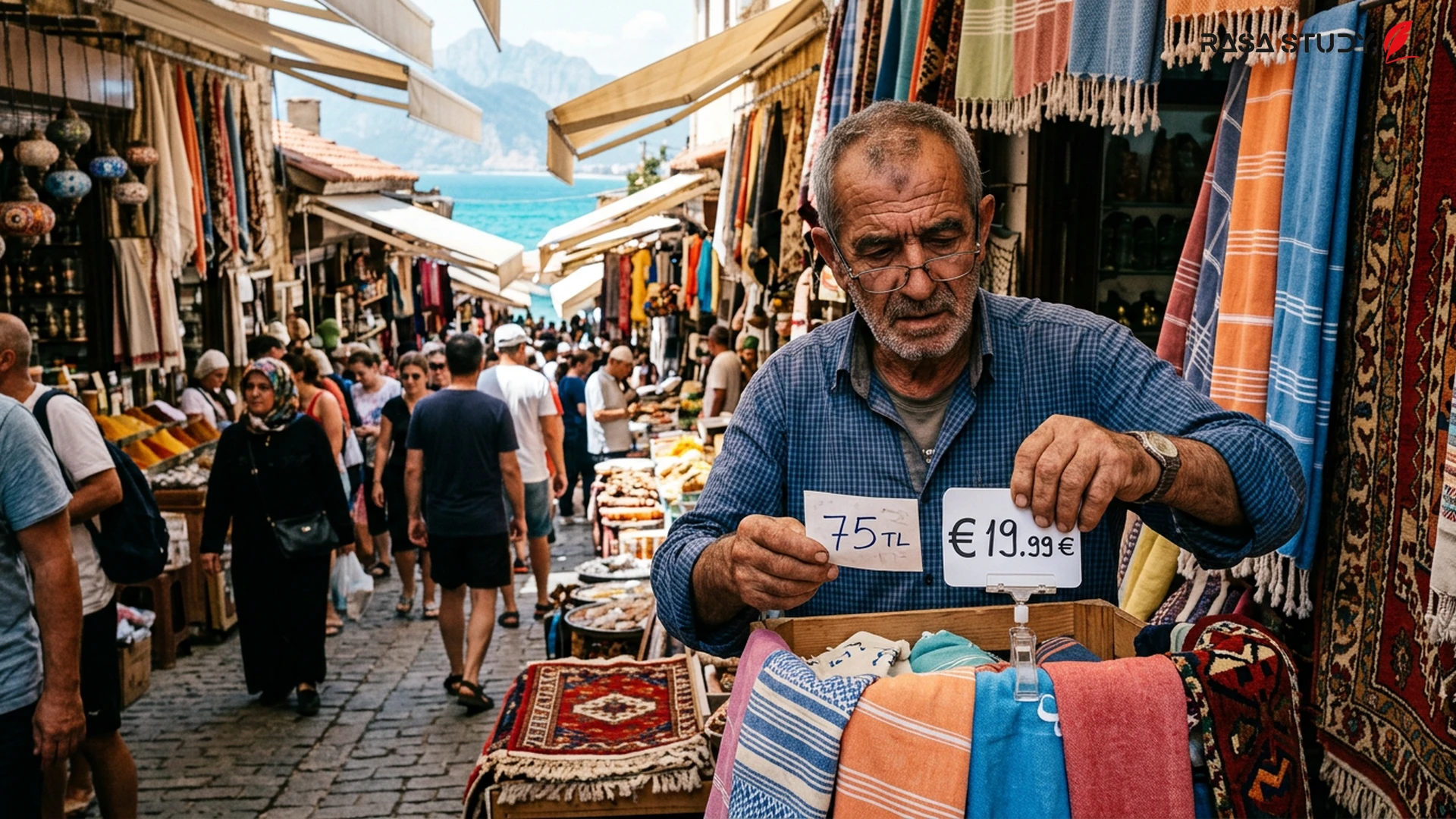
Field reports from Turkey's tourism hubs indicate that shopkeepers in Antalya and Muğla have taken the unprecedented step of abandoning the Lira and conducting transactions entirely in Euro.
New Wave of Currency Change in Coastal Markets
According to reports published by reputable news sources, including "Patronlar Dünyası," shopkeepers and market traders in the tourist cities of Antalya and Muğla have widely turned to using the Euro instead of the Turkish Lira [1]. This phenomenon, which was initially seen in luxury stores and large entertainment centers, has now spread to retail shops, cafes, and even local street vendors. Sellers believe that given the severe exchange rate fluctuations, pricing in Lira is no longer economically justifiable.
Economic Reasons Behind the Scenes: Escaping Inflation
The primary reason for this decision is to preserve profit value and capital against chronic inflation. While the Turkish economy continues to struggle with structural challenges in 2026, shopkeepers prefer to transact in a currency that offers more stability [2]. Momentary fluctuations in the Lira had forced sellers to change their price tags several times a day. Using the Euro has not only solved this problem but also facilitated the purchasing process for European tourists, who constitute the majority of visitors to these regions.
Legal Challenges and Official Reactions
Under current Turkish laws, conducting transactions between resident citizens in foreign currencies is restricted in certain sectors [3]. However, in tourist areas, the line between a "transaction with a tourist" and an "internal transaction" is very thin. Turkish tax authorities have not yet shown a formal or harsh reaction to this widespread change, but experts warn that weakening the Lira's sovereignty in domestic markets could increase inflationary pressures in the long run. Some trade unions in Antalya have stated that this is a "survival measure" to prevent the bankruptcy of small businesses.
Impact on Tourists and Locals
Although this change seems convenient for foreign tourists traveling with Euros, it is considered an economic nightmare for local residents and seasonal workers whose income is in Lira. Price increases based on the Euro rate have severely reduced the purchasing power of local people in these areas. It is expected that as this trend continues through the summer of 2026, the Turkish government will be forced to adopt stricter regulatory policies in tourist areas to maintain a balance between shopkeeper satisfaction and the rights of domestic consumers.
Shops in Antalya and Muğla are now displaying prices in Euro instead of Lira.
linkSources
- Antalya ve Muğla’da esnaf Türk Lirası’nı yerine euro ile satış dönemine geçti — Patronlar Dünyası (2026-07-10)
- Turkey Inflation Rate and Economic Outlook 2026 — Bloomberg Economics (2026-07-05)
- Foreign Exchange Regulations in Turkish Tourism Zones — Official Gazette of the Republic of Turkey (2025-12-20)