Seyed Abbas Araghchi, Iran's Foreign Minister, met today, June 28, 2026, with Iraqi Prime Minister Ali Falih al-Zaidi during a sensitive visit to Baghdad to discuss stabilizing the peace memorandum with Washington and new regional security plans.
Diplomatic Consultations at a Sensitive Regional Juncture
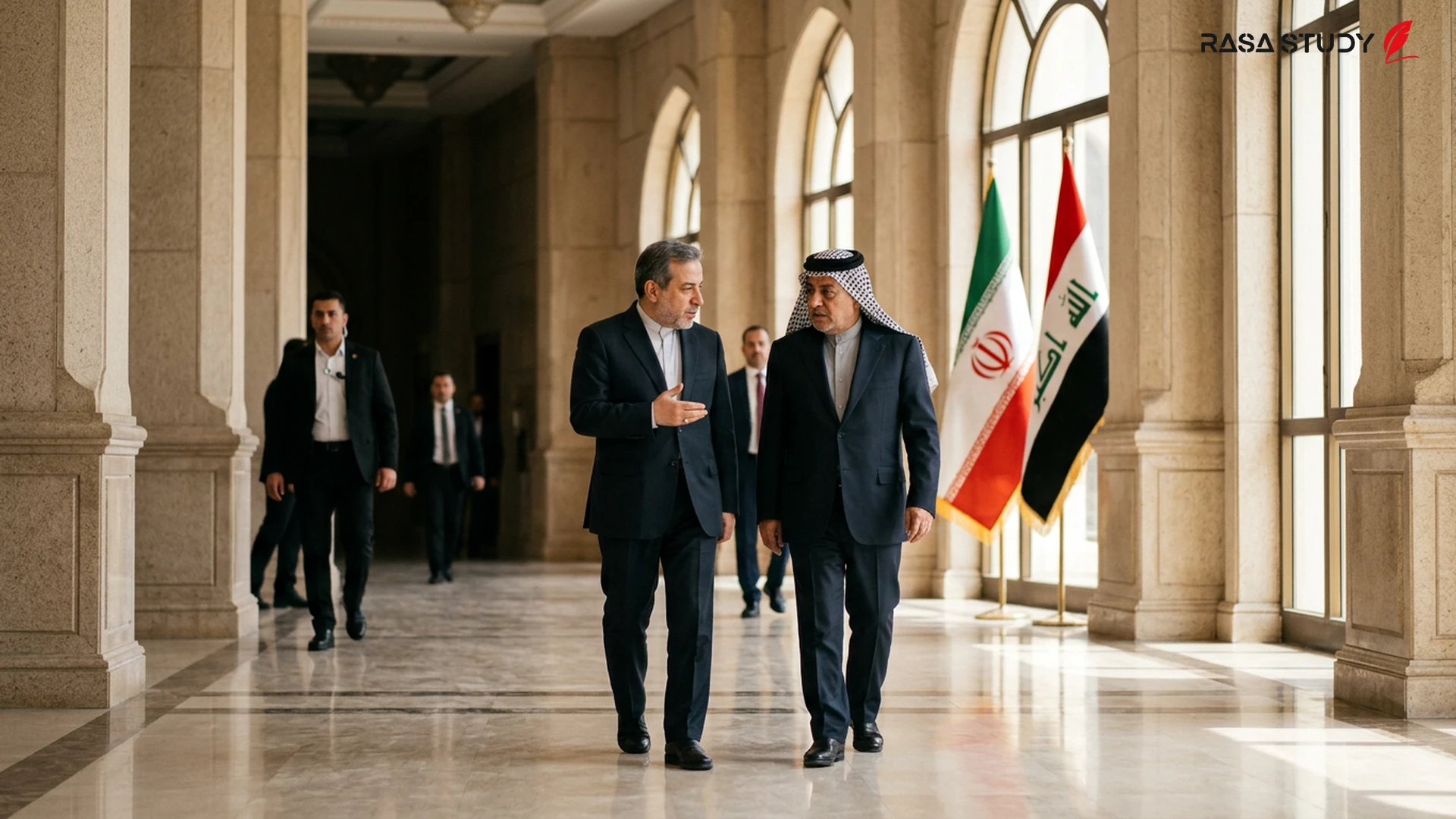
Seyed Abbas Araghchi, the Foreign Minister of the Islamic Republic of Iran, arrived in Baghdad this morning, Sunday, June 28, 2026 (8 Tir 1405), heading a high-level political delegation. In the first part of his official meetings, he met and consulted with "Ali Falih al-Zaidi," the new Prime Minister of Iraq. This visit takes place as the Middle East region stands on the verge of a major diplomatic transformation after months of conflict [1][4].
The main axis of the talks between Araghchi and al-Zaidi is the examination of the dimensions of the peace memorandum signed between Iran and the United States in Switzerland on June 18. This memorandum, which includes 14 clauses, focuses on the cessation of hostile actions, the gradual lifting of sanctions, and the release of Iran's frozen assets. During this meeting, the Iraqi Prime Minister emphasized that Baghdad fully supports any action that leads to the end of the war and the strengthening of stability in the region [3][4].
Iraq's Proposal for a New Regional Security Architecture
One of the most important topics raised in this meeting was the Iraqi government's proposal to hold an eight-party summit with the participation of Iran, Iraq, and the six member states of the Gulf Cooperation Council (GCC). While welcoming this initiative, Araghchi announced that Tehran is fully prepared to cooperate with its neighbors within the framework of an indigenous security structure without the interference of extra-regional forces [3].
The Iranian Foreign Minister also warned in a joint press conference with his Iraqi counterpart, Fuad Hussein, that any foreign intervention in the management of the Strait of Hormuz could delay the process of reopening this vital waterway. He emphasized that maritime security must be provided by the countries of the region [1][3].
Coordination for the Historic Funeral in the Holy Shrines
Another part of Araghchi's mission in Baghdad is coordination with Iraqi officials for the funeral ceremony of Ayatollah Seyed Ali Khamenei, the late Leader of the Islamic Revolution, in the holy cities of Najaf and Karbala. According to the plans made, this ceremony is scheduled to be held in mid-July 2026 with the presence of millions of mourners and international delegations [2][5].
In this regard, Araghchi stated that logistical and security coordination with the Iraqi side for the magnificent holding of this ceremony is on the serious agenda. He also expressed appreciation for the positions of the Iraqi government and nation in supporting Iran during recent months [1][2].
Challenges Ahead and Continued Tensions
Despite the signing of the peace memorandum, reports indicate sporadic exchanges of fire between US forces and some groups in the region over the past few days. In his meeting with al-Zaidi, Araghchi emphasized the necessity of Washington's adherence to its commitments and warned that potential excessive demands could block the path of diplomacy [3][4]. This visit is evaluated as a key step to stabilize Iran's position in the new regional order and to ensure the precise implementation of international agreements.
Seyed Abbas Araghchi and Ali Falih al-Zaidi during an official meeting at the Iraqi Prime Minister's headquarters, June 28, 2026.
linkSources
- Araqchi Visits Iraq for Talks on Bilateral Ties, Regional Issues — Tasnim News Agency (2026-06-28)
- Araghchi meets Iraqi premier in Baghdad for talks — Mehr News Agency (2026-06-28)
- Iraq pushes for GCC-Iran summit in Baghdad as Tehran backs regional security framework — The National (2026-06-28)
- در دیدار عراقچی؛ تاکید الزیدی بر اولویت پایان جنگ و گفتوگو برای تقویت ثبات منطقه — Middle East News (2026-06-28)
- عراقچی به عراق رفت؛ رایزنی درباره برگزاری مراسم تشییع آیتالله خامنهای — Anadolu Agency (2026-06-28)