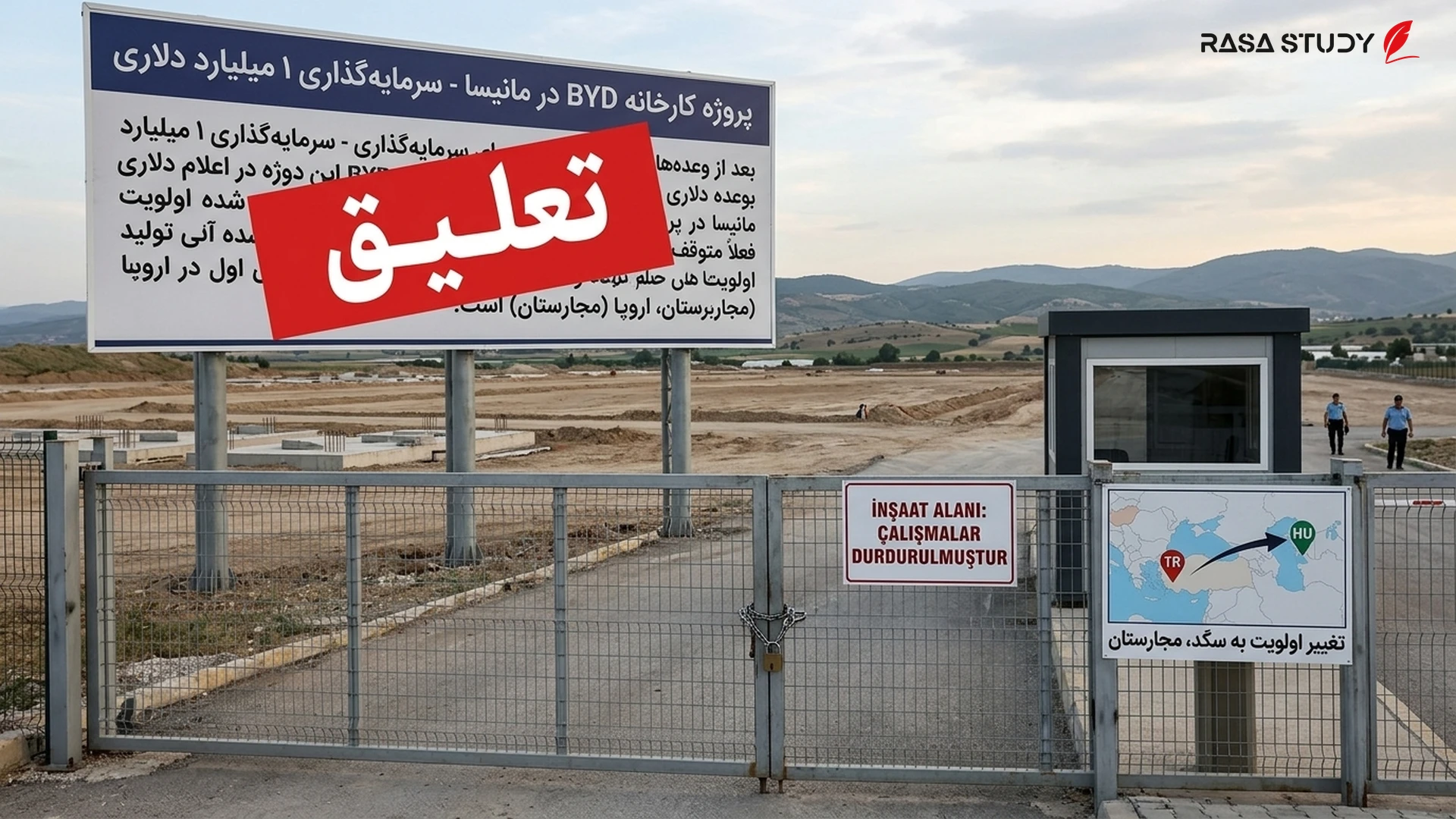
BYD, a leader in the electric vehicle industry, has suspended its $1 billion factory project in Manisa, Turkey. The company announced that its primary priority is now the completion of its production unit in Hungary.
BYD's Strategic Shift in the Eurasia Region
While Turkey was expected to become a new hub for electric vehicle production in the region, recent reports indicate an unexpected halt to BYD's massive project in Manisa province. The project, which began with a promise of $1 billion in direct investment and the creation of thousands of jobs, is now in a state of uncertainty. According to reports published on June 8, 2026, BYD's senior management has decided to concentrate its financial and technical resources on the Hungary project [1].
Why Hungary Took Priority Over Turkey?
Automotive market analysts believe several key factors played a role in this change of approach. BYD's main priority is a direct presence in the European Union market without facing tariff complexities. The Hungarian factory, currently under construction in the city of Szeged, is recognized as the company's gateway into the heart of Europe. Given the increasing pressure from the European Union on Chinese electric vehicles, production within European soil (Hungary) provides greater trade security for BYD [2].
In contrast, although Turkey has a customs union with Europe, rules of origin and recent changes in Turkey's support policies have altered BYD's profitability calculations. The company stated that an operational focus on Hungary currently seems more logical to stabilize its market share on the Green Continent.
Reactions in Turkey and the Future of the Auto Industry
The suspension of this project is considered a heavy blow to the Turkish government's industrial development plans. Turkey's Ministry of Industry and Technology stated in response to the news that dialogues with BYD officials are ongoing, and they hope this suspension is only a short pause in the project's execution [3]. However, experts warn that competition to attract foreign investment in green technologies is very intense, and Turkey must offer more attractive incentives to retain tech giants.
The halt of the Manisa project not only affects the automotive parts supply chain in Turkey but also serves as a concerning signal for other Chinese investors planning to enter the Middle Eastern and European markets. Currently, all eyes are on the progress of the Hungary project to determine whether BYD will return to the negotiating table with Ankara in the future.
BYD's investment path shift from Manisa toward Szeged in Hungary
linkSources
- BYD Puts Turkey Plant on Hold, Prioritizes Hungarian Production — Reuters (2026-06-08)
- Shift in EV Strategy: Why BYD is Pausing its $1 Billion Manisa Project — Bloomberg (2026-06-09)
- Turkish Ministry of Industry responds to BYD investment suspension rumors — Daily Sabah (2026-06-10)


