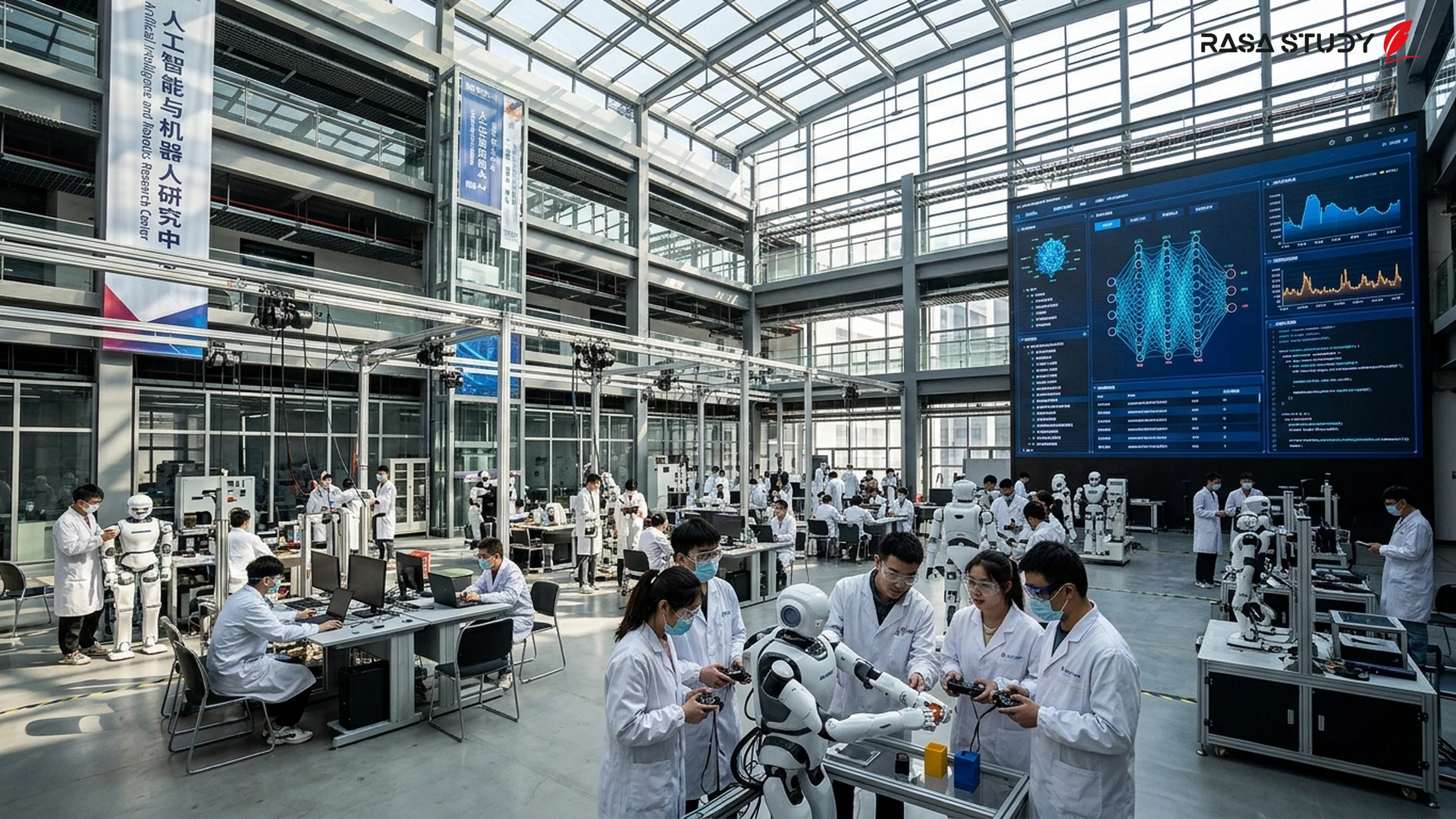
In the most significant higher education overhaul in decades, Chinese universities have eliminated more than 12,000 traditional majors to make way for emerging specialties such as artificial intelligence and robotics.
The Chinese government, in an unprecedented and extensive move, has restructured its higher education system to keep pace with rapid technological advancements. According to the latest data released by the Chinese Ministry of Education, the country's universities have removed or suspended more than 12,000 academic majors deemed "obsolete" or "saturated" over a five-year period [1][2]. These structural reforms, affecting more than 30% of the country's total university programs, aim to lead the global technology competition and address the youth unemployment crisis.
Dimensions of Structural Reforms in Universities Official reports show that between 2021 and 2025, exactly 12,200 undergraduate majors were removed from university curricula [4]. In contrast, Chinese higher education institutions introduced 10,200 new majors, with a primary focus on strategic technologies [2]. This massive shift reflects Beijing's change in approach from classical education toward applied specialties in the digital economy. Analysts believe that this rate of change, peaking in 2026, indicates the acceleration of China's national development plans [3].
Victim Majors and New Priorities The highest decline occurred in majors that no longer align with modern labor market needs. Fields such as arts, humanities, foreign languages, and management accounted for the highest removal rates [1][4]. Education officials believe these fields currently face a surplus of graduates, while demand for technical specialists is rising sharply. In contrast, new majors such as "Embodied Intelligence," advanced robotics, semiconductor science, and data mining are rapidly replacing them [2][3].
Strategic Reasons: Youth Unemployment and Tech Competition One of the main drivers of this educational surgery is the high unemployment rate of over 16% among Chinese youth [1]. Many graduates of traditional majors have found that their degrees hold little value in a labor market dominated by artificial intelligence. Recognizing this skills gap, the Chinese government has pressured universities to align their programs directly with the country's industrial goals [2]. This move is part of Beijing's grand strategy to become the world's primary AI hub by 2030, where the workforce must be familiar with smart tools from the moment they enter university [4].
Future Outlook of Education in China The 2026 reforms are not limited to removing majors; they also include changes to national entrance exams (Gaokao) and the integration of AI literacy across all educational levels [3]. With the introduction of 38 new majors this year, China seeks to train a generation of specialists who can apply AI in real-world industries such as advanced manufacturing and smart agriculture [2]. This transformation provides a new model for other developing countries facing similar challenges in the age of automation.
Chinese universities are paving the way for AI leadership by eliminating outdated majors.
linkSources
- Çin üniversiteleri yapay zeka reformu kapsamında 12 bin bölümü kaldırdı — Independent Türkçe (2026-06-16)
- China's universities cut 12,000 'obsolete' degrees amid race to embrace AI era — South China Morning Post (2026-06-14)
- Opinion: Overhaul of University Majors Must Balance Present Realities With Long-Term Goals — Caixin Global (2026-06-15)
- China Eliminates 12,000 University Programs to Prepare for AI Era — KT PRESS (2026-06-14)