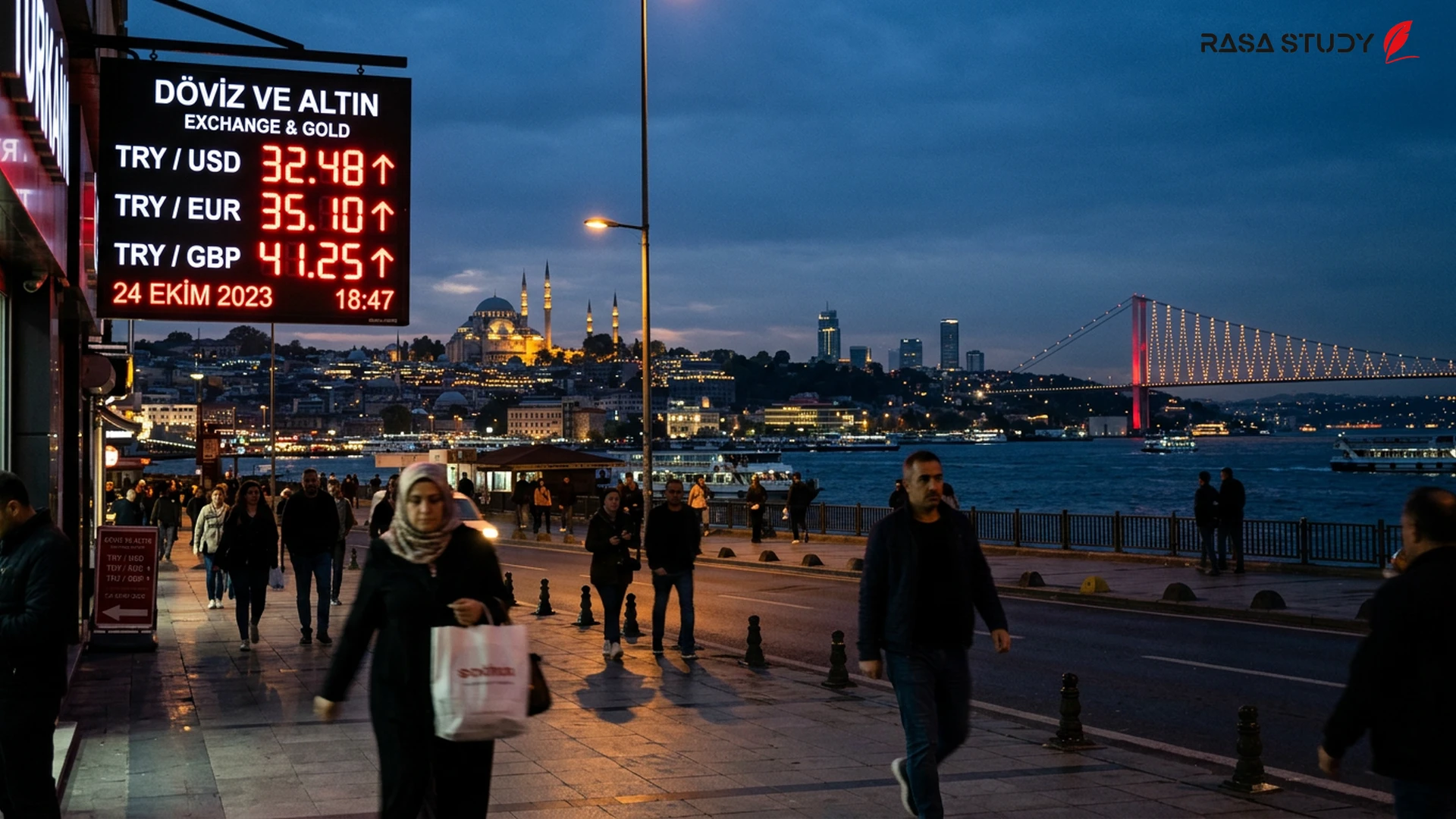
In its latest report, Deutsche Bank has provided bold forecasts for the future of interest rates, inflation, and the dollar price in Turkey, indicating the continuation of contractionary policies and a gradual reduction of interest rates in the coming months.
Deutsche Bank, the German banking giant, has provided detailed analyses of Turkey's economic situation in its new report titled "CEEMEA Outlook for the Second Half of 2026." This report, published on July 7, 2026, indicates that the Central Bank of the Republic of Turkey (TCMB), despite maintaining strict monetary policies, is ready to continue the interest rate cut cycle in a step-by-step and cautious manner [1].
Interest Rate Path: From 37% to 35% According to Deutsche Bank's analysis, the Central Bank of Turkey, which currently keeps the policy rate at 37%, will adopt a downward trend in the second half of 2026. The bank's analysts predict that the interest rate will decrease to 36% by the end of the third quarter of 2026 and to 35% by the end of the year [3]. This downward trend is also predicted for 2027, with the interest rate expected to reach 31% by the end of that year. This approach reflects the Central Bank's efforts to manage inflation while preventing a severe economic recession [1][4].
Exchange Rate Forecast: 51 Lira Dollar on the 2026 Horizon A significant part of the Deutsche Bank report is dedicated to exchange rate fluctuations. According to this report, the upward trend of the dollar against the Turkish Lira is expected to continue in a controlled manner. Deutsche Bank has announced its forecast for the dollar rate at the end of 2026 as 51 Lira [2]. Additionally, the bank expects the Euro rate to reach 63.8 Lira by the end of the same year. For a longer-term outlook, the bank's analysts predict that the dollar price will rise to the level of 65 Lira by the end of 2027 [3].
Macro Indicators: Inflation, Growth, and Investment Challenges Deutsche Bank has predicted Turkey's average inflation rate for 2026 at 30.5%. In the area of economic growth, the Turkish economy is expected to grow by 3% this year [1]. However, the report points to a concerning note: for the first time in 20 years, Foreign Direct Investment (FDI) flows into the region have entered negative territory. This issue, along with the increase in consumer goods imports due to the high real value of the Lira, has sounded the alarm for the trade balance [3][4].
Supporting Factors and Final Warnings Despite existing challenges, Deutsche Bank believes that strong revenues from tourism and a potential decrease in global gold prices could support the Turkish Lira in the short term [1]. However, analysts emphasize that maintaining the real value of the Lira may damage export competitiveness in the long run. Investors and institutions such as "YatırımX" are now closely monitoring these signals to adapt their strategies to Turkey's new economic realities [4].
Deutsche Bank predicts that the Central Bank of Turkey will reduce the interest rate to 35% by the end of 2026.
linkSources
- Dev banka yıl sonu dolar, enflasyon ve faiz tahminini açıkladı: TL için kritik uyarı — CNBC-e (2026-07-07)
- Deutsche Bank'tan döviz tahmini: Dolar ve Euro yıl sonunda ne kadar olacak? — Cumhuriyet (2026-07-07)
- Deutsche Bank'tan Türkiye tahmini: Dolar 51 TL, faiz yüzde 35 olacak — Haber7 (2026-07-07)
- Dev bankadan TL uyarısı: Dolar beklentisi 51 TL — Paratic (2026-07-07)