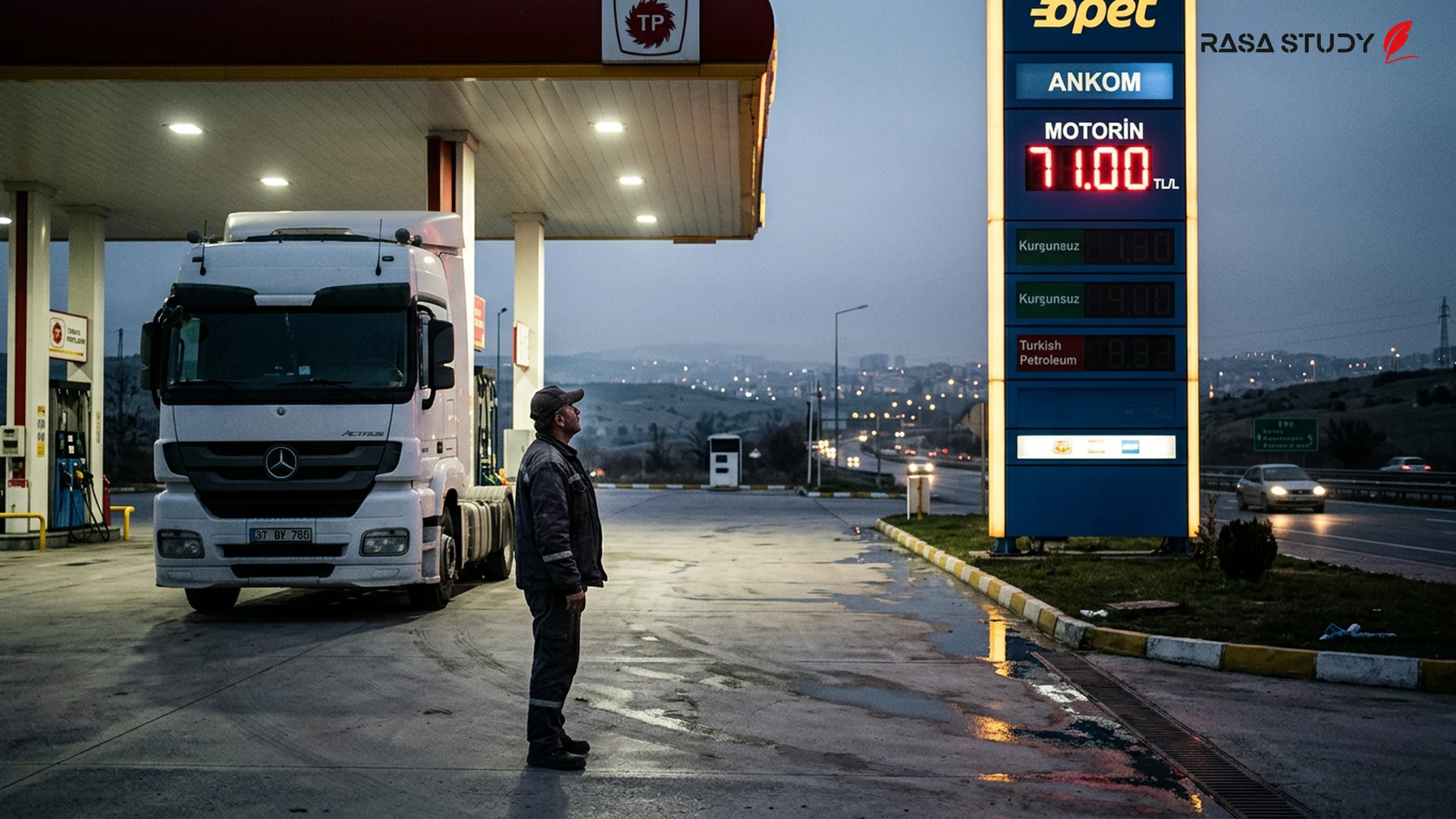
Today, July 10, 2026, with the implementation of the third consecutive price increase in less than a week, diesel rates at Turkish gas stations officially crossed the psychological threshold of 70 Lira, setting a new historical record in the country's economy.
Price Shock at Turkish Gas Stations
Turkey's energy market faced one of its largest price shocks in recent years today. According to reports published by reputable sources such as Nokta Gazetesi, the price of diesel (Motorin) has crossed the psychological 70 Lira mark following a significant increase [1]. This price hike, which took effect in the early hours of Friday, July 10, 2026, is the third wave of fuel price increases in just the last five days, bringing the total increase in this short period to over 5 Lira [3].
Roots of the Crisis: From the NATO Summit to Regional Tensions
Economic analysts believe the recent price jump is not solely due to domestic fluctuations. Recent statements by international officials during the NATO summit in Ankara, particularly messages regarding the end of the ceasefire process in certain parts of the Middle East, have sent a major shock to global oil markets [4]. Additionally, continued attacks on refinery infrastructure in Russia and increased shipping risks in the Strait of Hormuz have pushed Brent oil prices to their highest level in a year [3]. In Turkey's domestic market, the Dollar-to-Lira exchange rate, currently at 46.87, has placed additional pressure on energy import costs [4].
Price Details in Major Cities
With the implementation of the latest price increase of 3.10 Lira per liter, price boards at gas stations in various cities show extensive changes [2]. While prices in Istanbul have approached the 70 Lira mark, this threshold has been broken in cities like Ankara and Izmir. According to official statistics:
- Ankara: 71.00 Lira per liter
- Izmir: 71.27 Lira per liter
- Istanbul (European Side): 69.88 Lira per liter [3].
These price differences stem from logistics and distribution costs in different provinces, reaching even higher figures in eastern regions of Turkey [5].
Economic Consequences and Livelihood Concerns
Diesel prices crossing the 70 Lira mark is not just a number on fuel boards; it signifies a direct increase in the costs of goods transportation, agriculture, and public services. Experts warn that this "great wave of price hikes" will quickly reflect in the supply chain of food and essential goods, potentially causing inflation—which was already at high levels—to climb again [4]. The public transport sector and truckers have been hit hardest by these consecutive fluctuations and are calling for government intervention through the adjustment of Special Consumption Taxes (ÖTV) to mitigate part of this price pressure [2].
Consecutive price increases in July 2026 pushed diesel rates to a historical record of 70 Lira.
linkSources
- Motorine peş peşe zam! Pompa fiyatı 70 TL'yi geçti — Nokta Gazetesi (2026-07-10)
- Akaryakıta bir haftada üçüncü zam geliyor - Sözcü — Sözcü (2026-07-09)
- New fuel price hike! Psychological limit exceeded — Haberler (2026-07-09)
- Akaryakıt fiyatlarına Cumhuriyet tarihinin en büyük zamlarından biri geliyor! — Haber3 (2026-07-09)
- Motorin fiyatları 70 TL bandının üzerine çıktı — TV5 (2026-07-10)