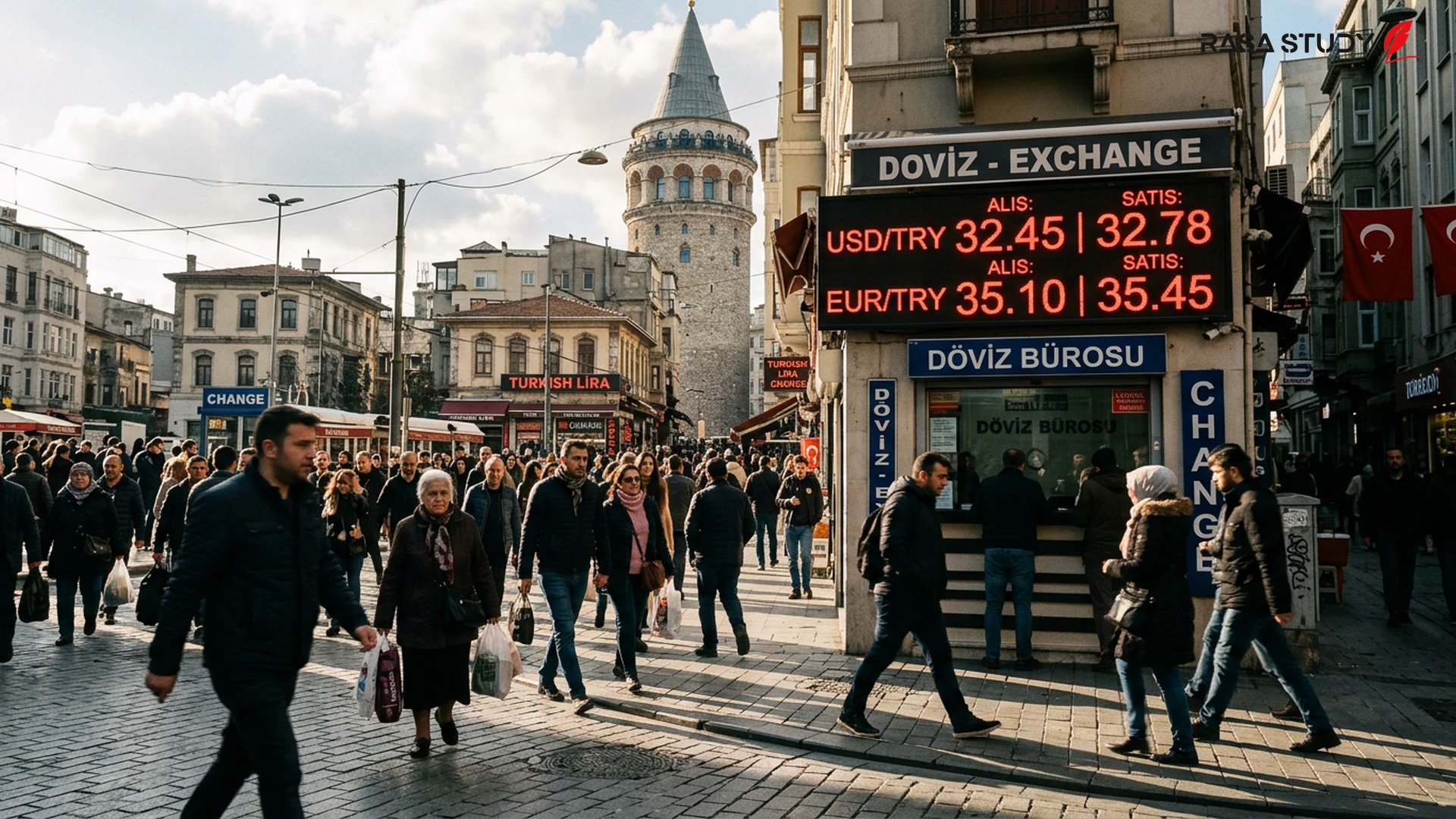
In transactions on Monday, July 13, 2026, the Turkish currency market witnessed diverging trends; while the dollar price continues its upward trajectory, the euro has faced a slight decline.
New Fluctuations in the Turkish Currency Market
Today, Monday, July 13, 2026, Turkey's financial markets began the new business week with significant movements in foreign exchange rates. According to reports published by reputable media outlets, including "Alanya Postasi," the price of the US dollar against the Turkish lira remains on an upward path, while the euro, after a period of growth, faced a relative price decrease today [3].
Based on real-time data from the Istanbul free market and reputable exchange offices in the tourist city of Alanya, each US dollar is trading at 46.89 lira, indicating continued pressure on Turkey's national currency [1]. In contrast, the euro rate, which had touched higher levels in recent days, retreated to the 53.61 lira range today [1]. This contrast in the behavior of the market's two main currencies has attracted the attention of local economic activists and investors.
Analysis of the Lira's Status Against Global Currencies
The depreciation of the Turkish lira in 2026 has become one of the main challenges for the country's economy. Statistical data shows that the lira has lost more than 17% of its value against the dollar since the beginning of this calendar year [2]. Although the Central Bank of the Republic of Turkey (TCMB) has kept interest rates at high levels between 37% and 40%, annual inflation, which was announced at approximately 32.11% in the latest reports, remains a major obstacle to exchange rate stabilization [4].
Economic analysts believe that seasonal demand for currency during the tourism season in Alanya and Antalya has partially helped market liquidity, but the high costs of importing energy and raw materials continue to exert structural pressure on the lira [4]. In the interbank market, the rates announced by the Central Bank have become very close to the free market rate, indicating policymakers' efforts to manage fluctuations and prevent sudden shocks.
Market Outlook and Impact on the Local Economy
In the Alanya region, currency fluctuations directly affect the cost of living and the tourism industry. Local exchange offices such as "YNS Döviz" report that despite the increase in the dollar price, transaction volumes remain high due to the presence of foreign tourists [4]. However, for Turkish citizens, the increase in the dollar price means the continued high cost of basic goods and a decrease in purchasing power.
Forecasts from international institutions such as "Trading Economics" suggest that the upward trend of the dollar may continue until the end of 2026 and could even surpass the 50 lira mark [2]. Meanwhile, the slight decrease in the euro price in today's transactions can be considered a temporary price correction, occurring under the influence of European Central Bank monetary policies and fluctuations in the EUR/USD pair in global markets [5]. Investors are now waiting for the next meeting of the Turkish Central Bank's Monetary Policy Committee to find new signs of a possible change in interest rates or new support tools for the lira.
Currency rate fluctuations in the Turkish free market; the dollar approaches a new record in July 2026.
linkSources
- 13 TEMMUZ DÖVİZ KURU: Döviz kurlarında hareketlilik devam ediyor — Dünya Gazetesi (2026-07-13)
- Turkish Lira - values, historical data, forecasts and news — Trading Economics (2026-07-12)
- Dolar yükselişte, Euro düşüşte: 13 Temmuz 2026 güncel rakamlar — Alanya Postası (2026-07-13)
- Alanya Döviz Kurları - Canlı Rakamlar — YNS Döviz (2026-07-11)
- ECB euro reference exchange rate: Turkish lira (TRY) — European Central Bank (2026-07-10)