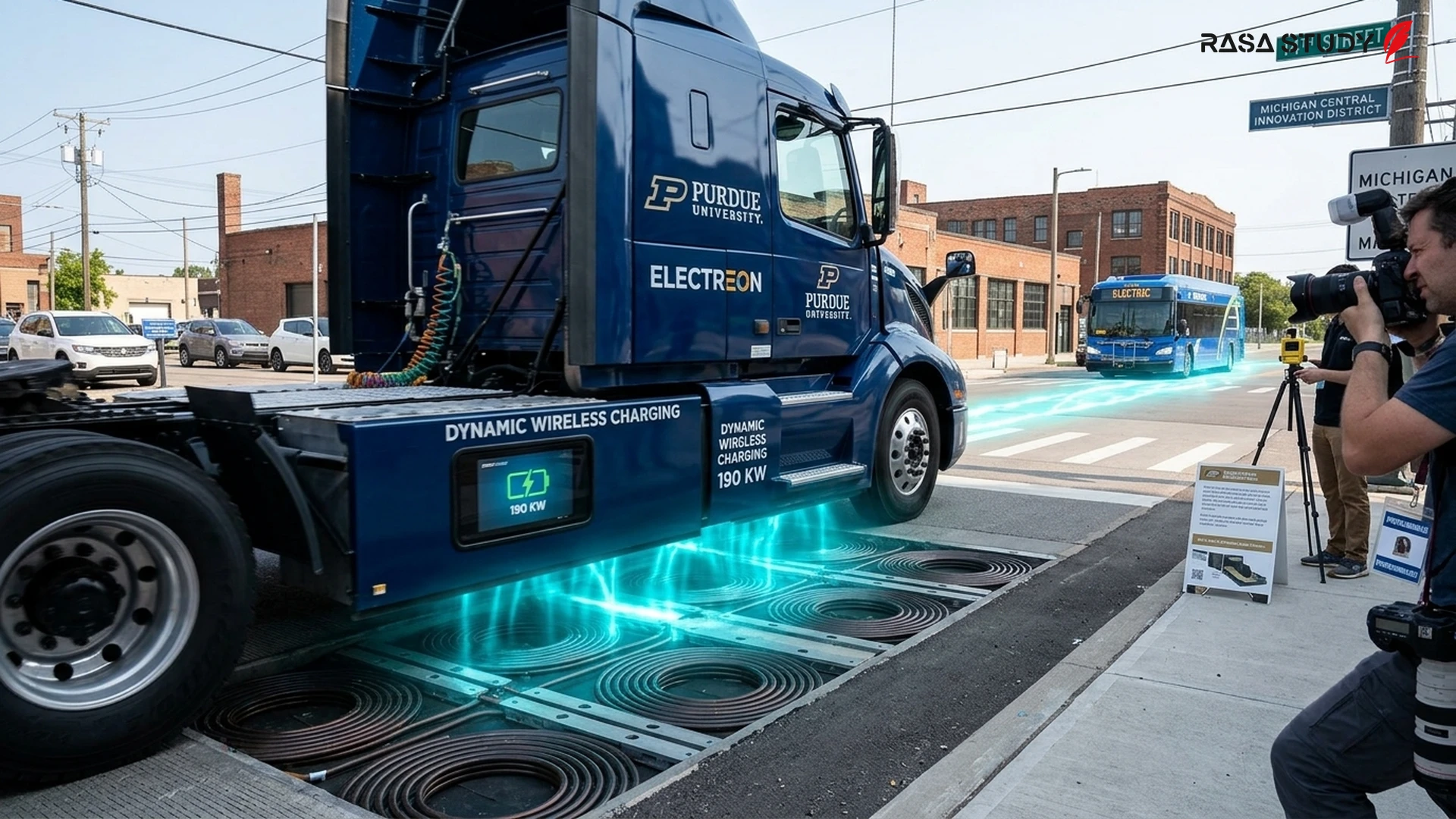
Dynamic Wireless Charging (DWC) technology is transforming the future of electric mobility by eliminating the need for cables and charging stops. Recent successes in Michigan and Indiana demonstrate that roads are becoming a permanent energy source for vehicles.
Today, June 2, 2026, the world of electric transportation is witnessing one of the greatest transformations in its history. The technology of "Charging Roads," scientifically known as Dynamic Wireless Charging (DWC), has moved beyond laboratory testing and is now showcasing itself on real American streets. This technology allows vehicles to charge their batteries simply by driving over asphalt, without the need to stop or connect a cable [1].
How Does DWC Technology Work? The basis of this technology is magnetic induction. Special coils connected to the power grid are embedded beneath the layers of asphalt. When an electric vehicle equipped with a special receiver passes over this section of the road, a magnetic field is created, and electrical energy is transferred wirelessly to the receiver under the car. This energy is sent directly to the battery, and the charging process is performed while moving [3].
Detroit: Pioneer of Smart Roads One of the most successful operational examples of this project has been implemented in Detroit, Michigan. A section of 14th Street in the Michigan Central innovation district has been equipped with this system. The project, executed in collaboration with the Israeli company Electreon, has proven its efficiency after two years of continuous testing in various weather conditions, including heavy snow and ice. Michigan officials are now planning to expand this network to other major streets, including Michigan Avenue [1][3].
Record-Breaking in Indiana with 190 kW Power Another stunning achievement has been recorded in the state of Indiana by researchers at Purdue University. In this project, the engineering team successfully charged a heavy electric truck while it was traveling on the highway at a speed of approximately 105 km/h (65 mph). The power transfer in this test reached an amazing 190 kilowatts, which is vital for powering heavy vehicles on long journeys [2]. This success shows that even the largest freight vehicles can continue their route without long stops for charging.
Strategic Advantages for the Future The development of charging roads offers several key advantages that are revolutionizing the automotive industry: - Reduced Battery Size: With continuous charging on the route, there is no longer a need for giant, expensive batteries, leading to a reduction in the final price of electric vehicles. - Elimination of Range Anxiety: Drivers will no longer worry about running out of charge on long trips. - Fleet Efficiency: Electric trucks and buses can operate 24/7 without needing to stop at charging stations [2][3].
This technology is rapidly developing not only in the United States but also in countries such as Sweden, Germany, and China, and is expected to become a new standard on international highways by the end of this decade.
Dynamic Wireless Charging technology on 14th Street in Detroit; vehicles charge while moving.
linkSources
- Road that charges electric vehicles through the ground is already operational in the USA — MSN / Caio Aviz (2026-05-30)
- Purdue Engineers successfully test dynamic wireless power transfer on a U.S. highway — Purdue University (2026-03-09)
- Detroit's First Wireless EV Charging Road Shows Promise After Two-Year Trial — WRIF (2025-10-22)


