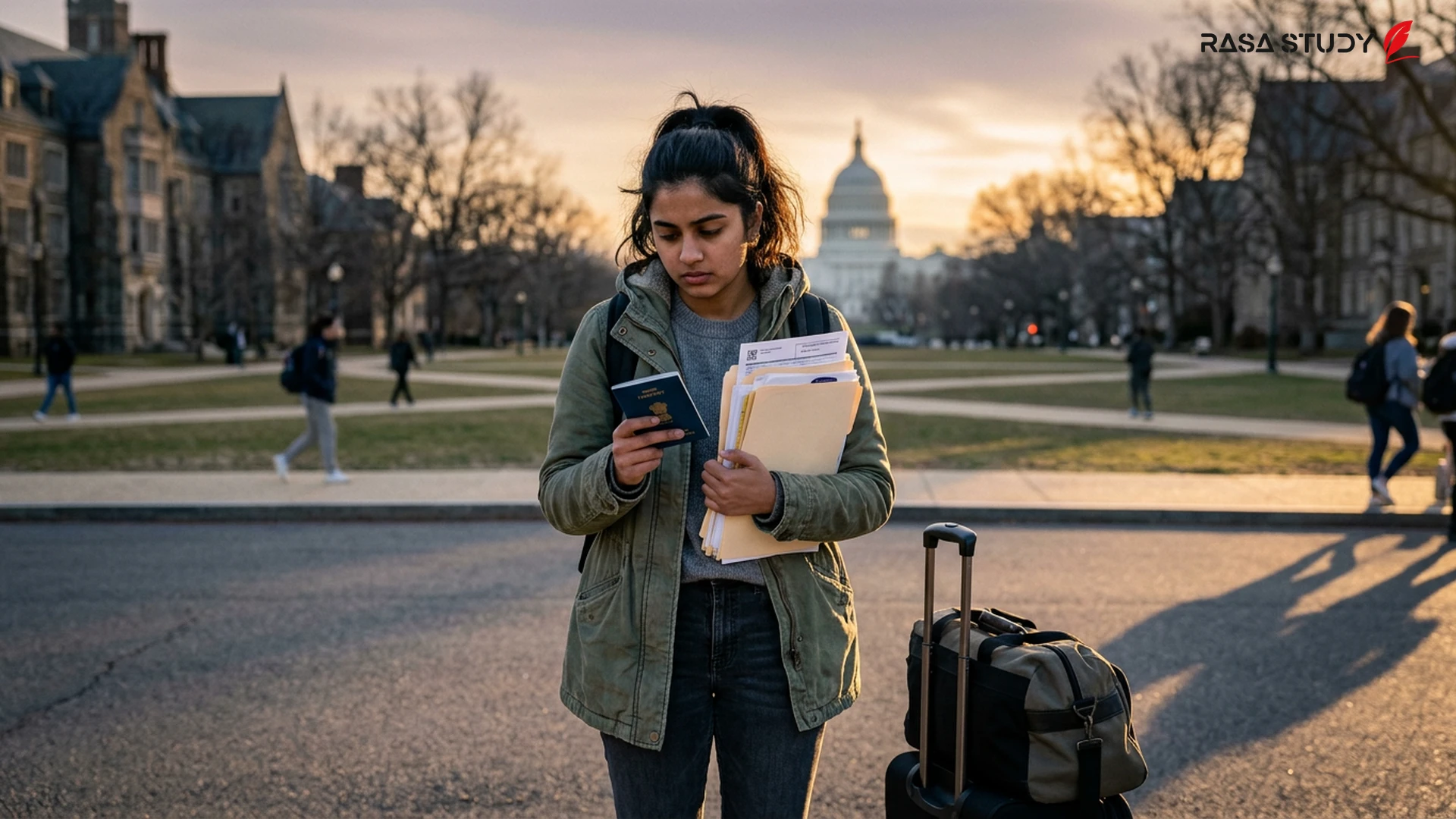
The United States government has officially ended the era of unlimited stays for students, exchange program participants, and journalists. Under the new regulations, these visas will now have a fixed expiration date and a maximum four-year cap, significantly increasing immigration oversight.
A Major Shift in United States Immigration Laws
In an unprecedented move announced by the U.S. Department of Homeland Security (DHS), the traditional "Duration of Status" system, commonly referred to as D/S, has been officially revoked. According to reports published on July 20, 2026, this decision marks the end of an era where international students and journalists could remain on U.S. soil without a specific expiration date on their visas until the completion of their educational or professional activities [1].
These changes, which will be fully implemented starting September 15, 2026, directly target holders of F (students), J (exchange visitors), and I (foreign media representatives) visas. Under the new regulations, a definitive end date will be assigned to all these categories, which in most cases will be a maximum of 4 years [2].
Details of the New Time Restrictions
Markwayne Mullin, the U.S. Secretary of Homeland Security, stated in a press release that the previous system allowed individuals to stay in the country for many years without close government supervision by continuously enrolling in various educational courses. He emphasized that this situation had led to abuses of the immigration system [3].
Some of the key changes include:
- 4-Year Cap: Most students and exchange participants will only be permitted to stay for a maximum of 4 years unless they apply for a formal extension.
- Reduced Departure Grace Period: The grace period to leave the country or change status after the end of the program for F visa holders has been reduced from 60 days to 30 days [1].
- Oversight of Journalists: Media visa (I) holders can no longer operate indefinitely in the U.S. and must renew their status at specific intervals.
Reactions and Operational Consequences
This decision has met with widespread reactions in academic and media circles. Critics argue that this move increases bureaucracy and may reduce the attractiveness of the United States for international talent. However, the government insists that this action is necessary for more effective "screening, vetting, and monitoring" of foreign nationals [2][4].
Individuals who require more than 4 years to complete their academic programs must submit an extension request to federal authorities. This process will involve renewed security checks and proof of a genuine need to continue residency. Immigration experts advise applicants to begin planning now to align with the new laws that take effect in mid-September [3].
This new regulation is part of the government's 2026 strict policies for tighter control of borders and temporary stays, which officials say will strengthen national security [1][4].
New US visa rules create serious time restrictions for international students and journalists.
linkSources
- Süresiz vize uygulaması resmen sona erdi — Sözcü Gazetesi (2026-07-20)
- ABD, yabancı öğrenci vizelerinde sabit süre uygulamasına geçiyor — Milliyet (2026-07-17)
- ABD'den yabancı öğrencilere kötü haber: 'Süresiz kalma' dönemi bitti — Star Gazetesi (2026-07-17)
- ABD'den yabancı öğrencilere yeni vize kararı: Kalış süresine 4 yıl sınırı — CNBC-e (2026-07-16)


