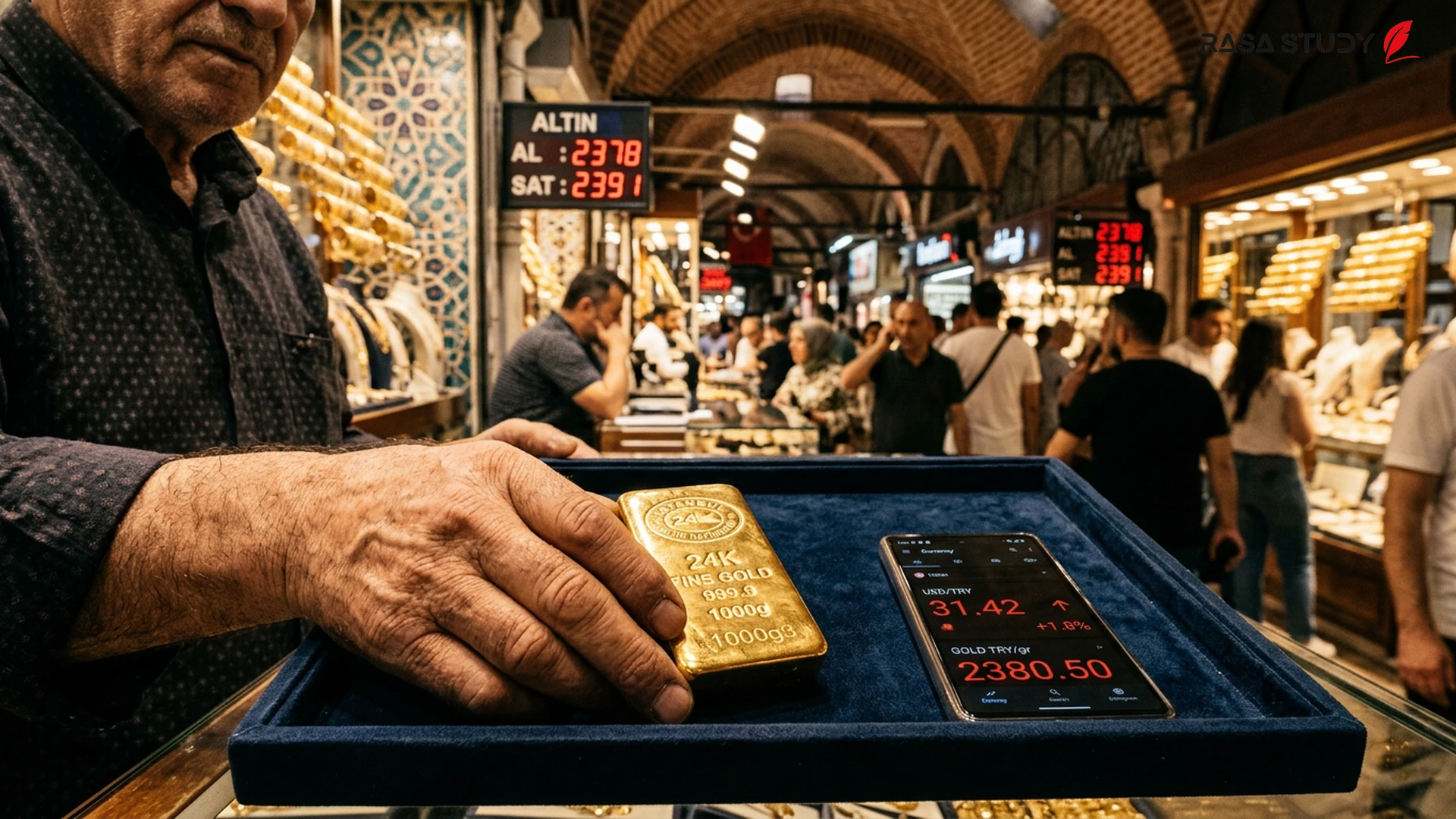
The difference in gold prices between the banking system and the free market, especially on July 11, 2026, has become a major concern for investors. This gap stems from operational costs, taxes, and physical demand.
Today, Saturday, July 11, 2026, the gold market in Turkey and the region is witnessing intense fluctuations. While the price of 24-karat gold in the free market has reached approximately 6,225 Lira [2], many citizens are confused by the price difference seen on banking apps and exchange office boards. This phenomenon, referred to in economic literature as the "price gap" or "Makas," has several structural and economic reasons that have been examined in detail in recent reports by Haber Gazetesi [1].
The Difference Between Digital and Physical Gold One of the main reasons for this discrepancy is the difference in the type of asset. Gold traded in banks is actually a digital asset (XAU) defined based on bank reserves. In contrast, gold in the free market or the Grand Bazaar (Kapalıçarşı) is physical gold that carries costs for storage, transportation, and minting [3]. During times when demand for physical gold purchases increases due to geopolitical tensions in the Middle East, the free market price quickly diverges from banking prices [1].
The Role of Taxes and Banking Regulations in 2026 In 2026, new tax and regulatory rules have had a direct impact on banking prices. Banks are required to deduct Banking and Insurance Transaction Tax (BSMV), which increases the final purchase price for the customer [3]. Additionally, according to reports published in July 2026, new requirements for the electronic registration of all gold transactions in the banking system have raised administrative costs for banks, forcing them to increase their spreads to cover these expenses [1].
Liquidity and Real-Time Currency Fluctuations The price of gold in the free market is heavily influenced by the real-time dollar rate in the informal market. While banks update their prices based on Central Bank reference rates with a slight delay, money changers in the Grand Bazaar adjust prices based on real-time supply and demand and fluctuations in the Lira exchange rate [2]. This causes the price gap between these two sources to reach its maximum during volatile hours of the day [1].
Operational Costs and Exchange Office Commissions Unlike banks that use automated systems to determine prices, gold dealers and free market exchange offices include costs such as rent, security, and labor wages in the final price [3]. Furthermore, in July 2026, due to rising energy and operational costs, commissions for physical gold transactions have grown compared to previous years, which is directly reflected in the final sales price to the consumer [2].
The difference in gold prices between the banking system and the free market has increased in July 2026 due to structural factors.
linkSources
- Bankada ve Serbest Piyasada Altın Fiyatları Neden Farklı? — Haber Gazetesi (2026-07-10)
- Altın fiyatlarında dalgalı seyir: Gram altın 6 bin 225 lirayı aştı — Dokuz Eylül (2026-07-11)
- Gold prices in Istanbul's Grand Bazaar: Differences Between Markets — Coruh Kuyumculuk (2026-05-27)