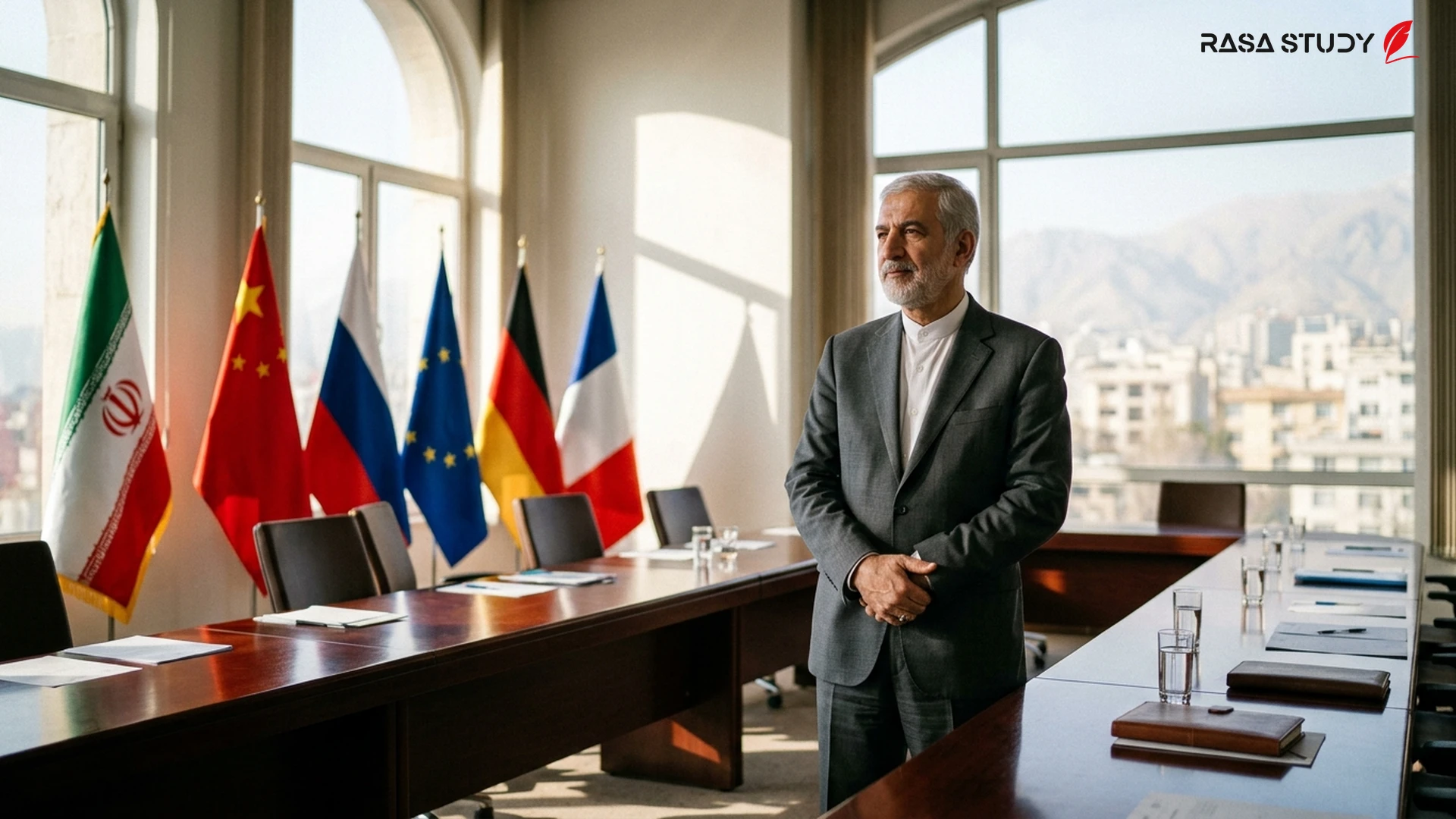
Following recent developments in the international arena, new reports indicate that Iran, by utilizing strategic levers and new alliances, has succeeded in compelling Western parties to accept its key demands in negotiations.
Power Display at the Negotiation Table and Paradigm Shift
Diplomatic developments in June 2026 indicate a fundamental shift in how global powers interact with Tehran. According to the CGTN Türk network, Iran has been able to assert its demands in sensitive international files by relying on a strategy of "active diplomacy" [1]. This success is not merely the result of table talk, but a direct consequence of increasing technical capabilities and strengthening regional influence, which has forced the opposing side to reconsider its positions.
Experts believe that Tehran, with a precise understanding of global energy needs and ongoing geopolitical crises, has used these tools as leverage. This approach has led Western powers, who previously emphasized strict positions, to now seek a way to compromise with Iran's proposed conditions [3].
Eastern Alliances; Iran's Counterweight to the West
One of the main reasons for Iran's success in gaining acceptance for its demands is the strengthening of strategic ties with the emerging powers of the East. Full membership in the Shanghai Cooperation Organization and the BRICS group has allowed Tehran to completely break its diplomatic isolation. These alliances have not only provided an economic safety net but have also significantly increased Iran's political weight at the negotiation table [2].
Political support from Beijing and Moscow for Iran's principled positions has rendered unilateral Western pressures ineffective. In fact, by replacing its commercial and political partners, Iran has increased the cost of continuing sanctions for Western parties and steered them toward accepting new realities [1].
Western Retreat and New Geopolitical Realities
Reports published in mid-June 2026 indicate that the United States and its European allies have moved closer to Iran's positions on many disputed points, including economic guarantees and the removal of trade restrictions [3]. This retreat stems from the West's urgent need for stability in the energy market and the prevention of spreading tensions in the Middle East.
Using "strategic patience," Iran managed to control time in its favor. While Western parties were under pressure from public opinion and domestic needs, Tehran, by maintaining consistency in its foreign policy, demonstrated that it would not back down from its core positions. This persistence ultimately led to the acceptance of a framework that maximally secures Iran's national interests [2]. This diplomatic victory marks a new chapter in international relations where regional powers play a more decisive role in global equations.
Iran's active diplomacy in 2026 has led to a shift in the balance of power in international negotiations.
linkSources
- İran taleplerini nasıl kabul ettirdi? — CGTN Türk (2026-06-10)
- Iran's Strategic Patience and the New Middle East Order — Al Jazeera (2026-06-11)
- Tehran's Leverage in Nuclear Diplomacy — Reuters (2026-06-12)


