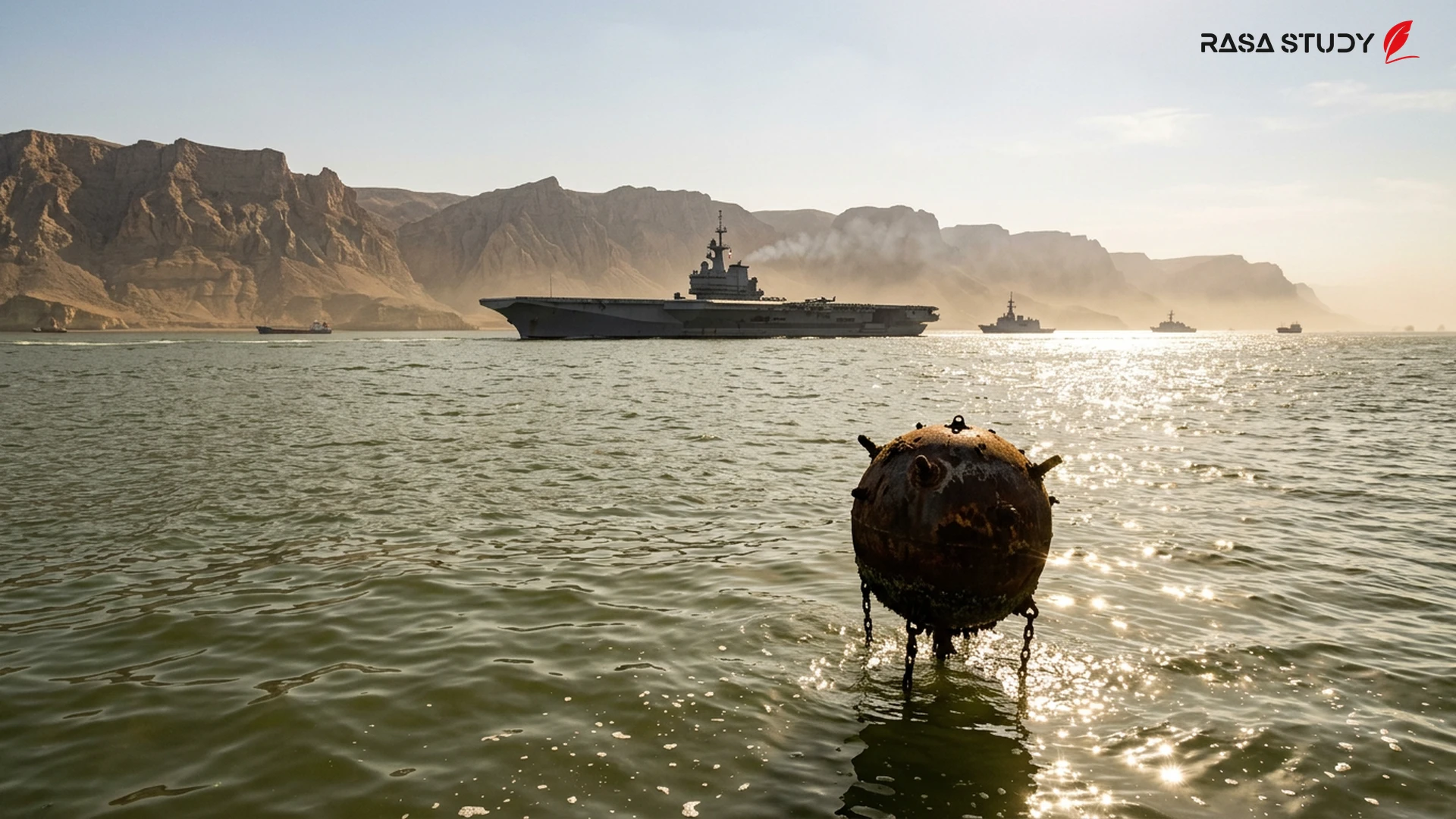
Following Emmanuel Macron's proposal for joint demining operations in the Strait of Hormuz, Tehran issued a sharp warning to Paris. Iranian officials emphasized that the security and management of this strategic waterway are exclusively under Iran's control.
Tehran's Decisive Rejection of Macron's Plan On June 30, 2026, diplomatic tensions between Iran and France over maritime security in the Strait of Hormuz reached a new peak. The crisis began after French President Emmanuel Macron, during a meeting with the Sultan of Oman, proposed the formation of an international coalition to clear naval mines and ensure "free and unconditional passage" through the strait [1]. Tehran immediately rejected the proposal, viewing it as a blatant interference in its sovereign affairs.
Esmaeil Baghaei, spokesperson for the Iranian Ministry of Foreign Affairs, stated in his weekly press conference that the issue of demining in the Strait of Hormuz is solely the responsibility of Iran and requires no outside intervention [1][2]. This stance reflects Tehran's determination to maintain full control over the world's most vital energy chokepoint amidst a fragile regional ceasefire.
The Strait of Hormuz: Iran's Sovereign Red Line Kazem Gharibabadi, Deputy Foreign Minister for Legal and International Affairs, warned France in a clear message to refrain from "provocative" actions that complicate the situation [2]. Citing the "Islamabad Memorandum," he emphasized that according to Article 5 of this agreement, navigation management and demining operations in the Strait of Hormuz are under the coordination of Iran as the coastal state [2][3].
Iran believes that the presence of extra-regional forces, particularly the French naval fleet including the aircraft carrier "Charles de Gaulle," does not contribute to security but rather increases the risk of accidental conflicts [3]. Analysts believe Tehran is using the Strait of Hormuz as a key bargaining chip in ongoing negotiations with Washington [5].
French Military Presence and Security Complexities France has significantly increased its military presence in the region in recent months. Reports indicate that 10 additional French warships have been deployed to escort commercial vessels in the area [3]. Macron claims these actions are purely "defensive" and intended to protect the interests of European citizens and regional partners such as the United Arab Emirates [3]. However, recent drone attacks on French bases in the UAE have pushed Paris to take a tougher stance toward Tehran.
Economic Consequences and Diplomatic Deadlock These tensions occur as the global economy still suffers from shocks caused by conflicts in early 2026. The United Nations has warned that continued insecurity in the Strait of Hormuz has led to a sharp increase in food and fuel prices, especially in developing countries [4]. The 14-point memorandum signed on June 17 between Iran and the United States is now in a very precarious state due to disputes over how to fully reopen the waterway and the presence of foreign forces [5].
Ultimately, Iran's insistence on "new rules of the game" in the Strait of Hormuz and France's attempt to restore the former international order have left the region in a state of suspense, where any miscalculation could reignite the flames of war.
The Strait of Hormuz has once again become the center of diplomatic tensions between Iran and European powers.
linkSources
- Hürmüz Boğazı’nda mayın gerilimi: İran’dan Fransa’ya sert mesaj — Cumhuriyet (2026-06-30)
- Iran rejects Macron-backed Hormuz demining plan, warns France against 'provocations' — Anadolu Agency (2026-06-29)
- Strait of Hormuz: 'Iran has made it very clear that there are new rules' — France 24 (2026-06-29)
- Middle East conflict leaves developing countries paying the price — United Nations (2026-06-30)
- Iran war has cost Americans $1,000 per household, economist estimates — CBS News (2026-06-29)


