Following the conclusion of the multi-day funeral ceremonies for Ayatollah Ali Khamenei in various cities across Iran and Iraq, the Institute of Strategic Thinking (SDE) published an analytical report examining the concept of 'funeral politics' and the strategic messages of this event for the world.
The funeral ceremony of Ayatollah Ali Khamenei, cited as one of the largest religious-political events in contemporary history, concluded on July 9, 2026, with his burial in Mashhad. The Institute of Strategic Thinking (SDE) in Ankara, publishing an analysis titled 'Funeral Politics in Iran,' emphasized that this ceremony was more than a religious rite; it was a tool to demonstrate the continuity of power and send diplomatic messages to regional allies and rivals [1].
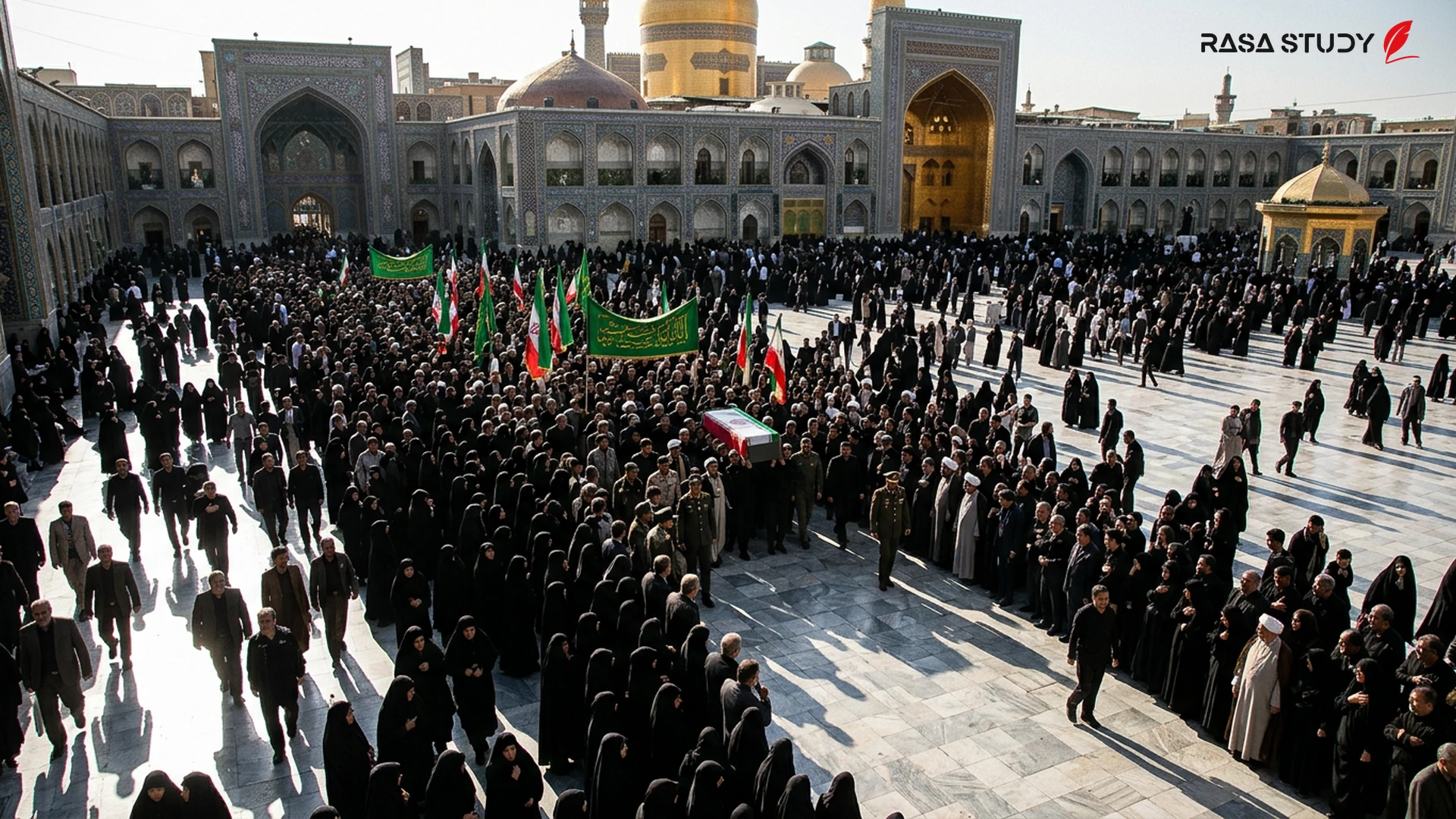
Funeral as a Soft Power Tool The SDE report notes that the Islamic Republic uses burial ceremonies as a 'soft power maneuver.' The analysis states that the presence of millions of people in the cities of Tehran, Qom, Najaf, Karbala, and Mashhad aimed to demonstrate the political stability of the system following the late leader's assassination during the attacks of February 2026 [3]. The report suggests that through extensive media imagery, Iran attempted to signal to the world that the power structure in the country is not dependent on an individual and that sovereign institutions remain standing despite external pressures [4].
Diplomatic Messages in the Form of Quranic Verses One of the highlights of the SDE report is the analysis of religious symbolism throughout the ceremony. According to the report, the selection of Quranic verses for various diplomatic delegations contained precise political messages. For representatives of the 'Axis of Resistance,' including Hamas and Hezbollah, verses with themes of martyrdom and victory were chosen, while for the delegations from Russia, China, and India, concepts such as peace and international cooperation were emphasized [1]. This approach demonstrates the clever use of religion to solidify Iran's geopolitical position in the new non-Western global order.
Mashhad; The New Spiritual Capital and Consolidation of Succession The choice of Mashhad as the final burial site was, from the perspective of geopolitical analysts, a strategic decision to create a 'spiritual polarization' in Iran's political geography [2]. This move not only strengthened Mashhad's position as the system's spiritual capital but also provided a platform to consolidate the legitimacy of the new leader, Ayatollah Mojtaba Khamenei. Although some opposition media described the ceremony as a 'propaganda failure' due to high costs and security challenges [5], international observers believe the event successfully conveyed the message of 'uninterrupted continuity of macro policies' [2].
Challenges Ahead in the Transition Period With the conclusion of this 'funeral of the century,' Iran now enters a new phase of its political life. Field reports indicate that despite the display of unity during the ceremony, economic challenges and pressures resulting from the end of the ceasefire with the United States persist [3]. SDE analysts warn that while funeral politics caused national cohesion and a 'rally 'round the flag effect' in the short term, the sustainability of this situation will depend on the new leadership's ability to manage livelihood crises and military tensions in the coming months [1].
Ayatollah Khamenei's funeral ceremony in July 2026, analyzed as a tool for demonstrating Iran's political stability.
linkSources
- İran'ın Cenaze Siyaseti — Stratejik Düşünce Enstitüsü (SDE) (2026-07-10)
- برگزاری مراسم در مشهد از منظر ژئوپلیتیک — Etemad Online (2026-07-11)
- Iran's funeral of the century: A week of mourning and geopolitical tension — The Guardian (2026-07-09)
- The strategic messages of the Leader's funeral ceremony — Mehr News Agency (2026-07-07)
- مراسم تشییع جنازه خامنهای؛ شکست تبلیغاتی یا نمایش قدرت؟ — Iran International (2026-07-06)