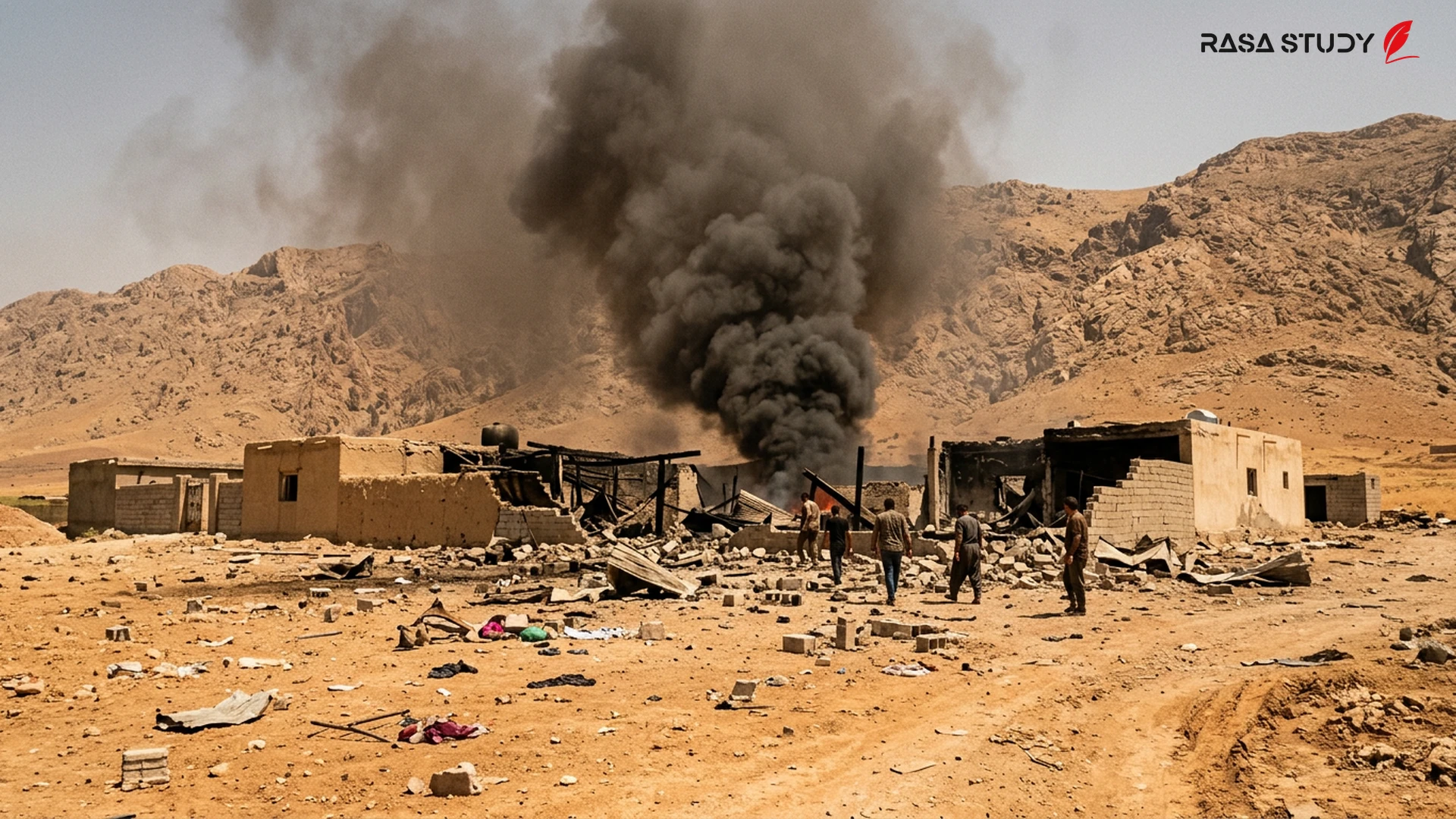
As military clashes between Iran and the United States expand, field reports indicate that Tehran's wave of retaliation has moved beyond the Persian Gulf and is now targeting strategic areas in northern Iraq.
Expansion of Conflict to Northern Iraq While the crisis in the Strait of Hormuz has reached its peak, field reports from CNN Türk correspondents show that Iran's retaliation strategy has now opened a new front in Iraq [1]. Missile and drone attacks on areas in Erbil and Sulaymaniyah indicate a shift in Tehran's tactics in response to recent attacks by the United States and its allies in the region. These developments occur as the US military has targeted positions inside Iranian territory for the eighth consecutive night [2].
According to published reports, the attacks in northern Iraq have left at least eight people dead, primarily members of Iranian Kurdish opposition forces in these areas [1]. This action by Iran is seen as a clear message to Washington; a message indicating that any military pressure in the Persian Gulf will be met with symmetric and asymmetric responses across the Middle East geography.
The Strait of Hormuz Crisis and Blockage of Energy Arteries The current crisis, which began in early 2026, has now reached a critical stage. US President Donald Trump has ordered new attacks to punish Iran-affiliated forces, especially after the deaths of two US service members in Jordan were confirmed [3]. Total US military fatalities since the start of these clashes on February 28 have reached 16 [3].
In response to sanctions and airstrikes, Iran has blocked the Strait of Hormuz and used suicide drones and ballistic missiles to target the military and energy infrastructure of US allies in the Persian Gulf [4]. Neighboring countries including Kuwait, Bahrain, and Oman are also on full alert, with their air defense systems continuously intercepting incoming projectiles.
Regional Security Outlook in July 2026 Military analysts believe that Iraq's direct entry into this equation has significantly increased concerns about an all-out regional war. While the United States attempts to degrade Iran's drone and missile capabilities, Tehran is trying to disperse Washington's military focus by expanding battlefronts to Iraq and Jordan [2].
Field reports from Tehran and Washington show that neither side is willing to retreat from their positions. The blockage of the Strait of Hormuz has faced not only regional security but also the stability of global energy markets with an unprecedented threat. Meanwhile, civilians in Iraq and the Persian Gulf countries are suffering the most from this continuous exchange of fire [3].
Archive image of troop deployments and military tensions on the Iraq-Iran borders - July 2026
linkSources
- CNN TÜRK bölgede: İran’ın Körfez misillemesi Irak’a sıçradı — CNN TÜRK (2026-07-18)
- US military launches new airstrikes against Iran after deaths in Jordan — NPR (2026-07-18)
- US launches new airstrikes to 'punish' Iran after reporting first military deaths — Al-Monitor (2026-07-19)
- Iran responds to U.S. attacks with fire on Gulf neighbors — CBS News (2026-07-13)


