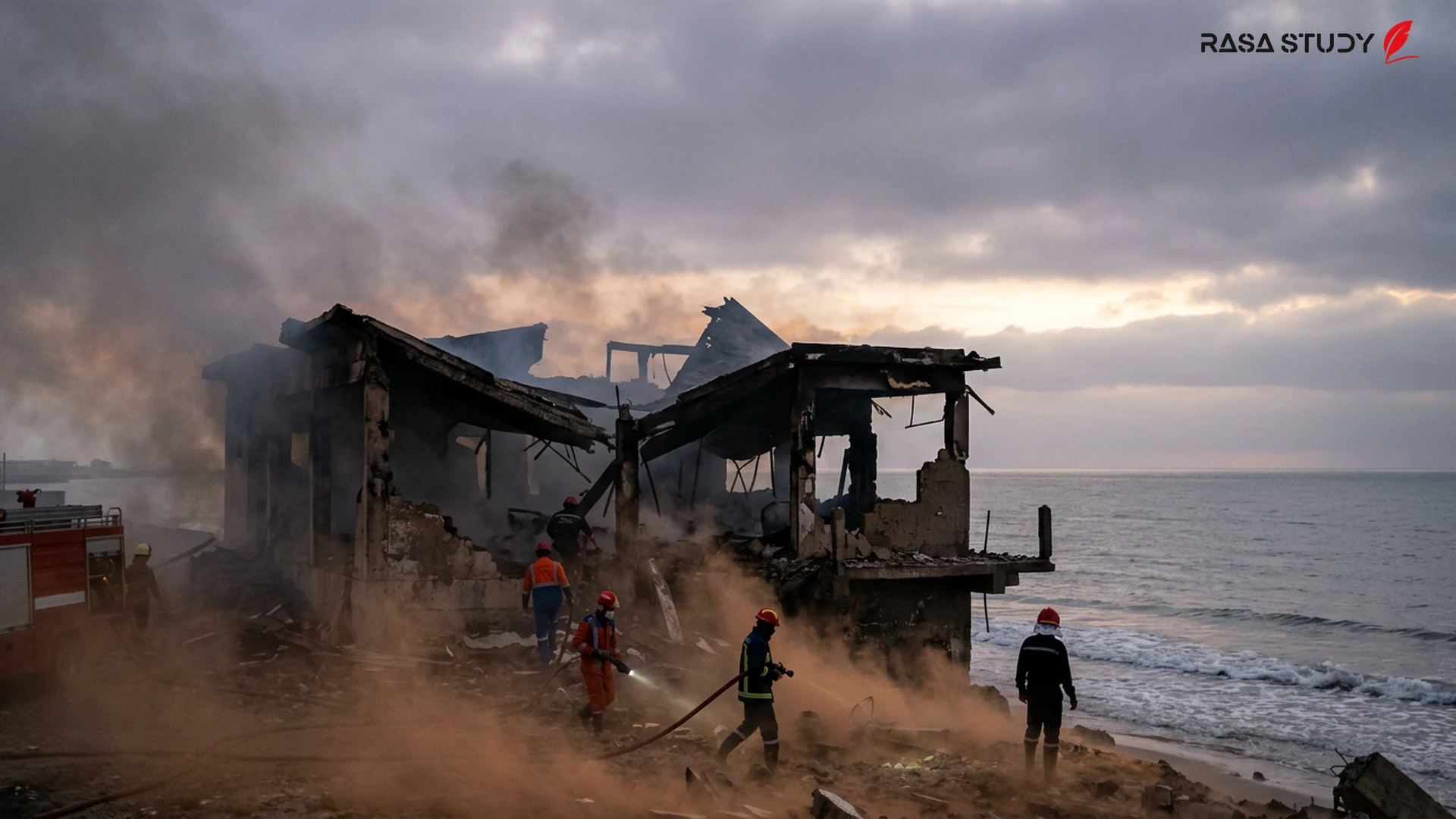
Following a new wave of United States airstrikes on Iranian infrastructure and the violation of the peace memorandum, the foreign ministers of Iran and Iraq emphasized the necessity of regional stability and preventing the expansion of conflicts during a telephone call.
On July 18 and 19, 2026, Seyed Abbas Araghchi, the Iranian Foreign Minister, discussed the latest regional developments and the consequences of recent U.S. military aggressions in a sensitive telephone call with his Iraqi counterpart, Fuad Hussein [1]. This conversation took place as the U.S. military launched a new wave of attacks against strategic targets on Iranian soil. During the call, Araghchi emphasized the need to maintain regional stability and security, describing Tehran-Baghdad relations as strategic and beyond external pressures.
Violation of the Islamabad Memorandum and Escalation of Conflicts One of the main axes of the conversation was Washington's repeated violation of the provisions of the "Islamabad Memorandum of Understanding." This memorandum, signed in late June 2026 with the aim of reducing tensions, has now effectively reached a deadlock following U.S. airstrikes on infrastructure in southern Iran [5]. According to official reports, recent U.S. attacks targeted communication bridges in Bandar Khamir and coastal monitoring facilities, resulting in civilian casualties and heavy damage [3]. In response to these actions, Iran has suspended its commitments within the framework of this memorandum and declared that the current priority is defending the country's territorial integrity [2].
Iraq's Proposal for a Regional Security Summit During this consultation, Iraqi Foreign Minister Fuad Hussein proposed holding an emergency meeting with the participation of Iran, Iraq, and member states of the Gulf Cooperation Council (GCC) [4]. This initiative, which received an initial welcome from Tehran, seeks to create an indigenous security structure in which regional countries, rather than extra-regional powers, take responsibility for maintaining peace. Baghdad is attempting to use this plan to distance itself from the center of military competition between Iran and the United States and play an active mediator role [1].
Critical Situation and International Reactions Simultaneously with these diplomatic developments, military clashes in the Strait of Hormuz and the Sea of Oman have intensified. Reports indicate that Iranian armed forces, in response to U.S. attacks, have targeted U.S. radar facilities and military bases in the region [3]. The Iranian Ministry of Health announced that dozens of citizens have been martyred or injured following the attacks of recent weeks. Internationally, China and Pakistan expressed deep concern over the current situation, calling for an immediate cessation of hostilities and a return to the negotiating table, although the sharp tone of Washington officials indicates the possibility of further escalation in the coming days [3].
The foreign ministers of Iran and Iraq consulted on the military crisis and the violation of the Islamabad Memorandum by the United States.
linkSources
- İran ve Irak dışişleri bakanları, ABD'nin İran'a yönelik saldırılarını ve bölgesel meseleleri görüştü — T24 (2026-07-18)
- Iran says MoU suspended after 'US violated its commitments' — Anadolu Agency (2026-07-19)
- Iran's Revolutionary Guards strike U.S. radar sites — The Hindu (2026-07-17)
- ابتکار عراق برای نشست امنیتی منطقهای با حضور ایران و کشورهای خلیج فارس — Iran International (2026-07-19)
- بیانیه وزارتخارجه درباره نقض دوباره تفاهم توسط آمریکا — Tabnak (2026-06-28)


