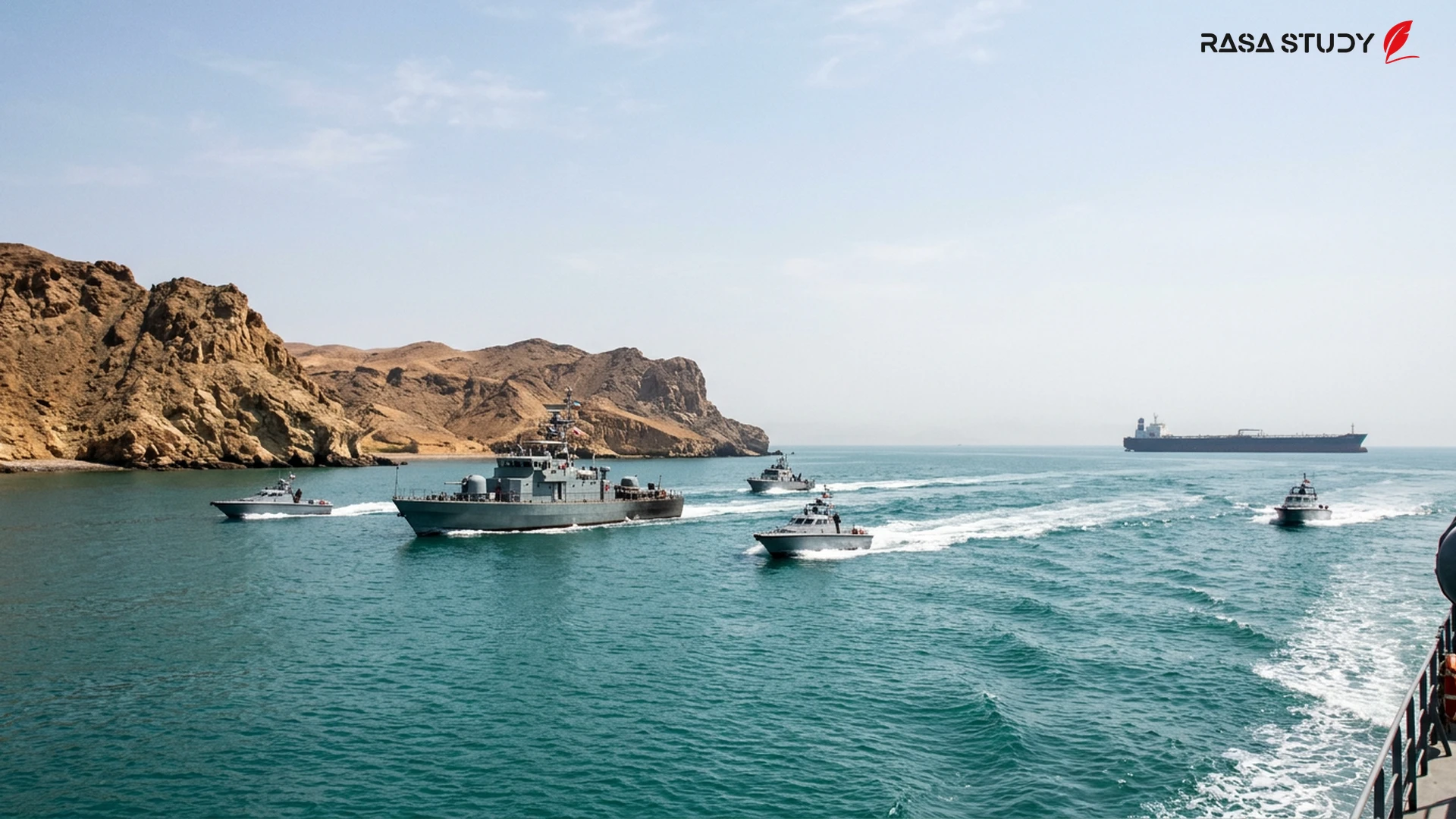
Following recent developments in the Persian Gulf, Iran has issued a new and cautionary message regarding the security of the Strait of Hormuz. This stance, coinciding with naval exercises, demonstrates Iran's high defensive readiness in this strategic waterway.
Dimensions of Iran's New Message in the Region On July 16, 2026, senior Iranian military and diplomatic officials once again emphasized the strategic importance of the Strait of Hormuz. This message, released through official media, clearly states that the security of this international waterway must be provided solely by regional countries. Iran warned that any intervention or military presence by extra-regional forces could jeopardize global energy stability [1]. These statements come as diplomatic tensions have escalated in recent weeks.
Naval Exercises and Display of Power Simultaneous with the issuance of this message, the Islamic Republic of Iran Navy and the Islamic Revolutionary Guard Corps have launched joint exercises near the mouth of the Strait of Hormuz. In these military drills, the latest coastal-to-sea missile systems and advanced reconnaissance drones were unveiled [2]. The goal of these actions is to send a clear message to global powers that Iran maintains full intelligence and operational oversight over all movements in this region. Field commanders emphasized that the security of the Strait of Hormuz is a non-negotiable "red line" for Iran.
International Reactions and Economic Consequences The release of this news immediately impacted global energy markets. Analysts believe that any signal of insecurity in the Strait of Hormuz, which serves as a transit point for a large portion of the world's crude oil, could cause prices to spike sharply [3]. Western countries and some regional allies have called for restraint, but Tehran maintains that the presence of foreign fleets is the primary cause of instability. This situation reflects the geopolitical complexities of 2026, where diplomacy and military power are inextricably linked.
Strategic Importance of Indigenous Security In its message, Iran once again emphasized indigenous security plans and called on neighboring countries to participate in a regional coalition without the interference of major powers [1]. This approach, part of Tehran's new defense doctrine this year, seeks to reduce reliance on foreign forces and strengthen bilateral cooperation with Persian Gulf countries. However, achieving this goal requires mutual trust-building and the reduction of long-standing political disputes in the region.
Iranian naval forces during the July 2026 exercises near the Strait of Hormuz
linkSources
- Iran's Strategic Warning in the Persian Gulf — IRNA (2026-07-16)
- Tensions Rise as Iran Conducts Naval Drills near Hormuz — Al Jazeera (2026-07-15)
- The Geopolitics of the Strait of Hormuz: A 2026 Perspective — Reuters (2026-07-14)


