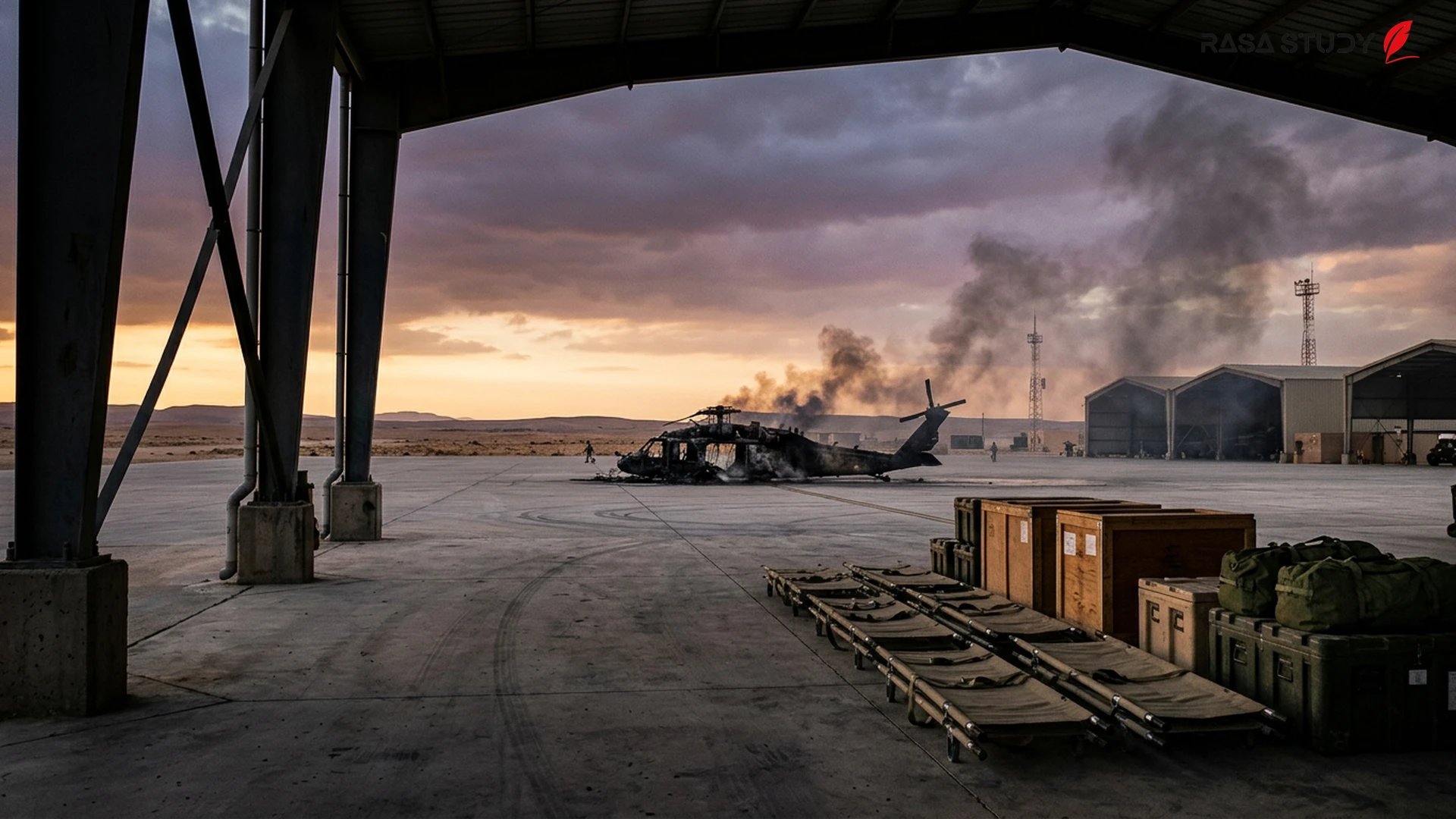
Following the seventh night of heavy clashes, Iran targeted strategic US bases in Saudi Arabia and Jordan with dozens of ballistic missiles and drones. This operation, met with regional air defense responses, has pushed tensions to an unprecedented level.
Today, Saturday, July 18, 2026, the Middle East was shaken by a new wave of Iranian missile and drone attacks against United States military positions in Saudi Arabia and Jordan. These attacks, which official news agencies named as part of phases 14 and 15 of operations "Saeqeh" and "Raad," were carried out in response to ongoing CENTCOM operations against Iranian infrastructure [1].
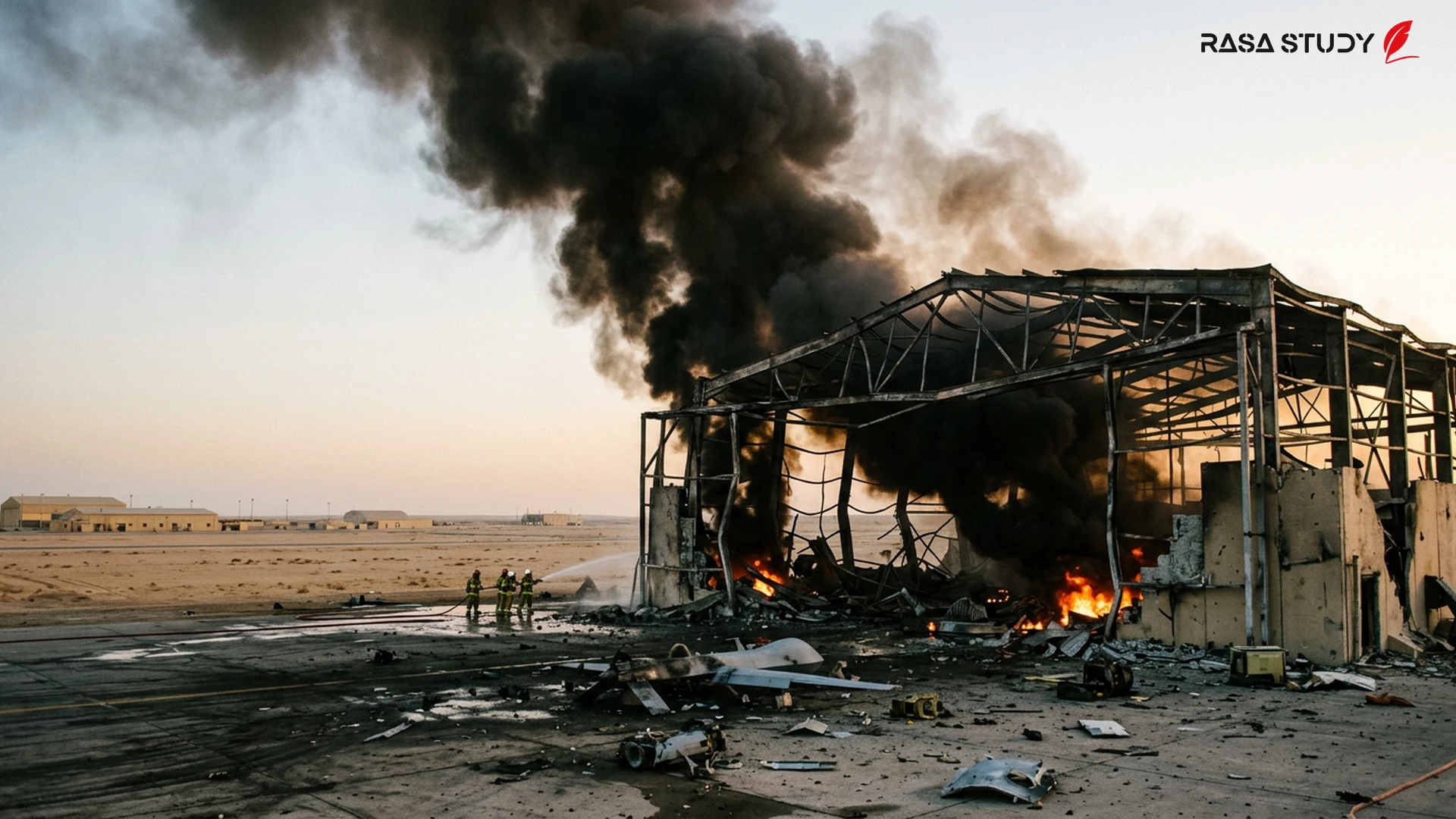
Details of Attacks on "Al-Kharj" and "Al-Azraq" Bases Reports published by Tasnim News Agency and other regional sources indicate that sirens sounded in the Saudi cities of Al-Kharj and Yanbu, as well as eastern regions of Jordan. The primary target in Saudi Arabia was the "Prince Sultan" Air Base south of Al-Kharj, which serves as a hub for US military refueling and transport aircraft [1]. In Jordan, the "Al-Azraq" Air Base and "Prince Hassan" Base were hit by precision strikes. The Army of the Islamic Republic of Iran announced in a statement that fuel tanks, ammunition depots, and MQ-9 drone hangars at these bases were severely damaged or destroyed [2].
Defense Responses and Reported Casualties The Jordanian military announced that its air defense units successfully intercepted and destroyed at least 10 Iranian missiles in the early morning hours. Jordanian officials emphasized that these actions were taken to protect national sovereignty and citizen safety, with debris falling in uninhabited areas [4]. Meanwhile, the Pentagon reported that since the start of the recent clashes this week, US troop casualties have reached 14 dead and over 400 wounded, though specific details of today's casualties are still being assessed [1].
Diplomatic Condemnations and State of Emergency Saudi Arabia issued a sharp statement condemning the attacks as a blatant violation of international law and good neighborliness. The Saudi Foreign Ministry emphasized its full support for brotherly nations including Kuwait, Bahrain, and Jordan [3]. Simultaneously, the United Arab Emirates declared solidarity with the targeted countries and called for an immediate halt to military escalations. This is described as the first direct attack attributed to Iran on targets near Saudi soil in four months [1].
Shock to Financial Markets and Energy Security The consequences of this conflict were immediately visible in global markets. The Tehran Stock Exchange index plummeted by 120,000 units, and global energy prices rose due to concerns over blocked transit routes in the Persian Gulf and the Red Sea [1]. Experts warn that the continuation of this situation could completely destroy the fragile economic stability in the region.
Reports indicate the firing of dozens of ballistic missiles and suicide drones toward bases hosting US forces in Jordan and Saudi Arabia.
linkSources
- İran'dan Suudi Arabistan ve Ürdün'e füze saldırıları — Tasnim News Agency (2026-07-18)
- حملات ارتش جمهوری اسلامی ایران به دو پایگاه امریکا در اردن و عربستان — Khabar Online (2026-07-17)
- Saudi Arabia condemns Iran's repeated attacks on Gulf and Jordan — Al Arabiya English (2026-07-16)
- Jordan intercepted 10 Iranian missiles: Military — Anadolu Agency (2026-07-18)