Following the collapse of the ceasefire and the escalation of military conflicts between Iran and the United States, Tehran issued a sharp warning, designating the vital infrastructure of Persian Gulf countries as retaliatory targets.
Tensions in the Persian Gulf region have reached a critical stage. On July 17, 2026, Iranian military officials explicitly stated that if the United States carries out its threats to attack Iranian bridges and power plants, no infrastructure in neighboring countries will be safe from retaliatory strikes [1]. This warning comes as direct clashes between American and Iranian forces have entered a new phase in recent days.
Threat of Total Destruction of Regional Infrastructure Colonel Ebrahim Zolfaghari, spokesperson for the Khatam al-Anbiya Central Headquarters, emphasized in a statement published by state media that in the event of any American aggression against Iranian civilian facilities, all remaining infrastructure in the region will be crushed under the "iron blows" of the Iranian armed forces [2]. He stated that these attacks would be such that it would be as if these facilities never existed. This direct threat has placed Kuwait, Bahrain, and the United Arab Emirates, which host American military bases, on maximum alert [4].
Collapse of the June Agreement and Blockade of the Strait of Hormuz The roots of these new tensions trace back to the collapse of the Memorandum of Understanding (MOU) signed on June 17, 2026. Following the failure of this agreement, Iran officially declared the Strait of Hormuz closed on July 11 [5]. In response, the Donald Trump administration reacted by re-establishing a naval blockade against Iranian ports and conducting airstrikes on positions in Bandar Abbas and Greater Tunb Island [3]. Donald Trump has warned that if Iran does not return to the negotiating table, he will target all of the country's power plants and bridges; a threat that has now met with Tehran's counter-response against regional countries.
Expansion of Conflict to Kuwait, Bahrain, and Jordan Field reports indicate that in the past 24 hours, Iran has fired several missiles and drones at military facilities in Kuwait, Bahrain, and Jordan [2]. The Kuwaiti military announced that its air defenses countered "sinful aggression" by Iranian drones. Simultaneously, the Bahraini Ministry of Interior has asked residents to stay near shelters [1]. On the other hand, the Houthi leader in Yemen has also entered the fray, threatening to target Saudi Arabian oil facilities if Riyadh intervenes [3].
Global Consequences and Diplomatic Deadlock Analysts believe the region is on the brink of an all-out war that could paralyze the global energy market. Given that only a few ships have managed to pass through the Strait of Hormuz in recent days, energy prices in global markets have fluctuated sharply [3]. While diplomatic efforts by countries such as Pakistan and Qatar continue to reduce tensions, both sides' insistence on their positions regarding control of the Strait of Hormuz has made reaching a peaceful solution difficult in the short term [2].
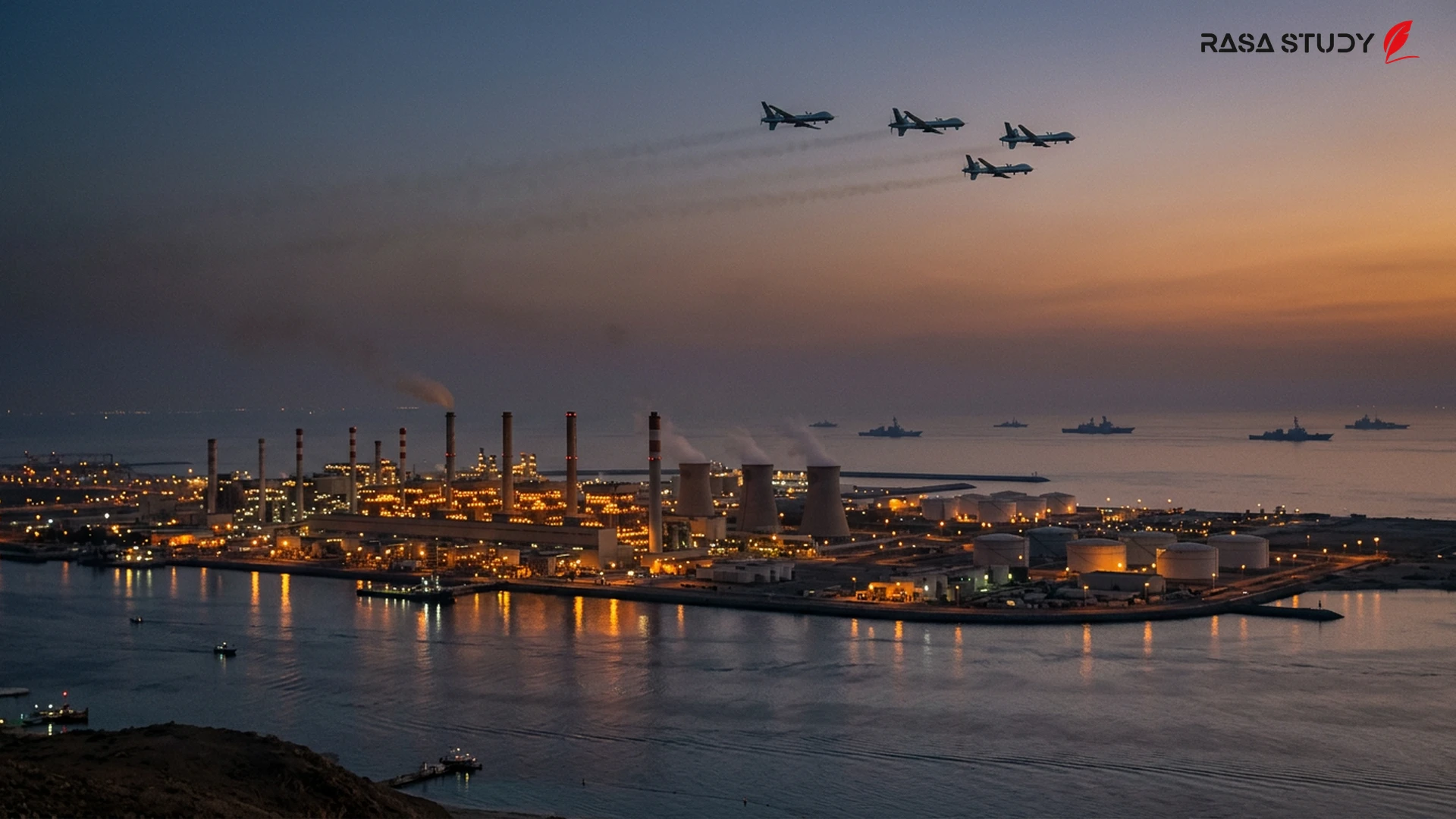
Increased military presence in the Persian Gulf alongside Iranian threats against regional energy infrastructure.
linkSources
- Iran threatens infrastructure of Persian Gulf nations as U.S. continues attacks — Washington Times (2026-07-16)
- Tehran threatens regional infrastructure if U.S. attacks Iran's — CBS News (2026-07-17)
- US-Iran fighting threatens to turn into all-out war — The Guardian (2026-07-16)
- İran Devrim Muhafızları, Körfez ülkelerinin altyapı tesislerini vurmakla tehdit etti — Sözcü / Ege Alternatif (2026-07-16)
- Risk Barometer: Escalation Window Rapidly Closing in the Gulf — Global Guardian (2026-07-16)


