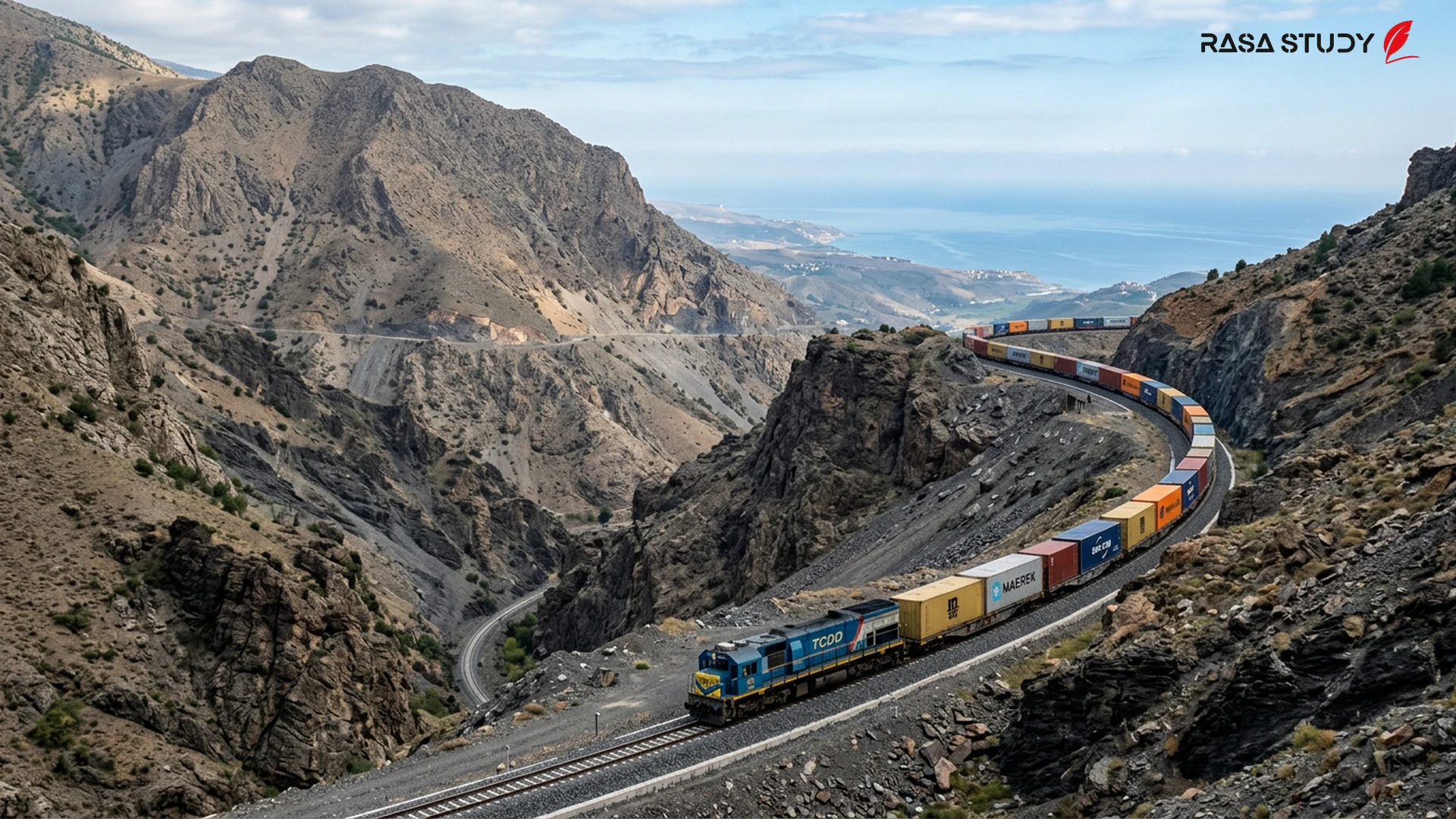
During recent diplomatic meetings between high-ranking officials from Iran and Turkey, the strategic "Eastern Black Sea Railway" project was approved as the central axis of transit and economic cooperation to bypass regional maritime crises.
Reviving the Modern Silk Road in the Heart of the Black Sea In recent days, coinciding with the 5th Maritime Summit in Istanbul, the issue of connecting Iran's rail to the Eastern Black Sea region has once again topped the news. According to reports published by the media outlet "Haber 61," in recent bilateral meetings between representatives of Iran and Turkey, both parties emphasized the need to accelerate the implementation of the Eastern Black Sea Railway project [1]. This project, which is considered part of the large "Development Road" corridor, is intended to connect strategic northern Turkish ports such as Trabzon and Rize to Iran's national rail network.
Abdulkadir Uraloğlu, Turkey's Minister of Transport and Infrastructure, noted in a recent speech that Turkey is seeking to create alternative routes to the Strait of Hormuz and strengthen the "Middle Corridor" [2]. This approach demonstrates Ankara's determination to become a regional logistics hub in interaction with its eastern neighbors, particularly Iran.
Technical Details and Strategic Route of the Project The Eastern Black Sea Railway project involves connecting the rail line from Erzincan to Gümüşhane and finally to the Port of Trabzon. This route will connect within Iranian territory to the new "Marand-Cheshmeh Soraya" rail line, for which preliminary agreements were finalized in late 2025 [4]. This 200-kilometer rail line, with a budget exceeding $1.6$ billion, will be the shortest route for transporting Iranian and Central Asian goods to Europe via the Black Sea.
Experts believe that with the completion of this chain, the transport time for goods between Iran and European ports will decrease by up to 30%. Furthermore, this project acts as a complement to the Baku-Tbilisi-Kars railway line and significantly increases the region's transit capacity [1].
Pivotal Role in Global Transit Security Given the recent tensions in the Persian Gulf and the Red Sea, the security of alternative routes has gained double importance. In a recent phone call between the defense officials of the two countries on July 3, 2026, the security of transport corridors was emphasized as part of regional stability [3]. Both Iran and Turkey seek to reduce dependence on high-risk maritime routes, and the Eastern Black Sea Railway can serve as a vital artery to guarantee supply chain security.
Economic Consequences for Tehran and Ankara The implementation of this project will not only increase transit foreign exchange earnings for Iran but will also lead to an economic boom in the northeastern provinces of Turkey. The Port of Trabzon, which has long been the gateway for Iran's trade with Europe, will regain its historical position by connecting to the rail network [2]. It is expected that with the operationalization of this plan, the volume of bilateral trade, which targets $30$ billion, will grow more rapidly. Officials from both countries hope that the executive phases of this project will be pursued with greater seriousness by the end of 2026 to respond to the growing needs of international trade in the Eurasia region.
Eastern Black Sea Railway Project; A new step in Iran-Turkey transit cooperation in 2026
linkSources
- İran Türkiye zirvesinde Doğu Karadeniz Demir Yolu! — Haber61 (2026-07-02)
- Türkiye and Iran discuss regional transport corridors at Maritime Summit — Anadolu Agency (2026-07-02)
- Iran, Turkey Stress Regional Security and Logistics Cooperation — Tasnim News Agency (2026-07-03)
- Iran and Turkey agree to begin constructing new joint rail link — AFP / Times of Israel (2025-11-30)


