Following months of military tension, reports today, June 14, 2026, indicate unprecedented diplomatic movements by Pakistan, Turkey, and Egypt to mediate between Tehran and Washington and reach a sustainable agreement.
Intensive Efforts by Islamabad and Cairo to De-escalate In the past few hours, regional diplomacy has reached its peak. Ishaq Dar, the Foreign Minister of Pakistan, and Badr Abdelatty, his Egyptian counterpart, reviewed the latest progress toward an understanding between Iran and the United States in their second phone call within 24 hours [2]. Pakistan, which has played a key role in establishing a ceasefire since April 2026, is now working alongside Egypt and Turkey to draft a final text to end the conflicts. Shehbaz Sharif, the Prime Minister of Pakistan, stated in a declaration that both sides are close to a "final and agreed text" and that peace is more accessible than ever before [3].
Details of the 14-Point Plan from Mehr News Agency Mehr News Agency, in an exclusive report, has published details of a 14-point draft memorandum that is said to be the main focus of ongoing talks [1]. According to this report, the plan includes items such as the formation of a monitoring mechanism for the agreement's implementation, final confirmation by a Security Council resolution, and the release of a portion of Iran's frozen assets. A significant point in this draft is the focus on Iran's economic reconstruction and the suspension of oil sanctions in exchange for nuclear program management, while missile and regional issues have been removed from the agenda for now to pave the way for an initial agreement [1].
The Role of Turkey and the Quadrilateral Mechanism (R-4) Turkey, as another major player in this field, is part of the so-called "Regional Quad" (R-4) alongside Saudi Arabia, aimed at preventing the expansion of war and protecting energy security in the Persian Gulf [3]. Using its diplomatic influence, Ankara has exchanged sensitive messages between the Iranian negotiating team led by Abbas Araghchi and Washington's special envoys. These efforts are particularly focused on reopening the Strait of Hormuz, which has been blocked since the start of the conflicts, causing a crisis in the global energy supply chain [2].
Ambiguity in Signing Time; Washington Optimistic, Tehran Cautious Despite the optimism expressed by US President Donald Trump, who claimed the agreement might be signed as early as today (Sunday), Iranian officials are proceeding with more caution [4]. The spokesperson for the Iranian Ministry of Foreign Affairs, while confirming significant progress, announced that the text of the agreement still requires careful review by the country's high-level institutions and the exact time of signing is not yet certain [1]. However, diplomatic sources in Islamabad believe that preparations for an "electronic signature" or a technical-level ceremony are underway for the coming days [4].
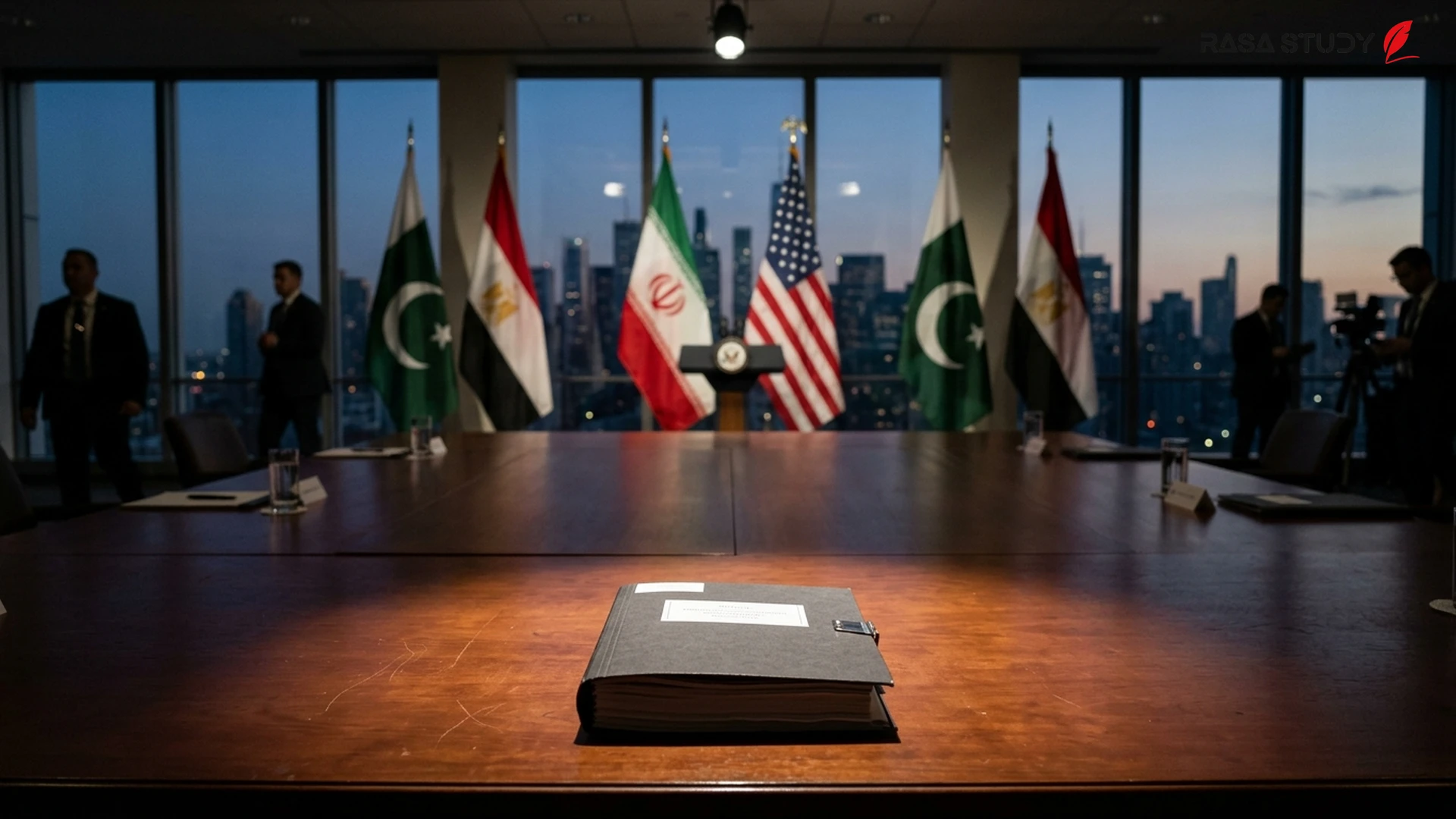
Diplomatic efforts in Islamabad and Cairo to finalize the draft agreement between Iran and the United States.
linkSources
- انتشار جزئیات جدید از پیشنویس تفاهمنامه ایران و آمریکا — خبرگزاری مهر (2026-06-12)
- Pakistan, Egypt hold second call on US-Iran deal prospects — Yeni Şafak (2026-06-14)
- US and Iran have agreed to wording of a deal to end their war, Pakistan's prime minister says — The Washington Post (2026-06-13)
- US, Pakistan Confirm Iran MoU Signing on Sunday — The Media Line (2026-06-14)