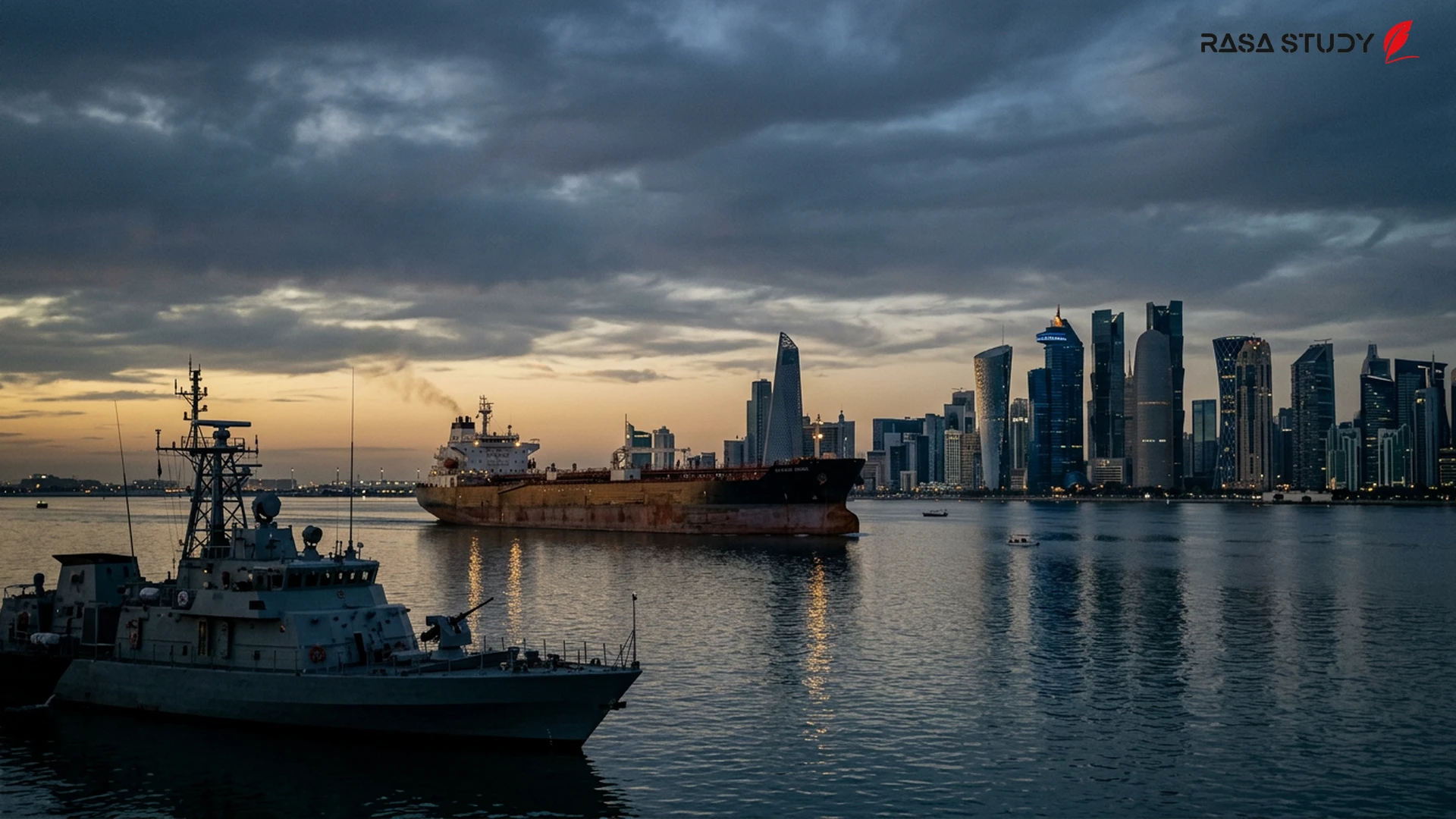
Following the escalation of military tensions in the Persian Gulf, diplomatic reports on July 5, 2026, indicate that Iran and the United States, mediated by Qatar, have agreed to halt reciprocal attacks and return to the negotiating table.
Return to Diplomacy Amid Military Tensions In recent days, the Persian Gulf region witnessed heavy exchanges of fire between American and Iranian forces, pushing the 60-day ceasefire memorandum signed in Switzerland (known as the Lucerne Memorandum) to the brink of total collapse. However, reports released on July 5, 2026, indicate that officials from both countries, through the active mediation of Qatar and Pakistan, have agreed to an immediate halt of all "kinetic military activity" [1]. This emergency agreement was reached after the United States targeted positions inside Iran, and in response, American bases in Kuwait and Bahrain were targeted by retaliatory attacks [5]. ## Doha Meeting; Indirect Diplomacy and Presence of Special Envoys Technical and political negotiations in Doha have been held with the presence of high-level delegations. Although the spokesperson for the Iranian Ministry of Foreign Affairs has denied direct negotiations at the political level, diplomatic sources confirm that messages are continuously exchanged between the parties through Qatari and Pakistani mediators [3]. The presence of key figures such as Steve Witkoff, the US Special Envoy, in Doha indicates Washington's seriousness in preventing a full-scale war. The main focus of this meeting is the precise implementation of the 14-point Memorandum of Understanding previously signed in June [4]. ## Strait of Hormuz and the $6 Billion Assets Deadlock One of the main points of contention in the Qatar negotiations is the implementation of agreements related to maritime security in the Strait of Hormuz. According to the Lucerne Memorandum, Iran is committed to ensuring the safe passage of commercial vessels, and in return, the United States is committed to lifting the blockade of Iranian ports [2]. However, Tehran emphasizes that until it gains full access to its $6 billion in released assets in Qatari banks, it will suspend some technical conditions. Qatari officials have announced that positive progress has been made in removing banking obstacles, which could pave the way for more lasting stability [3]. ## Establishing a Hotline Between the IRGC and the US Military One of the significant and tangible achievements of the recent negotiations is the agreement to activate a "Hotline" between the United States military command and the Islamic Revolutionary Guard Corps. The goal of this measure is real-time coordination in maritime traffic and the prevention of misunderstandings that led to unintended clashes in recent weeks [1]. Analysts believe that activating this direct military communication channel, even in the absence of formal diplomatic relations, can minimize the risk of confrontation and give diplomats more time to finalize a comprehensive permanent agreement [4].
Doha has once again become the center of gravity for diplomacy to reduce tensions between Tehran and Washington.
linkSources
- توافق ایران و آمریکا بر سر توقف حملات/ دور جدید مذاکرات در دوحه — Tabnak (2026-06-29)
- US and Iran agree to halt Hormuz attacks, hold talks in Qatar — Times of Israel (2026-06-29)
- Qatar and Pakistan say positive progress made in US-Iran talks — CBS News (2026-07-01)
- Where the U.S. and Iran stand after Doha negotiations — Japan Times (2026-07-03)
- ایران و آمریکا بر سر توقف موقت حملات توافق کردند — Radio Farda (2026-06-29)


