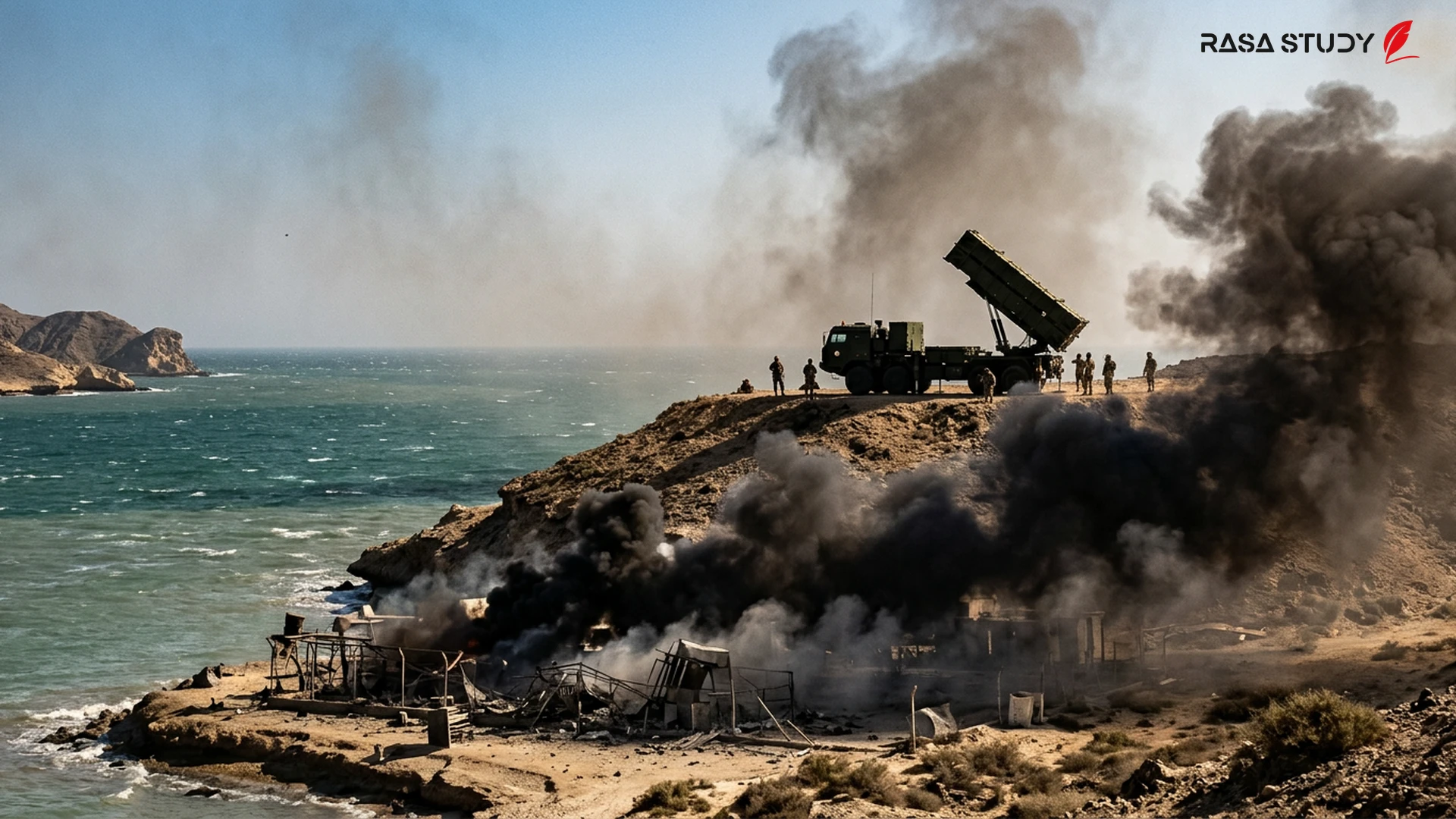
Following the escalation of conflicts in the Strait of Hormuz and extensive United States airstrikes on Iranian soil, Tehran officials sent decisive messages, emphasizing their right to retaliate and refusal to surrender to Washington's pressure.
Breakdown of the Ceasefire and Start of a New Round of Conflicts As the Persian Gulf region experiences one of its most tense days today, July 11, 2026, reports indicate that the fragile ceasefire signed last June has effectively collapsed. US President Donald Trump, announcing the official end of the ceasefire, ordered extensive airstrikes hitting approximately 170 military targets on Iranian soil [1]. These attacks, which Washington considers a response to the targeting of commercial vessels in the Strait of Hormuz, have met with a sharp reaction from Iranian military and political officials.
Ghalibaf's Message: Resistance Until the Last Moment Mohammad Bagher Ghalibaf, Speaker of the Islamic Consultative Assembly, emphasized in meetings with foreign officials that Iran will never surrender to military pressure. According to a Bloomberg HT report, Ghalibaf stated that Washington violated previous agreements by conducting these attacks and Tehran no longer has any trust in US diplomatic promises [2]. He also noted that the war will not end with Iran's surrender and any aggression will be met with the firm standing of the nation. In his remarks, Ghalibaf also messaged US Vice President James D. Vance that Iran will not back down from its right to legitimate defense [2].
Zolghadr's Warning Regarding Targeting Infrastructure Simultaneously, Mohammad Bagher Zolghadr, Secretary of Iran's Supreme National Security Council, warned that any attack on the country's vital infrastructure would be met with a reciprocal and regrettable action [3]. In a message addressed to the Trump administration, he announced that Iran's armed forces are ready to target US bases in the region as well as the interests of its allies if aggression continues. Zolghadr emphasized that the policy of "commitment for commitment" is the basis of Iran's action and any breach of promise by Washington will result in a proportionate response [3][5].
Diplomacy in the Shadow of Threats and Regional Mediation Despite the prevailing wartime atmosphere, diplomatic efforts to prevent an all-out war continue. Qatar and Pakistan, as the main mediators, are consulting with both sides to return to the negotiating table [1][4]. However, the Iranian Ministry of Foreign Affairs has denied any official request for negotiations with the Trump administration under current conditions and described the recent attacks as "war crimes" [5][4]. According to published statistics, attacks over the past two days have resulted in the deaths of at least 14 people and the injury of dozens more in Iran's coastal areas, which has doubled public anger during the funeral of the late Iranian leader in Mashhad [1].
Mohammad Bagher Ghalibaf, Speaker of the Iranian Parliament, warning the United States about the consequences of violating agreements and recent airstrikes.
linkSources
- US holds fire on Iran after 2 days of strikes; Khamenei buried — Fox News (2026-07-11)
- İran'dan ABD'ye misilleme mesajı — Bloomberg HT (2026-07-10)
- Top Official Warns of Retaliation for Attacks on Iran's Infrastructure — Tasnim News Agency (2026-07-10)
- Iran condemns fresh US strikes, warns of retaliation — Tehran Times (2026-07-10)
- Iran denies requesting talks with US, warns of 'reciprocal' response — Anadolu Agency (2026-07-10)


