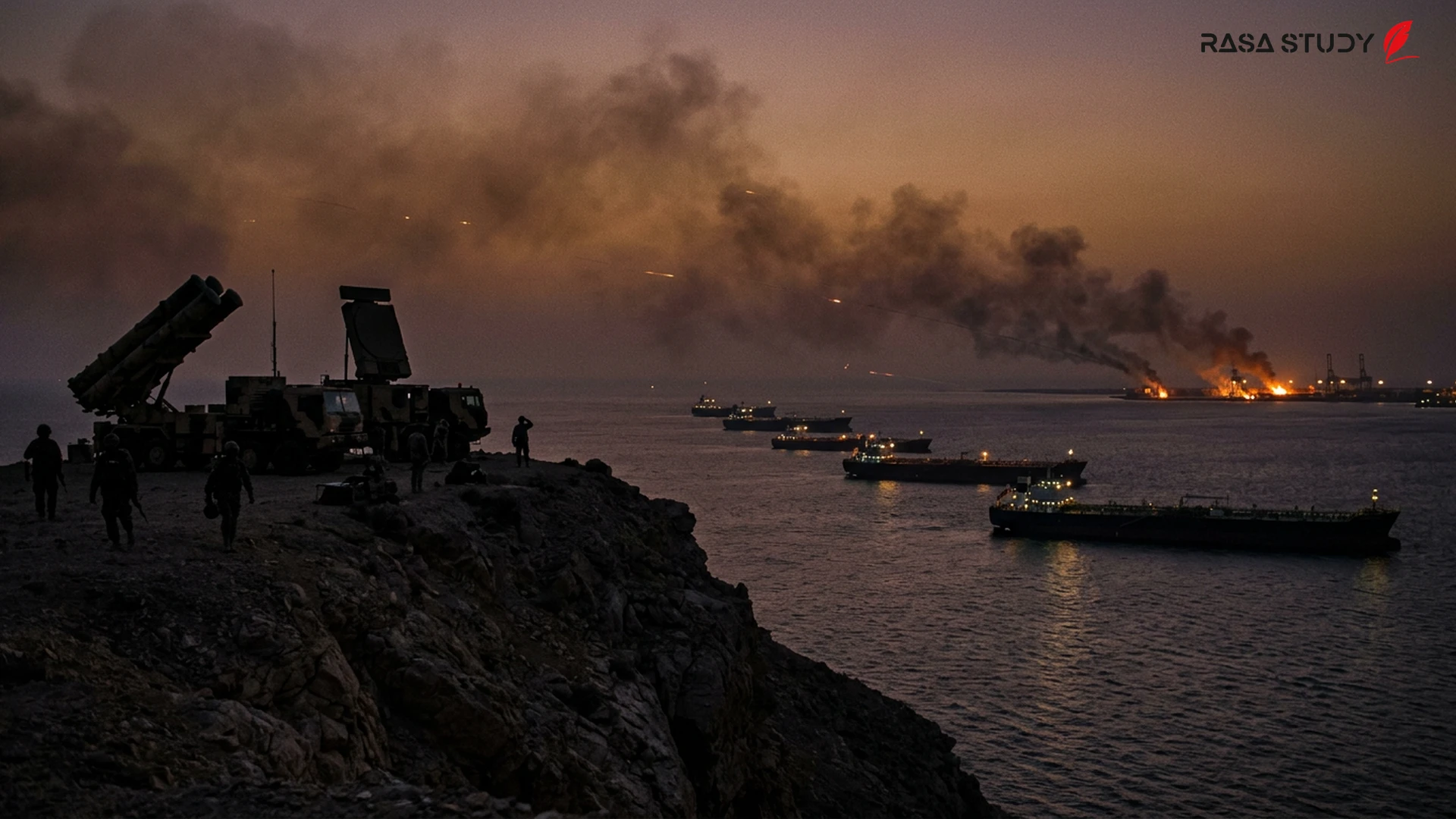
With the collapse of the ceasefire agreement and the continuation of US airstrikes, Iranian military officials described the Strait of Hormuz as an "invincible red line" and issued a serious warning against any intervention in this strategic waterway.
Tension in the World's Energy Jugular; Collapse of Agreements On July 17, 2026, tensions in the Persian Gulf region reached a boiling point. Colonel Ebrahim Zolfaghari, spokesperson for the Khatam al-Anbiya Central Headquarters, stated in a clear announcement that Iran will under no circumstances allow US intervention in the Strait of Hormuz [1]. He described this strategic waterway as the Islamic Republic's "invincible red line." These remarks come as the temporary memorandum signed last month to establish a ceasefire has completely collapsed due to what Iran calls "US lack of commitment" [2].
Sixth Night of Airstrikes and Reciprocal Responses Field reports indicate that US forces have carried out extensive attacks against targets on Iranian soil for the sixth consecutive night. US Central Command (CENTCOM) confirmed that missile sites, coastal radars, and command centers in areas such as Bandar Abbas, Ahvaz, and Qeshm Island were targeted [1]. In response, Iran has retaliated by launching missiles and drones at US military bases and its allies in Kuwait, Bahrain, and Jordan [2]. This extensive exchange of fire has sharply increased concerns about a full-scale regional war that could engulf the entire Persian Gulf.
Threat to Regional Infrastructure and Deterrence Strategy One of the most serious parts of Iran's recent warning is the threat to target infrastructure across the entire region if attacks continue. Military officials in Tehran warned that if US President Donald Trump carries out his threats to attack Iran's power plants and bridges, Iran will attack all energy and transit infrastructure throughout the Persian Gulf basin [1][3]. Brigadier General Mohammad Ekraminia, an army spokesperson, emphasized that Iran has the ability to control the Strait of Hormuz from any point on its territory, and this matter does not depend solely on coasts and islands [3].
Global Energy Crisis and Diplomatic Deadlock The practical blockage of the Strait of Hormuz directly targets global energy security. Fatih Birol, Executive Director of the International Energy Agency, warned that if the flow of oil through this strait does not improve soon, the world will face an unprecedented security crisis [2]. Currently, crude oil prices have risen due to the return of the naval blockade and conflicts, and global markets are on high alert. Iran emphasizes that the only way to safely reopen this waterway is for the US to adhere to the provisions of the 14-point memorandum and for foreign forces to withdraw from the region [3].
The Strait of Hormuz, through which about one-fifth of the world's oil passes, has now become the main focus of military conflict between Iran and the United States.
linkSources
- Iran warns US over Strait of Hormuz, vows retaliation — Gulf News (2026-07-17)
- Global energy security under threat as US-Iran conflict escalates — Al Jazeera (2026-07-17)
- Iran Warns Strait of Hormuz Is a 'Red Line' and Will Resist Until the End — Insurance Journal (2026-07-16)


