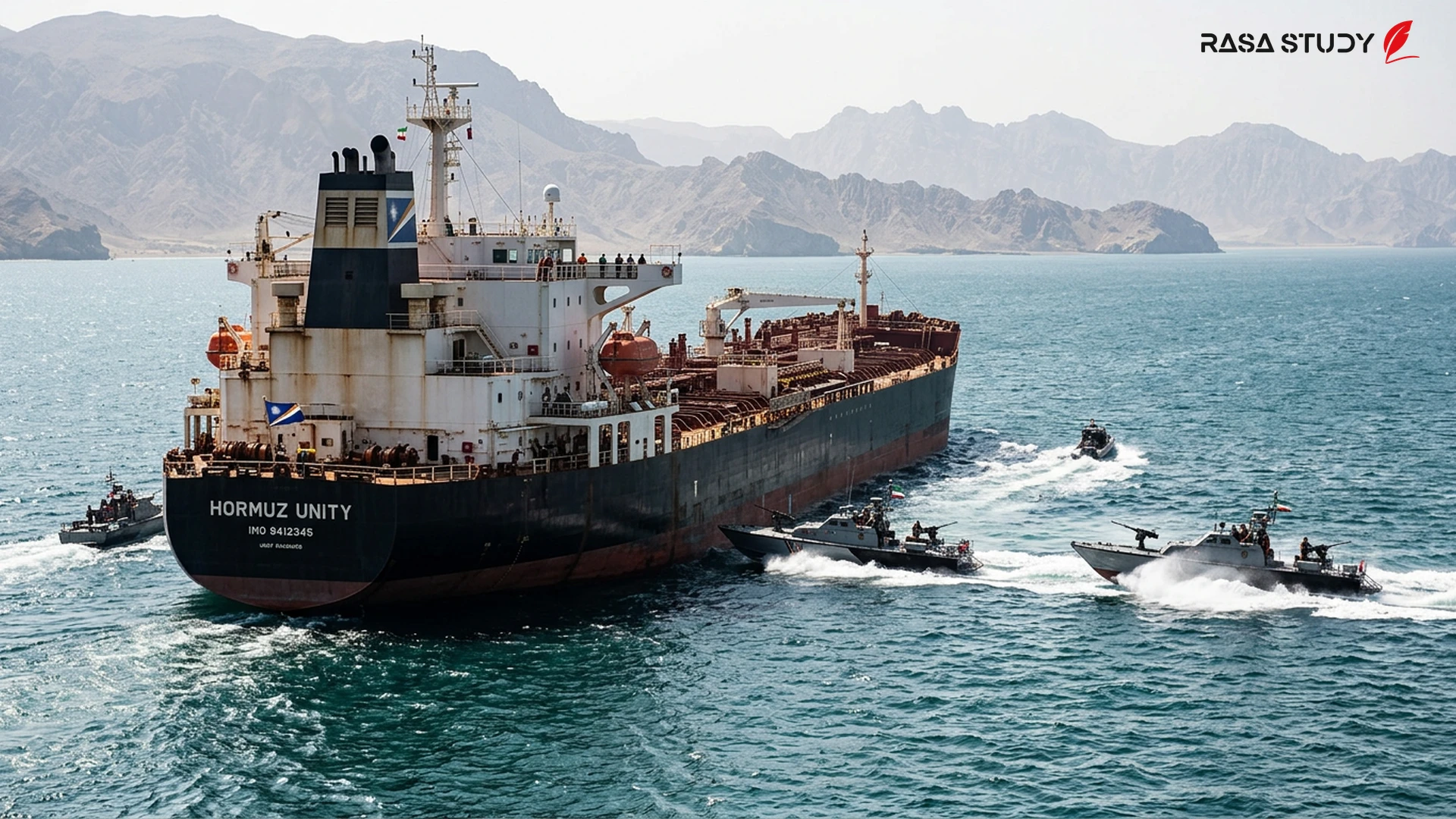
Following escalating maritime tensions in the region, the Islamic Revolutionary Guard Corps (IRGC) Navy today, June 26, 2026, stopped three foreign tankers attempting to pass through unauthorized routes in the Strait of Hormuz and forced them back into the Persian Gulf.
Confrontation in the Strait; Turning Back Violating Tankers
Reports from news sources on June 26, 2026, indicate that the Islamic Revolutionary Guard Corps Navy (DMO) has stopped three foreign tankers attempting to cross the Strait of Hormuz without necessary coordination. According to the Turkish media outlet "Ege'de Sonsöz," these tankers were forced to change course and return to Persian Gulf waters after receiving serious warnings from Iranian forces [1]. This action took place as tensions in this vital waterway reached a peak and surveillance of vessel traffic has intensified significantly.
War of Corridors; Why Does Iran Consider New Routes Illegal?
The root of this new conflict lies in the announcement of alternative routes for ship transit. The IRGC Navy stated in an official announcement that certain international authorities, without coordination with the Islamic Republic of Iran, have proposed new corridors in the southern Strait of Hormuz (near the coast of Oman) for ship passage [4]. Iranian officials described these routes as "illegal and dangerous," emphasizing that the only authorized path for passage is the corridors designated by Tehran in the northern section of the strait [2]. According to newly notified regulations, all vessels are required to perform necessary coordination via Channel 16 with the Iranian Navy before entering the strait [5].
Shadow of War on Maritime Security and Global Reactions
This incident occurred just one day after an attack on a Singapore-flagged commercial vessel near the coast of Oman, which led the International Maritime Organization (IMO) to suspend sailor evacuation operations in the area due to security risks [3]. International media reports that ship tracking data (MarineTraffic) shows confusion among regional maritime traffic; some ships have diverted their course northward, while others have preferred to avoid entering the strait altogether [5]. This situation has presented maritime security in one of the world's most important energy chokepoints with an unprecedented challenge.
Economic Consequences and Oil Market Fluctuations
The stoppage of these three tankers immediately impacted global energy markets. Although oil prices fluctuated in early Friday trading due to some stranded tankers leaving the area, experts warn that the continuation of this informal blockade and Iran's strict coordination requirements could sharply increase insurance and maritime transport costs [4]. Given that approximately 20 to 30 percent of the world's oil passes through this route, any long-term disruption could lead to a price shock in global markets [2]. International observers are now awaiting a potential diplomatic or military response from the United States and its allies to these Iranian deterrent actions.
The Strait of Hormuz on June 26, 2026; the new focal point of maritime tensions between Iran and international powers.
linkSources
- Hürmüz'den izinsiz geçen 3 tanker durduruldu — Ege'de Sonsöz (2026-06-26)
- İran: Hürmüz'den izinsiz geçmek isteyen üç tanker durduruldu — Bloomberg HT (2026-06-26)
- IRGC Navy warning forces three oil tankers to turn back in Strait of Hormuz — DAWN (2026-06-26)
- ۳ نفتکش متخلف خارجی که قصد عبور غیرمجاز از تنگه هرمز را داشتند به خلیج فارس بازگردانده شدند — Eghtesadnews (2026-06-26)
- Three tankers turn back in Strait of Hormuz after IRGC warning — CBS News (2026-06-26)


