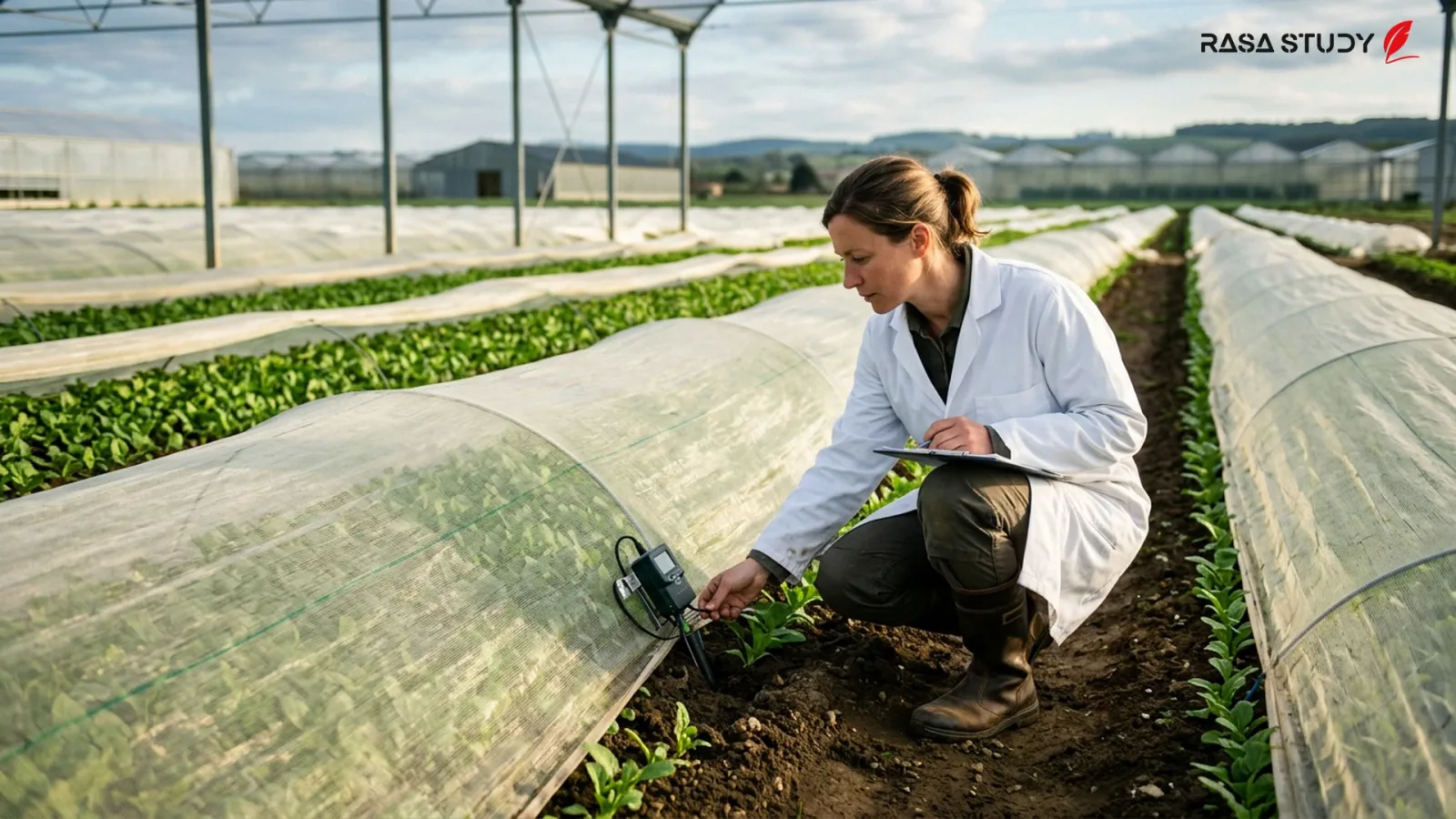
The Council of Higher Education (YÖK) has allocated a special budget through the ADEP support program to the groundbreaking "Smart and Sustainable Agrotextiles" project at Istanbul Technical University (İTÜ) to bring agricultural productivity to a new level.
In recent years, the integration of advanced technologies with the agricultural sector has become a strategic priority for developed countries. In this regard, the Council of Higher Education (YÖK) has announced its official support for Istanbul Technical University's (İTÜ) new project titled "Smart and Sustainable Agrotextiles" through the Research Universities Support Program (ADEP) [1]. This project is designed to reduce environmental impacts and increase crop yields through the use of advanced textile materials.
Revolutionizing Agriculture with İTÜ's New Technologies Istanbul Technical University, which has always been at the forefront of technological innovation in Turkey, is now focusing on "agrotextiles." These textiles are not merely simple covers for plant protection; they are equipped with sensors and shape-shifting materials that can accurately monitor environmental conditions [1]. According to reports published by academic sources, this project seeks structures that can identify soil moisture levels, ambient temperature, and even the presence of pests, providing appropriate responses [3].
The Role of the ADEP Program in Developing Academic Research The ADEP program, managed by YÖK, is specifically designed to strengthen the research capacity of Turkey's top universities. The allocation of funding to İTÜ's smart textiles project demonstrates the strategic importance of food security and water resource management in government macro-plans [2]. This financial support allows researchers to produce industrial-scale prototypes of these textiles and conduct extensive field tests in various agricultural regions of Turkey. This cooperation between government and academic institutions is expected to smooth the path for the commercialization of knowledge-based products [2].
Features of Smart and Sustainable Agrotextiles One of the key aspects of this project is the focus on sustainability. The textiles produced in this plan are made from biodegradable and recycled materials so that they do not harm the soil after their useful life [3]. Furthermore, the "smart" nature of these textiles helps farmers minimize the consumption of water and chemical pesticides. For example, these textiles can release stored moisture during dry soil conditions or signal the exact harvest time by changing color [1]. This approach not only reduces production costs but also improves the quality of the final products.
Future Outlook and Economic Impacts With the successful implementation of this project, Turkey could become one of the main exporters of agrotextile technologies in the region. Experts believe that the combination of İTÜ's technical knowledge and YÖK's structural support has the potential to create a new ecosystem in the textile and agricultural industries [3]. This project will benefit not only small-scale farmers but also drive large agribusiness companies toward using smart solutions to remain competitive in the global market.
İTÜ's new project, supported by YÖK-ADEP, seeks to integrate textile technology and sustainable agriculture.
linkSources
- İTÜ’nün ‘Akıllı ve Sürdürülebilir Tarım Tekstilleri’ Projesine YÖK-ADEP Desteği — İTÜ Haberler (2026-06-22)
- Araştırma Üniversiteleri Destek Programı (ADEP) 2026 Proje Listesi — Yükseköğretim Kurulu (YÖK) (2026-06-20)
- Tarım Tekstillerinde Akıllı Dönem: İTÜ Projesi ve Sürdürülebilirlik — Sanayi Gazetesi (2026-06-23)