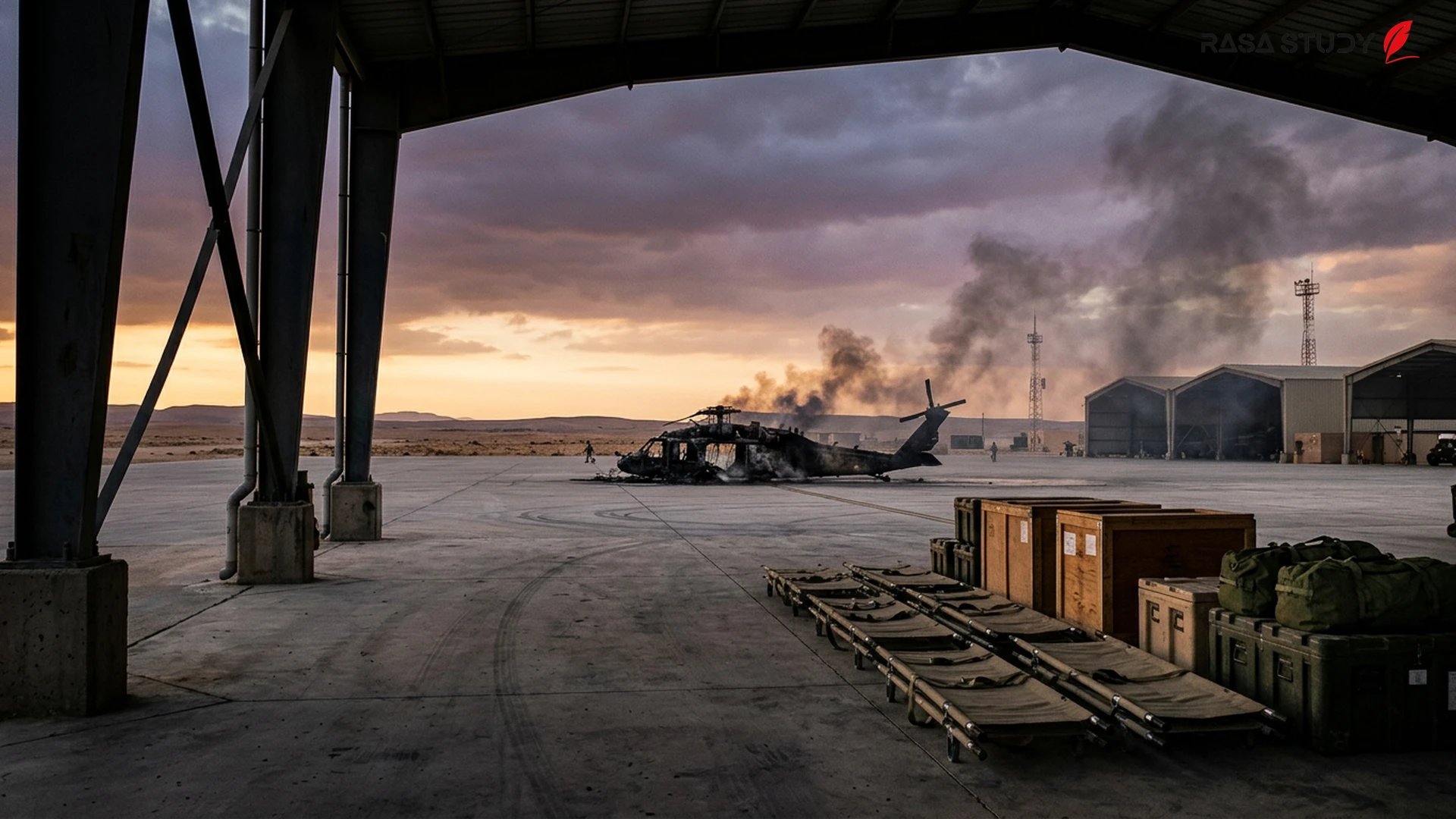
The Jordanian army announced today, July 14, 2026, that its air defenses successfully intercepted and destroyed four ballistic missiles that entered the kingdom's airspace from Iranian territory.
Details of the Defense Operation in Jordanian Skies
According to official reports issued by the General Command of the Jordanian Armed Forces, the country's air defenses succeeded in the early hours of Tuesday, July 14, 2026, in identifying and destroying four missiles launched from Iran before they hit their targets [1]. The Jordan News Agency (Petra), quoting a military source, reported that the operation was carried out with "high efficiency" and within the framework of standard operating procedures to protect the country's sovereignty and the security of its citizens [2].
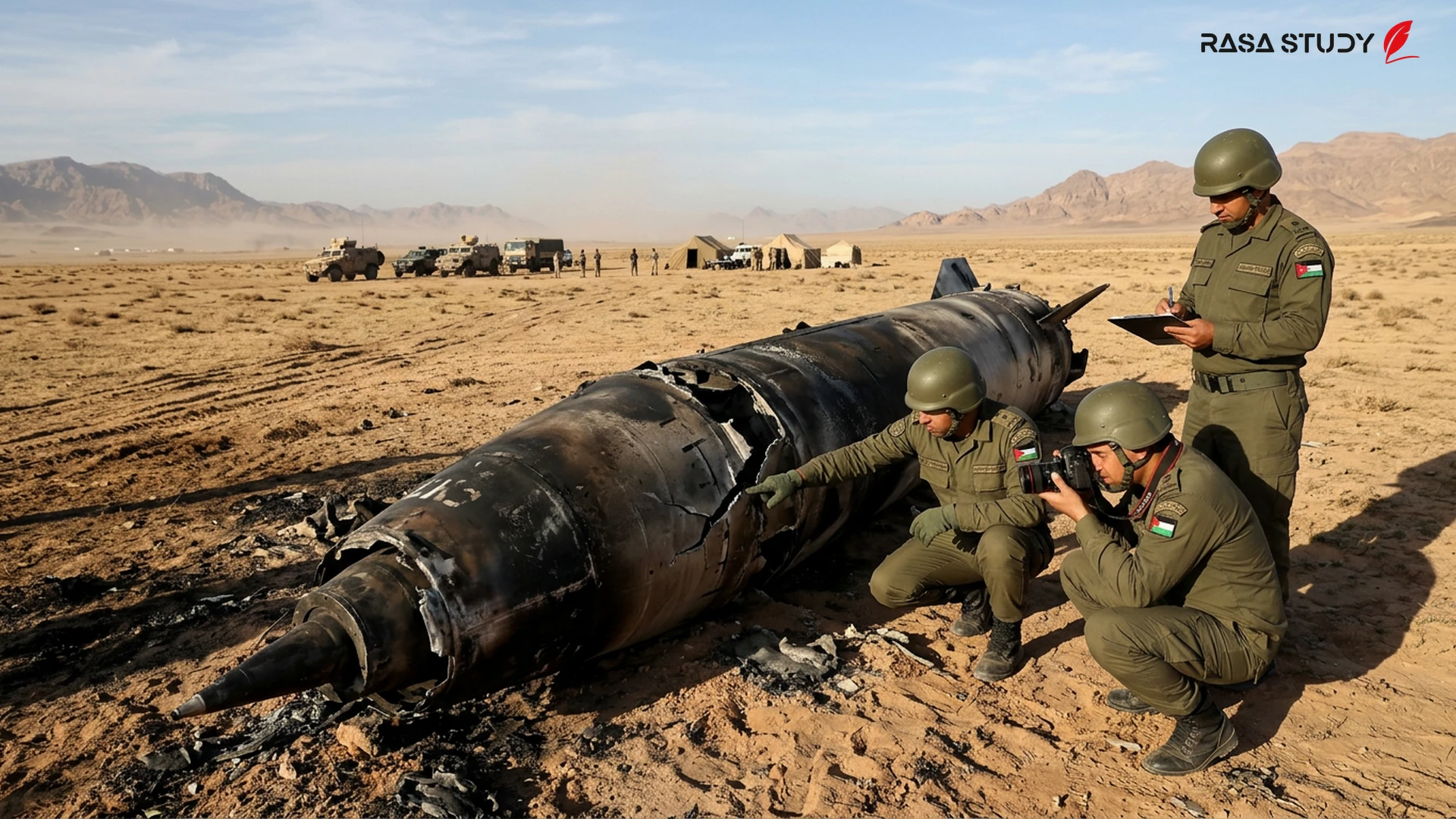
The military source emphasized that fragments of the destroyed missiles fell in various areas of Jordanian territory, but fortunately, no casualties or material damage were reported. Royal engineering teams were immediately dispatched to the crash sites to secure the areas and collect the missile remains [3].
IRGC Claims and Targeting of US Bases
In contrast, Iran's Islamic Revolutionary Guard Corps (IRGC) issued a statement announcing that it had fired several ballistic missiles toward the "Muwaffaq Salti" air base in Jordan. Iranian officials claim that this base is used by US forces to conduct attacks against Iranian infrastructure [2]. This claim comes as tensions between Tehran and Washington have reached their peak in recent days.
Media outlets close to regional resistance groups also claimed that these attacks were part of Iran's response to overnight strikes by the United States Central Command (CENTCOM) on military facilities on Iran's southern coast [4]. However, the Jordanian army warned once again that any attempt to violate its airspace or endanger the country's security would be met with "full decisiveness."
Historical Context and Escalation of Conflicts in 2026
Today's incident is part of a broader conflict that has engulfed the region since early 2026. In June and July, the exchange of fire between US and Iranian forces in the Persian Gulf and the Sea of Oman intensified, spreading to neighboring countries including Kuwait, Bahrain, and Jordan [4].
Jordan, which has always tried to maintain a neutral stance in regional conflicts, now finds itself in the middle of a major crisis. Its air defenses had previously intercepted flying objects and missiles passing through its airspace in 2024 and during the June 2025 conflicts [3]. However, direct fire toward bases located on its soil indicates a change in the level of conflict.
International Reactions and Regional Security Status
Following these events, UN Secretary-General António Guterres called on both sides to show restraint and prevent further expansion of the war. Additionally, member states of the Gulf Cooperation Council (GCC), in an emergency meeting, condemned the missile attacks on regional countries and emphasized their right to defend national security [1].
Currently, the situation at Jordan's air borders is under control, and the country's armed forces are on full alert. Amman officials have stated that they will not allow Jordanian territory or skies to become a battlefield for regional and extra-regional powers [2].
The air defenses of the Kingdom of Jordan successfully intercepted incoming missiles from the east on July 14, 2026.
linkSources
- Ürdün ordusu: İran'dan ateşlenen 4 füze etkisiz hale getirildi — Kurdistan24 (2026-07-14)
- Jordan says its air defenses intercepted 4 missiles fired from Iran — Anadolu Agency (2026-07-14)
- Jordan downed 4 Iranian missiles that entered its territory, military source says — The Times of Israel (2026-07-14)
- Jordan air defence systems intercept, neutralise four Iranian missiles — Big News Network (2026-07-13)