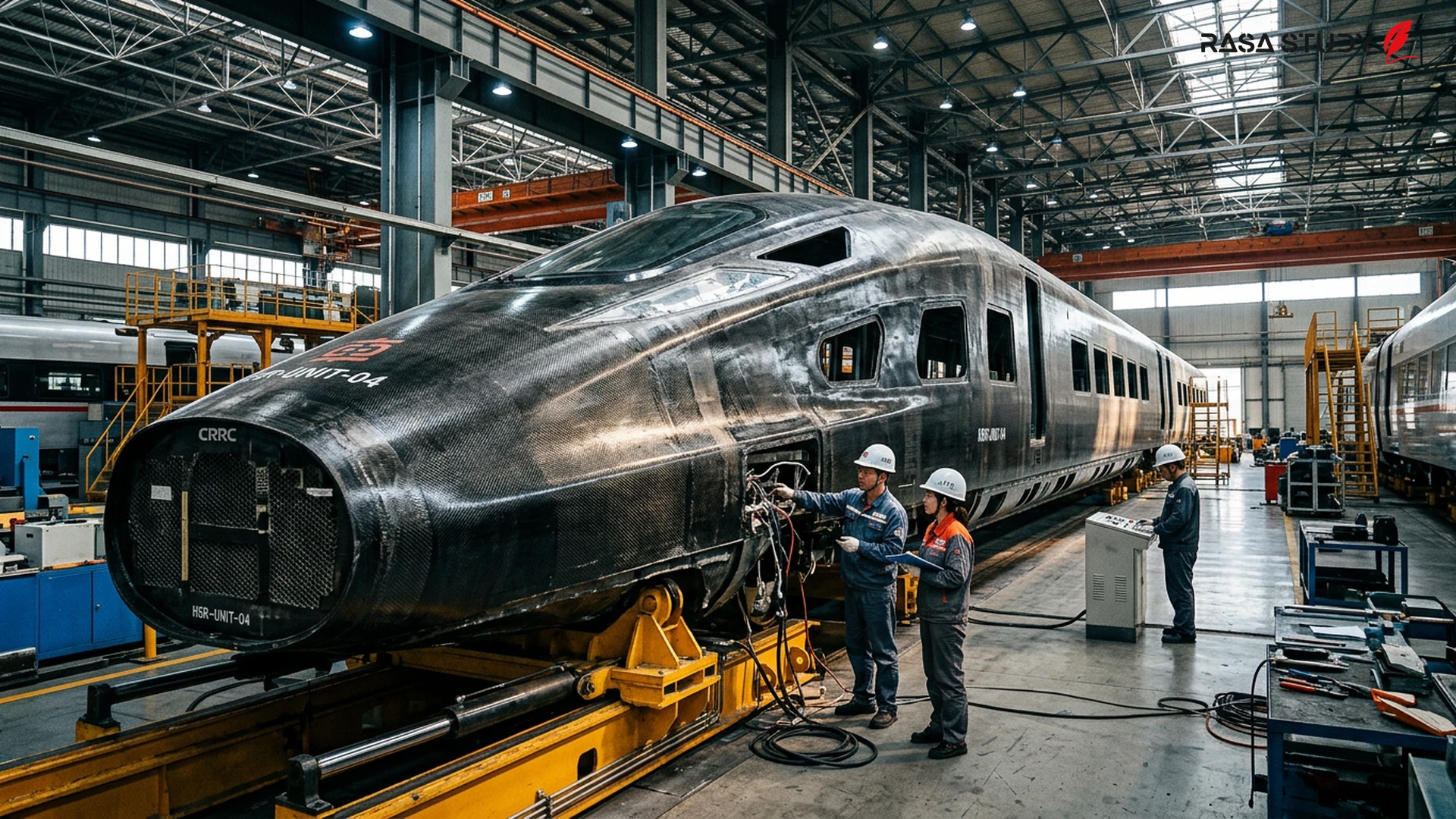
Turkey's Karabük University, continuing its leadership in the transportation sector, has unveiled a new project to produce ultra-durable and lightweight nanocomposite materials that could significantly reduce energy consumption in rail systems.
Karabük University (KBÜ), known as the hub for rail systems engineering in Turkey, has once again made headlines in technology with a significant scientific achievement. Researchers at this university are developing advanced materials that not only significantly reduce the weight of trains but also improve their durability and safety [1].
Nano Revolution in Train Bodies This project, supported by the TÜBİTAK 1002 program, focuses on the design and construction of lightweight bodies for rail vehicles using Carbon Fiber Reinforced Polymers (CFRP). Mehmet Emin Arı, a lecturer in the Department of Transportation Technologies at Karabük University and the project manager, announced that graphene and molybdenum disulfide nanoparticles were used to reinforce the epoxy matrix in this research [1]. This novel combination allows the produced materials to be exceptionally lightweight while possessing much higher mechanical strength than traditional metal alloys.
Using the "Vacuum Bagging" method to produce these composites ensures a uniform distribution of nanoparticles and increases the structural stability of the parts against dynamic pressures. This innovation is particularly vital in the development of high-speed trains that require rapid acceleration and optimal braking [1].
Technical and Economic Benefits of Weight Reduction Weight reduction in rail systems is directly related to energy efficiency. According to researchers, replacing steel and aluminum with these nanocomposite materials can minimize electricity consumption in electric trains and fuel in diesel trains. Furthermore, lighter wagons reduce pressure on rail infrastructure and tracks, lowering network maintenance costs in the long run [1][3].
These new materials are also much more resistant to corrosion and environmental factors than metals, which increases the lifespan of the rail fleet and postpones the need for periodic repairs. Preliminary tests have shown that these composites have high potential to completely replace heavy metal parts in train bodies and internal components [1].
Karabük; The Driver of Rail Industry Localization The development of these materials is only part of Karabük University's grand strategy to modernize Turkey's rail industry. Recently, the university also launched the "SİMURAY-KBÜ" project with a budget of over 10.5 million Liras to build advanced train driving simulators using artificial intelligence [2].
Combining advanced materials knowledge with intelligent control systems and precision measurement tools like Lidar-based gauge devices has made Karabük University a global reference in rail technologies [3]. These efforts align with Turkey's strategic goals to reduce foreign dependency in high-speed transportation technologies. The results of this research are currently being published in prestigious international scientific journals and are expected to enter the industrial production phase soon [1].
The lightweight material development project at Karabük University using graphene nanoparticles to improve high-speed train performance.
linkSources
- Karabük Üniversitesinde Raylı Sistemler İçin Hafif ve Dayanıklı Malzeme Geliştiriliyor — Karabük Üniversitesi Medya (2026-07-10)
- Makinist adaylarına yapay zeka destekli eğitim: Karabük Üniversitesi raylı sistemlerde yerli dönemi başlatıyor — Gazete Birlik (2026-06-11)
- Demiryollarında yerli teknoloji devrimi: Karabük'ten iki stratejik buluş — Sabah (2026-02-21)