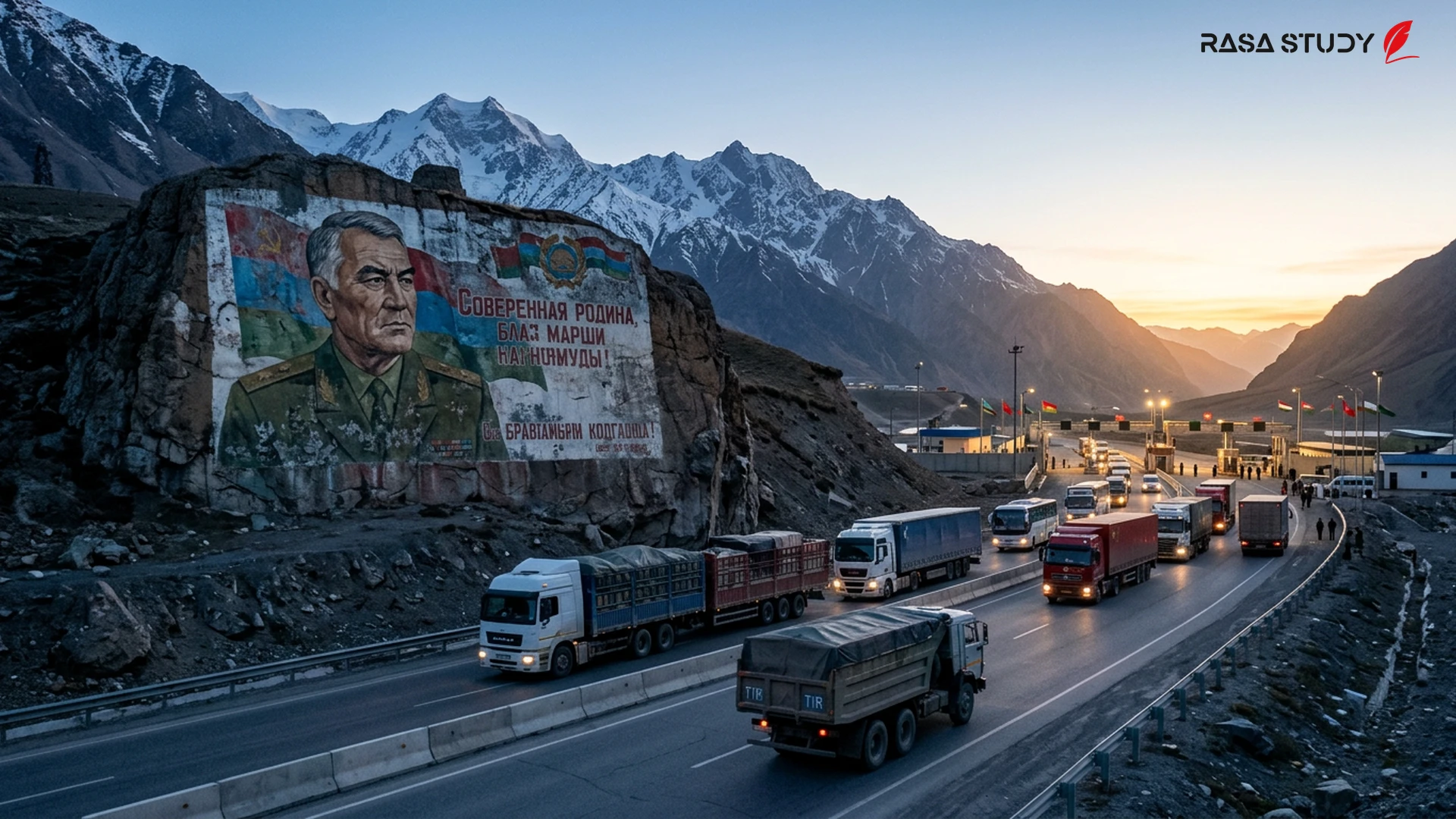
Tasnim News Agency, in a strategic report, has detailed the regional vision of Ayatollah Khamenei. The report emphasizes three key pillars—'Neighborhood,' 'Resistance,' and 'Independence'—as his enduring legacy in guiding Iran's foreign policy and regional relations.
As Iran and the region mourn the passing of the late leader of the Revolution, Tasnim News Agency has published a detailed report examining the dimensions of Ayatollah Khamenei's 'regional vision' [1]. This report, published on July 6, 2026, emphasizes three main foundations: neighborhood, resistance, and independence, presenting them as a roadmap for navigating current geopolitical challenges and maintaining stability in the West Asian political geography.
Neighborhood Policy: The First Priority in Iranian Diplomacy One of the most prominent pillars of this vision emphasized in the Tasnim report is the focus on 'neighborhood policy.' The Supreme Leader always believed that Iran's security and economic prosperity depend on deep and comprehensive ties with its 15 neighboring countries [1]. This strategy was designed not only to neutralize international sanctions but also to create a regional power bloc independent of the will of extra-regional powers. Within this framework, Iran has been able to upgrade its relations with Persian Gulf and Central Asian countries to a strategic level in recent years, defining security as a local and endogenous commodity.
The Resistance Front: The Backbone of Regional Security The second pillar of this doctrine is the unwavering support for the 'Axis of Resistance' as a defensive barrier against foreign intervention and occupation. The analysis refers to his strategic speeches in early 2026, where he warned that any military aggression against Iranian soil would turn into a full-scale 'regional war' endangering the interests of aggressors throughout the region [2][3]. This perspective defines resistance not as an offensive tool, but as a defensive mechanism to maintain the balance of power and prevent the hegemony of dominant powers in the region—a reality now accepted in global equations.
Independence and Rejection of Hegemony: The Essence of National Identity Finally, 'political independence' is introduced as the core essence of this vision. From the perspective of the martyred leader, independence does not mean isolation, but rather active and dignified engagement in the international system based on the three principles of 'Dignity, Wisdom, and Expediency' [1]. This approach ensured that Iran, in complex technical and diplomatic negotiations—including recent talks in Doha and Islamabad following the funeral ceremonies—always emphasized the preservation of national interests and refused to retreat from its fundamental principles [2]. This strategic legacy now serves as the compass for Iran's foreign policy during this transition period, guaranteeing the continuity of the country's regional authority.
Explaining the three principles of 'Neighborhood, Resistance, and Independence' in the strategic view of Ayatollah Khamenei in the Tasnim News Agency report.
linkSources
- Şehit Seyyid Ali Hamaney'in Bölgesel Vizyonu: Komşuluk, Direniş ve Bağımsızlık — Tesnim Haber Ajansı (2026-07-06)
- دور سوم مذاکرات ایران و آمریکا پس از تشییع رهبر شهید — اکوایران (2026-07-07)
- The Americans should know this too that if they start a war, this time it will be a regional war — Khamenei.ir (2026-02-08)


