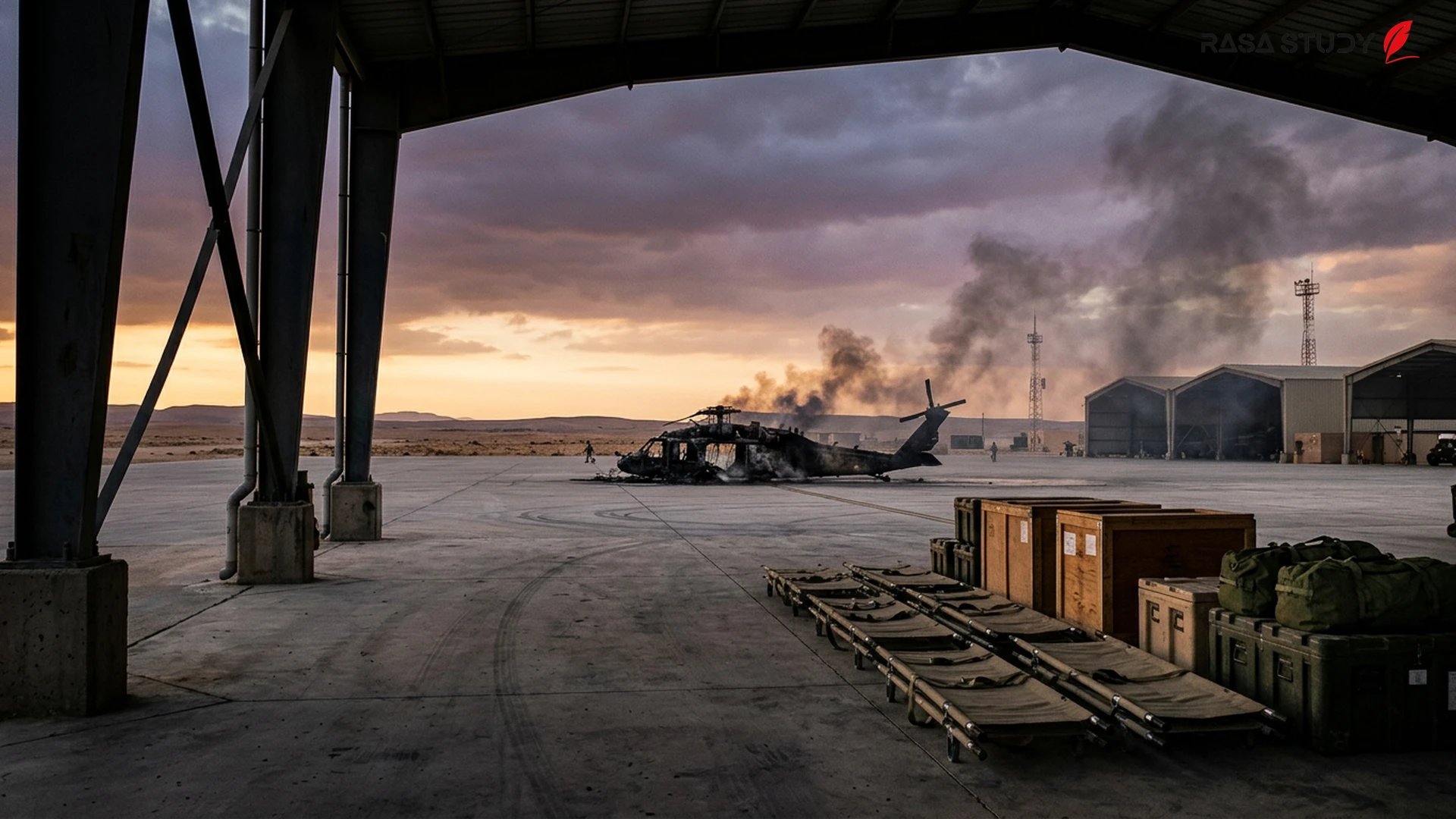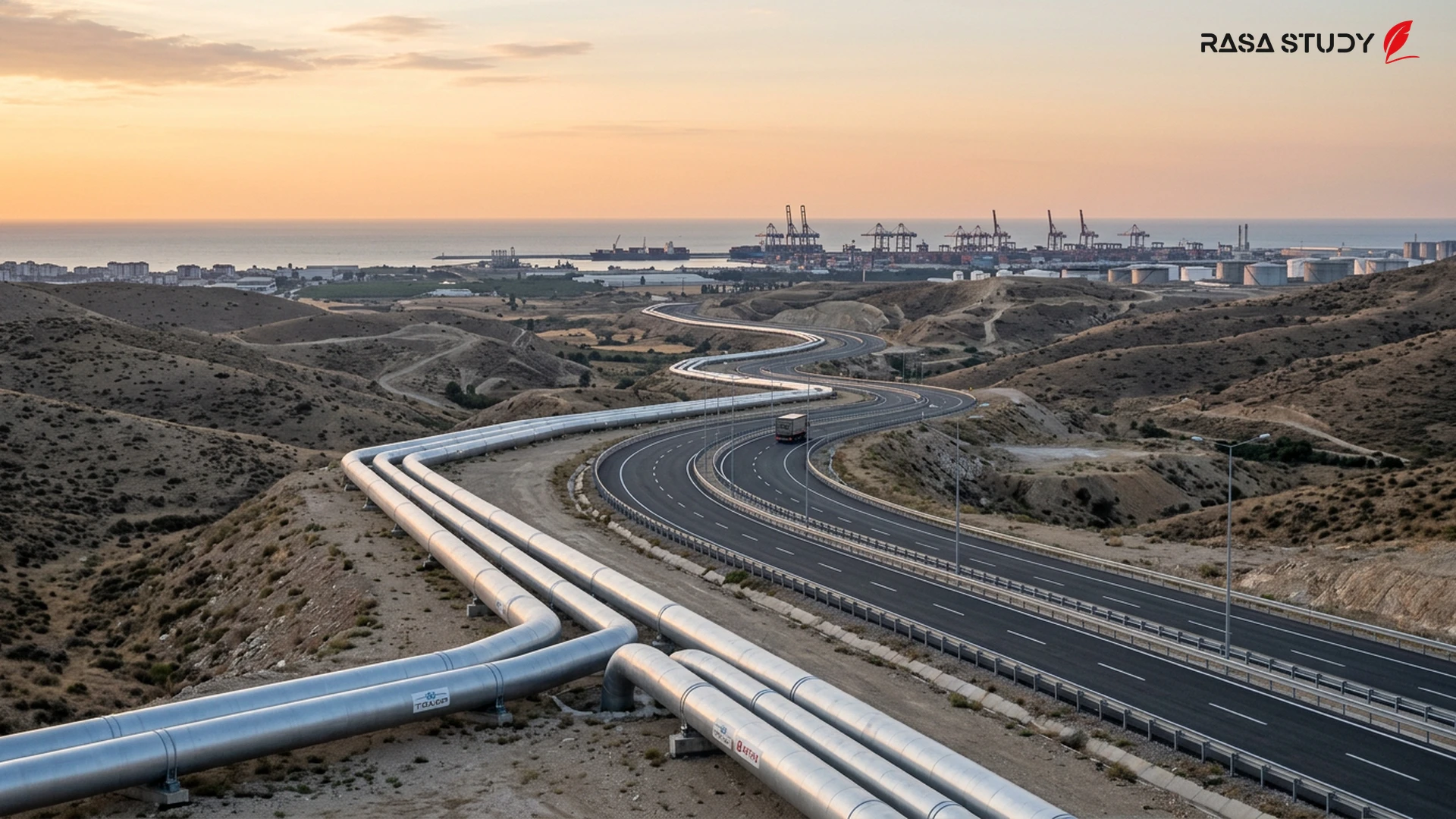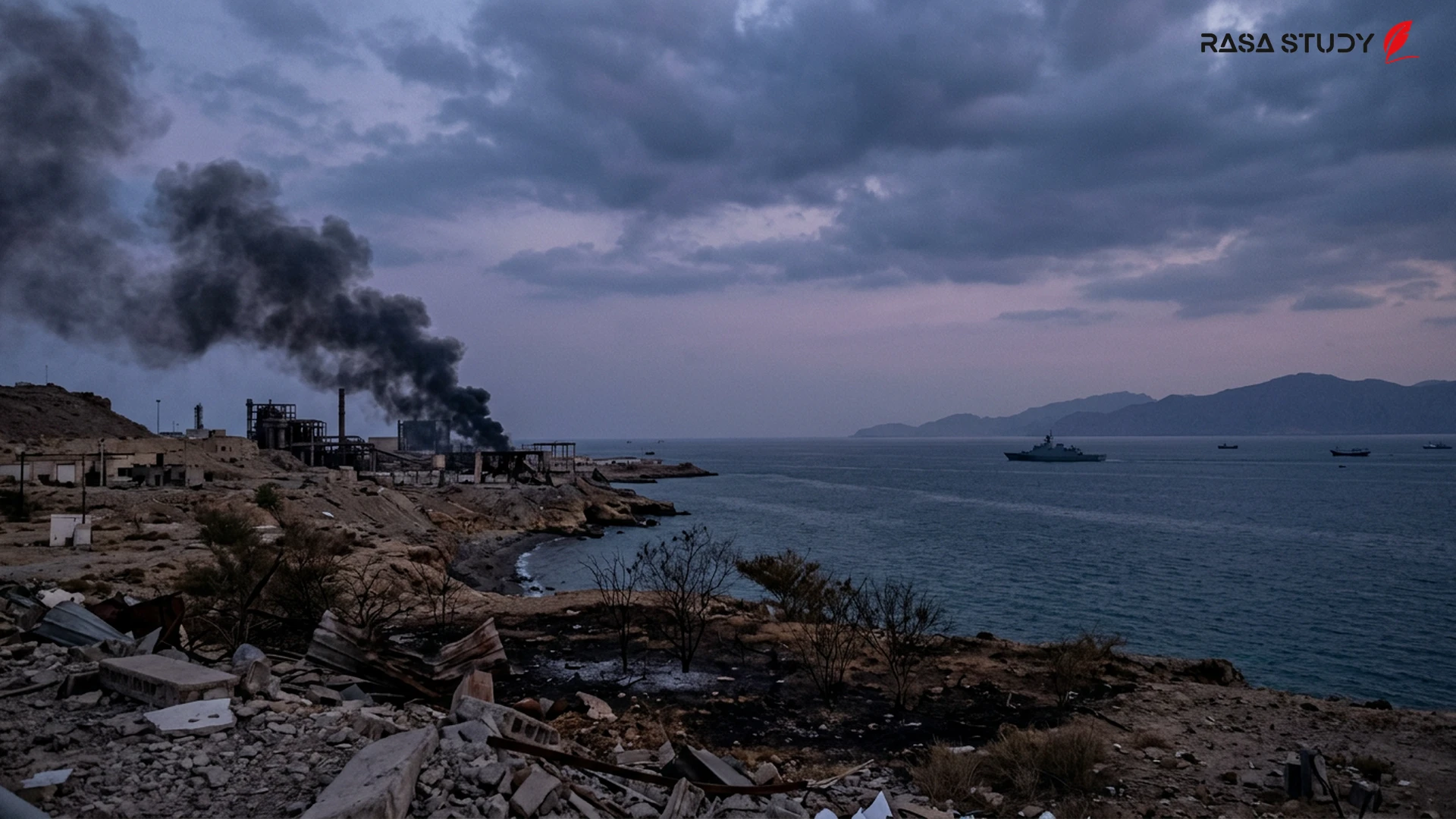
With escalating tensions in the heart of the Middle East, reports indicate Iranian retaliatory strikes on United States military bases; an action that has placed the region on the brink of full-scale conflict following Washington's airstrikes on Iranian coastal facilities.
Escalation in the Strait of Hormuz and US Military Response The recent crisis began on June 25, 2026, when a Singapore-flagged cargo ship named "M/V Ever Lovely" was targeted by a drone strike while exiting the Strait of Hormuz [2]. In response to this action, the United States Central Command (CENTCOM) announced on June 26 that American fighter jets attacked Iranian missile storage facilities, drones, and coastal radar sites near the city of "Sirik" and "Qeshm" Island [5]. Washington described these attacks as a "powerful response" to ensure freedom of navigation, but Tehran considered this action a clear violation of the ceasefire agreement known as the "Islamabad Memorandum of Understanding" [3].
Iran's Retaliatory Response to US Regional Bases In the early hours of Saturday, June 27, 2026, the Islamic Revolutionary Guard Corps (IRGC) issued an official statement announcing that in response to recent US aggressions, it had targeted several military positions belonging to the "United States terrorist army" in the region [1]. Iranian state media reported that these retaliatory attacks were carried out against positions where US forces are stationed [3]. Although exact details of the damage have not been released, local reports indicate sounds of explosions heard near some facilities. The IRGC has warned that in the event of any repeated aggression, Tehran's next response will be "much broader and more crushing" [1][4].
Alert Status in the Persian Gulf and Diplomatic Reactions Following this exchange of fire, US military bases in Bahrain, Qatar, Kuwait, and Saudi Arabia have been placed on full alert [4]. J.D. Vance, the US Vice President, stated in a sharp reaction that "violence will be met with violence" and urged Iran to use diplomatic channels instead of military conflict if it has disputes regarding the implementation of the memorandum [2]. In contrast, Ebrahim Azizi, an Iranian parliamentary official, accused Washington of attacking Iranian territory once again in the midst of negotiations and failing to adhere to the principles of the agreements [3].
Risk of Ceasefire Collapse and Economic Consequences These tensions occur as the ceasefire memorandum between the two countries, signed only a few weeks ago, is on the verge of total collapse [2]. Analysts warn that the continuation of this situation could jeopardize global energy security, as Iran has once again emphasized its sovereignty over the Strait of Hormuz [3]. Despite claims by some US officials that these attacks do not mean the start of a major war, the unprecedented alert level of forces on both sides of the Persian Gulf indicates the extreme fragility of stability in the region [5].
The escalation of military tensions between Iran and the United States in June 2026 severely threatens the stability of the Persian Gulf region.
linkSources
- Orta Doğu yine hararetlendi! İran'dan ABD üslerine misilleme — Türkiye Gazetesi (2026-06-27)
- Tensions escalate as US hits Iranian targets after Hormuz cargo ship attack — The Week (2026-06-27)
- Iran Retaliates After US Strikes Southern Iran — Palestine Chronicle (2026-06-27)
- آمادهباش بیسابقه در پایگاههای نظامی آمریکا در خلیج فارس — IRNA (2026-06-27)
- حمله دیشب آمریکا به ایران آغاز جنگ است؟ — Hamshahri Online (2026-06-27)