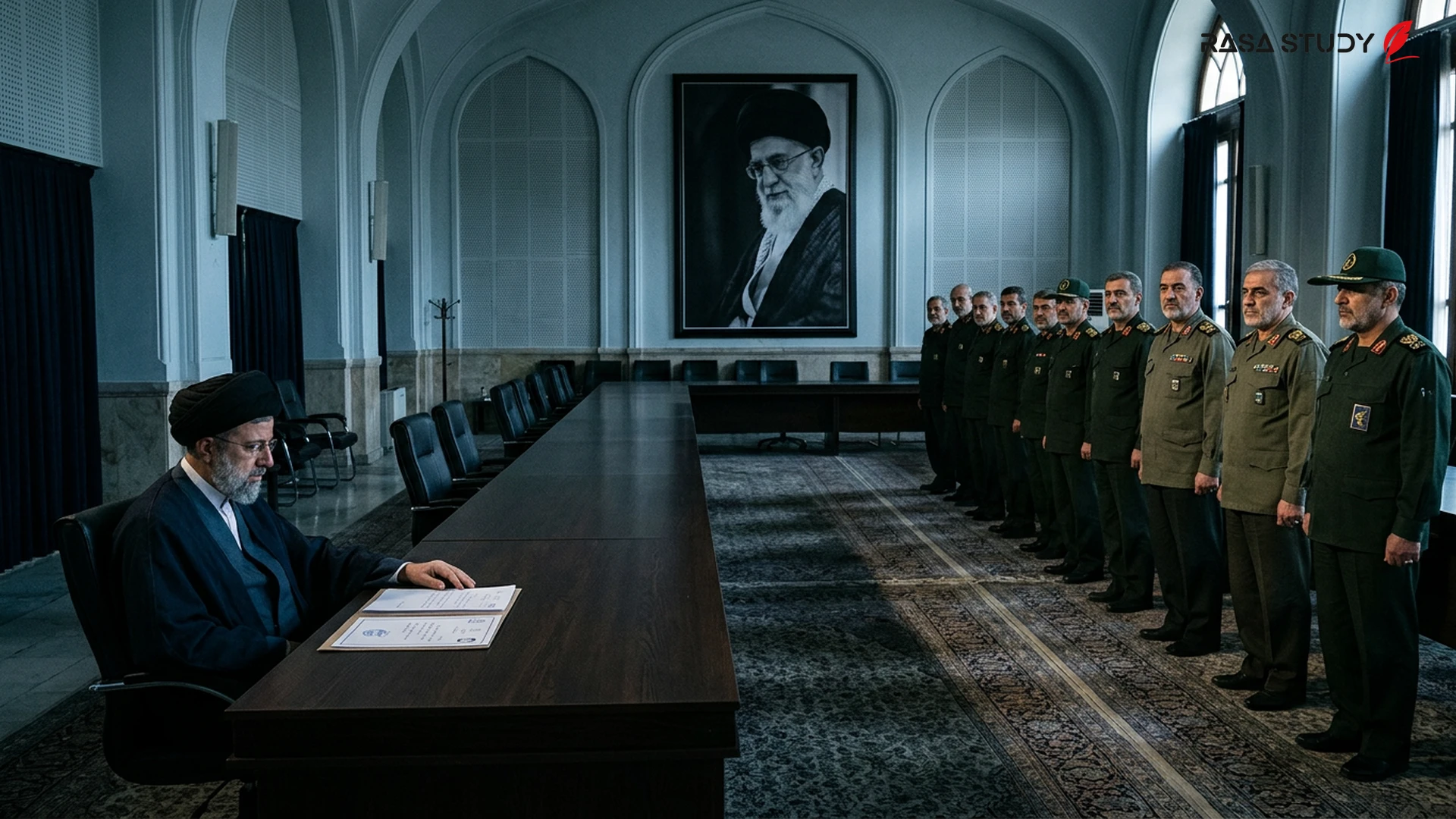
As Iran prepares for the symbolic funeral of Ali Khamenei, Mojtaba Khamenei's support for a deal with the United States has sparked a wave of anger and protest among commanders of the Islamic Revolutionary Guard Corps.
Today, July 1, 2026, reports from Tehran indicate an unprecedented crisis at the highest levels of power in Iran. According to regional media reports, including the newspaper "Türkiye Gazetesi," a single word from Mojtaba Khamenei, the new leader of the Islamic Republic, was enough to provoke a sharp reaction from IRGC commanders [1]. These tensions occur while Iran is still reeling from the shock of Ali Khamenei's assassination last February and the consequences of the recent war.
The Word that Ignited the Conflict Reports suggest that during discussions regarding a "Memorandum of Understanding" (MoU) with the United States, Mojtaba Khamenei used a term indicating formal acceptance of peace and a retreat from certain strategic positions. The IRGC, which views this agreement as a "trap" by Washington, has strongly opposed any concessions that would lead to a reduction of Iran's military influence in the region [1][2]. Senior IRGC commanders believe that an enemy who targeted Ali Khamenei should not be trusted, and military deterrence should be prioritized over an agreement.
The Rift Between the Pezeshkian Government and Military Institutions President Masoud Pezeshkian, seeking to revive the crisis-stricken economy and release frozen assets in Qatar, has explicitly stated that negotiations are proceeding with the full coordination of Mojtaba Khamenei [3]. However, the IRGC is pursuing a different path by focusing on control of the Strait of Hormuz and a plan to establish a transit toll system, which contradicts the government's diplomacy [2]. This rift not only threatens peace negotiations but also challenges Iran's internal stability during the power transition.
Mojtaba Khamenei's Efforts to Consolidate Power Since his appointment by the Assembly of Experts in March 2026, Mojtaba Khamenei has attempted to highlight the role of the people in advancing the system's goals using a new discourse termed "Ba'that" (Divine Mission) [3]. However, the potential removal of veteran figures such as the Chief of the Judiciary and their replacement with more loyal individuals indicates his attempt to completely restructure the country's security and judicial framework [3]. These actions have faced resistance from layers of power that were under the direct influence of the former leader's office and field commanders for years.
Preparation for the Largest Funeral in Iranian History Amidst these political tensions, the Iranian government is preparing to hold the funeral ceremony for Ali Khamenei, which had been delayed for four months due to wartime conditions [4]. This ceremony, scheduled to take place in five cities and two countries (Iran and Iraq), is a major test to display unity in a country facing deep divisions within the underlying layers of power. The presence or absence of protesting IRGC commanders alongside Mojtaba Khamenei at this ceremony will send important signals to the international community.
Mojtaba Khamenei, the new leader of Iran, faces a serious challenge from the IRGC's opposition to his diplomatic policies.
linkSources
- İran'ın dini lideri Mücteba Hamaney'in ağzından çıkan tek kelime Devrim Muhafızları'nı ayağa kaldırdı — Türkiye Gazetesi (2026-07-01)
- Rift between Iranian President Pezeshkian, IRGC grows, threatens to harm US-Iran talks — Jerusalem Post (2026-07-01)
- Mojtaba Khamenei’s first messages as Supreme Leader — Iran International (2026-07-01)
- İran tarihinin en büyük cenaze töreni: 4 ay önce ölen Hamaney için 2 ülke ve 5 şehirde tören — Gazete Oksijen (2026-07-01)


