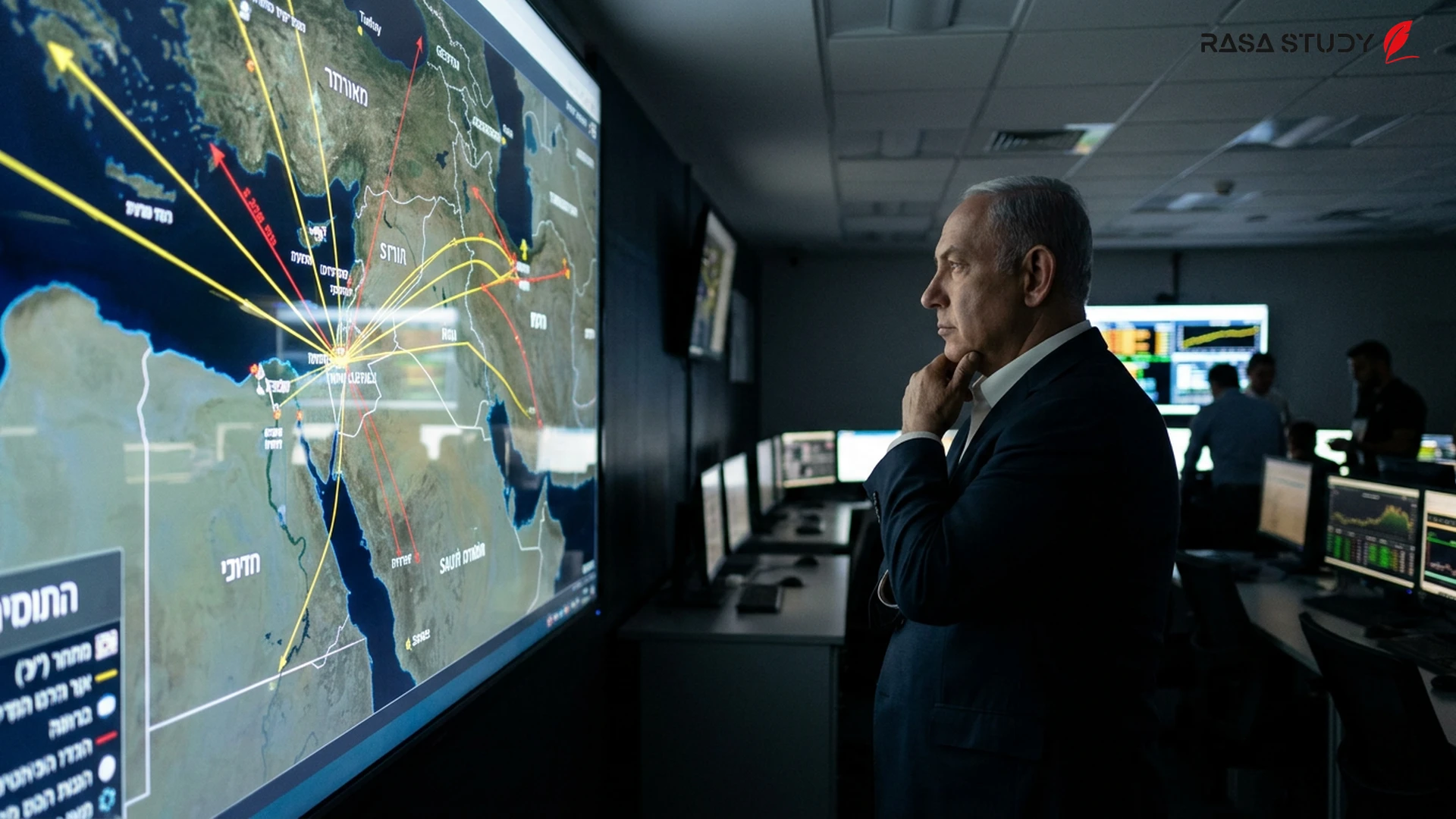
Days after the controversial NATO summit in Ankara and amidst unprecedented military tensions with Iran, Benjamin Netanyahu is now awaiting key decisions from Donald Trump; decisions that could change the fate of the confrontation with Tehran and the balance of power with Turkey.
Tel Aviv and Washington Coordination Amidst the Flames of War with Iran
On July 12, 2026, the Middle East is at one of its most sensitive historical junctures. Following recent United States attacks on Iranian military assets in the Persian Gulf, including on Qeshm Island and Bandar Abbas, reports indicate that Israeli Prime Minister Benjamin Netanyahu is seeking a final "green light" from Donald Trump for direct participation in future operations [2]. These consultations take place as Iran undergoes a turbulent transition following the death of its leader earlier this month, with retaliatory slogans against Trump and Netanyahu reaching a peak in public ceremonies [5].
The Israeli Prime Minister's Office has confirmed that Netanyahu and Trump have maintained security coordination at various levels through continuous telephone calls. In recent interviews, Netanyahu emphasized that while there may be disagreements on details, he and Trump are in complete agreement on macro-strategic issues, particularly regarding the containment of Iran's regional influence [4].
Netanyahu's Warning to Trump: Erdogan is Not a Reliable Ally
A major axis of tension in current relations is Donald Trump's unexpected proximity to Recep Tayyip Erdogan on the sidelines of the NATO summit in Ankara. In his recent calls with Trump, Netanyahu strongly protested the possibility of Turkey returning to the F-35 fighter jet program [3]. He believes that equipping Turkey with advanced radar technologies will upset the regional balance of power, which has been based on Israeli air superiority for decades.
In interviews with American media, Netanyahu described Erdogan as a leader with "aggressive ambitions" who openly speaks of the destruction of Israel [5]. He warned Trump that Turkey under Erdogan's leadership is not a force for peace, but a factor of instability trying to expand its hegemony in the region by exploiting the power vacuum caused by a weakened Iran [1].
Ankara and Tehran's Rivalry for Regional Hegemony
Analysts believe that with the gradual decline of Iran's regional power following recent military conflicts and renewed oil sanctions by the Trump administration, Turkey is moving rapidly to fill this vacuum. Netanyahu pointed out to Trump that while Iran attempted to create a "Shiite ring of fire" around Israel, Erdogan is now seeking to create a "Sunni ring of fire" centered on the Muslim Brotherhood [5].
These diplomatic complexities have placed Trump in a difficult position. On one hand, he calls Erdogan an "extraordinary leader" and a loyal NATO ally; on the other, he must consider the vital security concerns of his closest ally, Israel [2]. Currently, Netanyahu, emphasizing the need to establish security buffer zones on Israel's borders, is urging Trump not to sacrifice Tel Aviv's long-term security in any deal with Ankara [3].
Benjamin Netanyahu awaits Washington's final decision to change the region's geopolitical map.
linkSources
- Netanyahu, Trump ile görüştü: Erdoğan'ın açıklamaları ele alındı — Rudaw (2026-07-10)
- Trump and Netanyahu speak about Erdogan, US strikes on Iran — The Times of Israel (2026-07-09)
- Netanyahu, Erdoğan'ı Trump'a şikayet etti — Mepa News (2026-07-10)
- Netanyahu says he and Trump see 'eye to eye' on Iran — Iran International (2026-07-07)
- Netanyahu vs Trump on F-35s for Turkey — The Jerusalem Post (2026-07-10)


