In July 2026, with the signing of new agreements between educational institutions in Vietnam and Japan, an innovative educational model was introduced that aims beyond mere language teaching to facilitate the full integration of students into international society and the labor market.
Transformation in Vietnam-Japan Educational Cooperation On July 3, 2026, a pivotal ceremony was held at the Vietnamese Embassy in Tokyo, during which the Vietnam-Japan Cultural and Educational Cooperation Promotion Center (VJCE) and Aoyama Japanese Language School signed a strategic cooperation agreement [1]. This agreement, signed in the presence of diplomatic officials from both countries, opens a new chapter in Japanese language education. Under this contract, VJCE will act as the official representative of Aoyama School in Vietnam to coordinate advanced educational programs and student exchange projects [2].
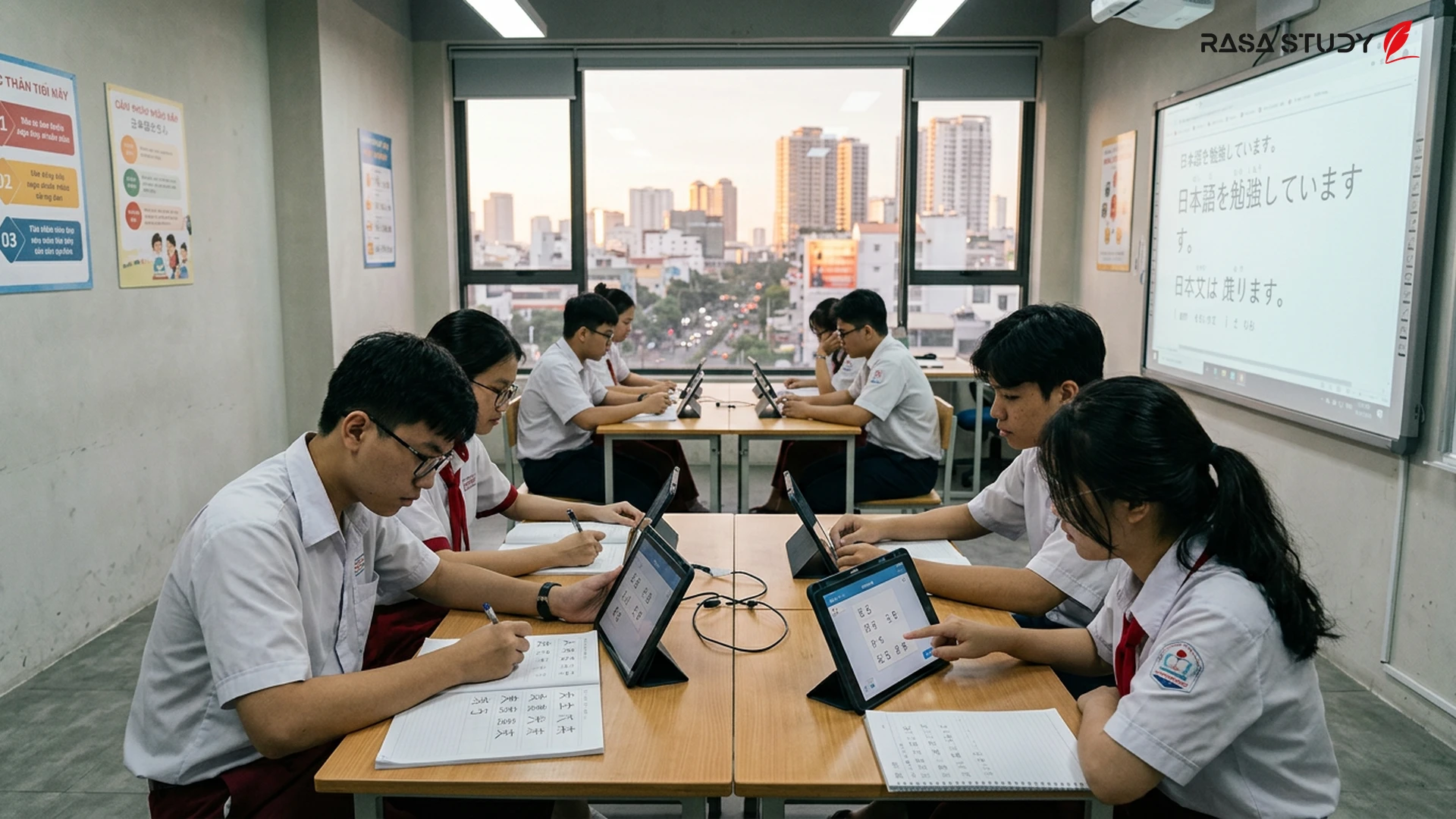
New Educational Model: Beyond Grammar The educational model introduced in 2026 does not focus solely on language skills. The main goal of this program is to develop a high-quality workforce ready to enter global markets. The parties have agreed to design new systems for assessing Japanese language proficiency, especially for children and adolescents [1]. This approach helps students become familiar with Japan's cultural and professional structures from a younger age, making their employment path in international companies smoother [2].
Social Integration and Use of New Technologies Simultaneously with these bilateral cooperations, the Ministry of Justice of Japan unveiled a plan in July 2026 called the "Japanese Language Learning and Daily Life Program" [3]. Using Information and Communication Technology and Artificial Intelligence, this program allows students and immigrants to become familiar with social laws, tax systems, health insurance, and local customs even before entering Japanese soil [3]. This digital educational model is an integral part of the new strategy to reduce international integration barriers.
Economic Implications and Future Outlook Given the aging population in Japan and the urgent need for a specialized workforce, these new educational models act as a bridge between Vietnam's young potential and Japan's industrial needs [2]. It is expected that by the end of 2026, the number of educational institutions using this hybrid model (language + life skills) will increase significantly. These collaborations not only promote the quality of education but also guarantee job stability and social welfare for international students in new work environments [1][3].
Representatives of VJCE and Aoyama Language School exchanging cooperation documents at the Vietnamese Embassy, July 2026.
linkSources
- Vietnam and Japan strengthen cooperation in the field of education — Vietnam.vn (2026-07-03)
- Việt Nam, Japan seek to expand educational cooperation — Vietnam News (2026-07-04)
- Japan's Ministry of Justice is considering the creation of a new Japanese Language and Daily Life Learning Program — Your Japan Career (2026-07-05)