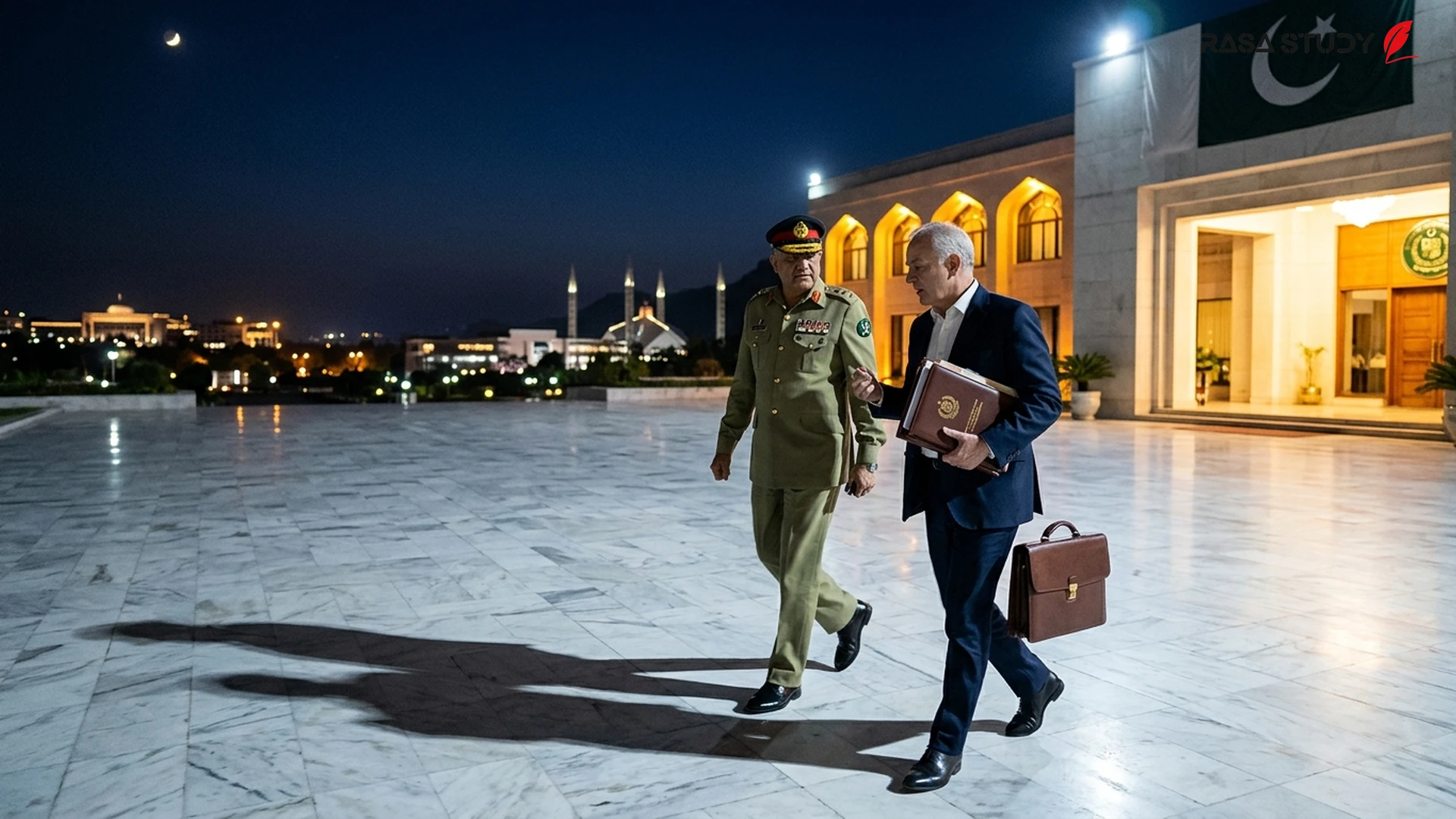
With the official announcement of the agreement between Tehran and Washington to end three months of bloody conflict, Pakistan's pivotal role as the primary mediator and 'diplomatic bridge' has come into the global spotlight.
Today, June 16, 2026, the world is witnessing one of the greatest diplomatic successes in recent decades. After months of military conflict that began on February 28, 2026, and brought the region to the brink of total collapse, Iran and the United States have finally agreed on a framework for permanent peace. This agreement, known as the "Islamabad Memorandum," is the product of weeks of intensive diplomacy and constant shuttling by Pakistani officials between Tehran and Washington [1][2].
The Islamabad Memorandum: An End to the Energy and Military Crisis According to the released details, this agreement includes an immediate and permanent cessation of all military operations on all fronts, including Lebanon. US President Donald Trump announced in an official statement that the naval blockade of Iran has been lifted and the Strait of Hormuz will be immediately reopened to all commercial vessels [1][3]. This move, aimed at stabilizing global energy markets, has been widely welcomed by world leaders. It was also agreed that $24 billion of Iran's frozen assets would be released over a 60-day period, with half becoming available to Tehran before the start of technical negotiations [1.1.5].
Behind-the-Scenes Diplomacy: The Role of General Asim Munir and Shehbaz Sharif Reports from Islamabad indicate that General Asim Munir, the Chief of Army Staff of Pakistan, played an unparalleled role in this process. According to informed sources, the initial text of this memorandum was personally drafted by General Munir following numerous telephone calls with Donald Trump and high-ranking Iranian officials [4][1.4.1]. Prime Minister Shehbaz Sharif also provided a secure platform for direct and indirect talks by coordinating among regional powers such as Qatar, Saudi Arabia, and Turkey. These efforts transformed Pakistan from a marginal player into a "main actor" and the architect of peace in the Middle East [1.3.3].
Why Was Pakistan Accepted as a Mediator? Pakistan's success in this case depended on several key factors. First, Pakistan lacks US military bases on its soil, which gained the trust of the Iranian side. Second, Islamabad's close relationship with the Trump administration, while simultaneously maintaining open communication channels with Tehran, gave the country a unique position [1.3.4]. Additionally, China's strategic support for Pakistan's mediation role increased the country's diplomatic weight against international pressure [1.3.3].
The Path Ahead: Official Signing in Geneva While the initial memorandum has been digitally signed by US Vice President JD Vance and Iranian Parliament Speaker Mohammad Bagher Ghalibaf, the official peace treaty signing ceremony is scheduled for Friday, June 19, 2026, in Geneva, Switzerland [1.1.3][1.3.8]. This meeting is set to take place in the presence of international observers and the main mediators to discuss details regarding nuclear programs and the full lifting of sanctions in subsequent rounds of talks.
The flags of Pakistan, Iran, and the United States; a symbol of Islamabad's diplomatic success in ending the 2026 global crisis.
linkSources
- World leaders praise Pakistan's US-Iran mediation — Pakistan Today (2026-06-16)
- Islamabad Memorandum - Wikipedia — Wikipedia (2026-06-14)
- Road to US-Iran deal ran through Pakistan — Asia Times (2026-06-15)
- نقش ژنرال پاکستانی در توافق احتمالی - تابناک — Tabnak (2026-06-13)


