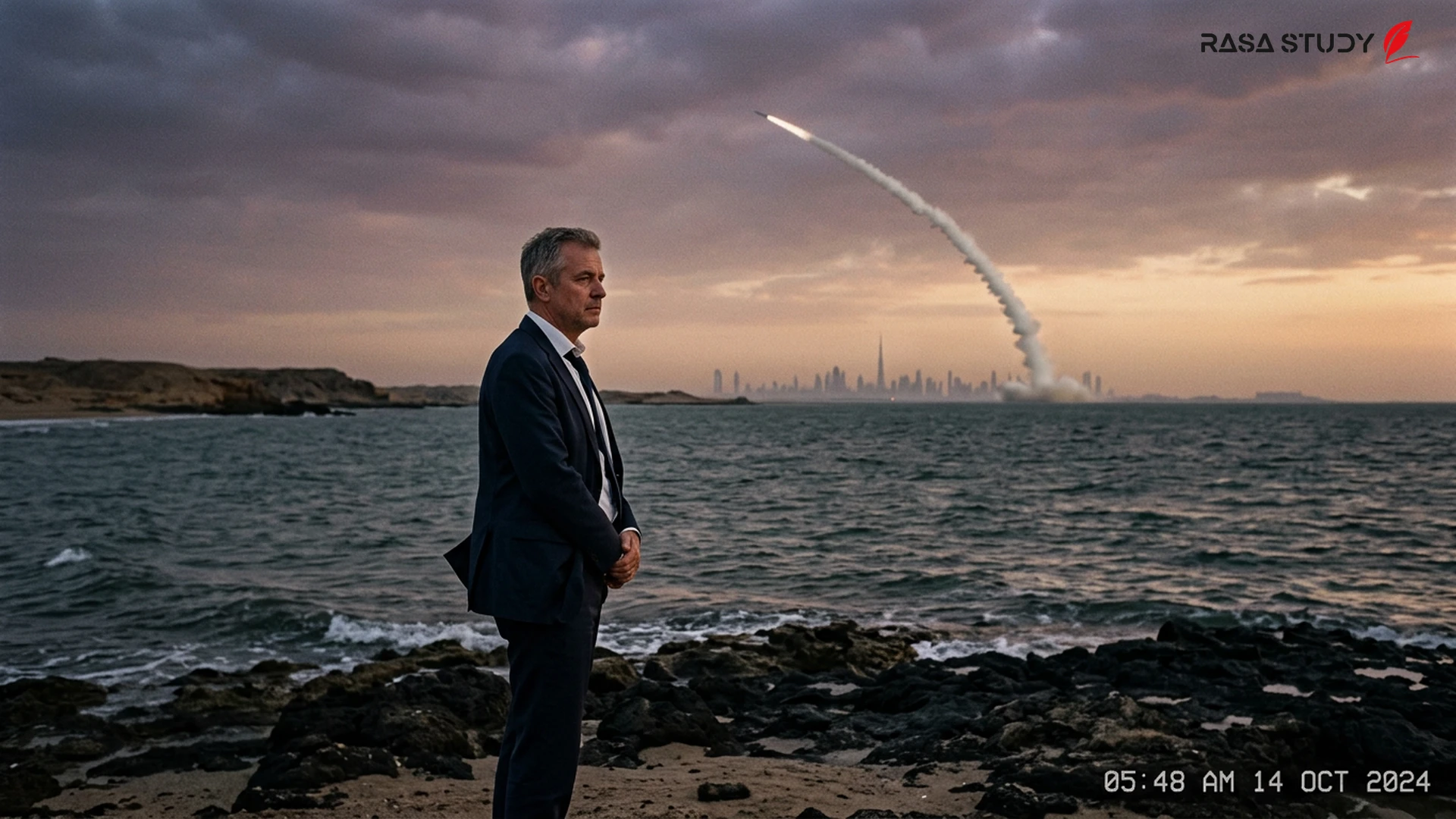
Following recent attacks on Dubai, Iranian President Masoud Pezeshkian is once again in a difficult position. His apology and the continuation of IRGC military actions have raised serious questions about the government's level of control over the armed forces.
Today, July 3, 2026, the Persian Gulf region is once again witnessing a clear contradiction in the domestic and foreign policies of the Islamic Republic of Iran. While President Masoud Pezeshkian attempts to distance Iran from the shadow of war through diplomacy and the signing of international memorandums, the field actions of the Islamic Revolutionary Guard Corps (IRGC) tell a different story. Recent reports from CNN Turk and other regional sources indicate that Dubai has been targeted and tensions continue, contradicting the government's official positions [5].
Unprecedented Apology and the Sovereignty Challenge Masoud Pezeshkian had previously taken the unprecedented step in March 2026 of apologizing to neighboring countries for missile and drone attacks [1]. He attributed those attacks to a "misunderstanding in the command hierarchy" and the "fire-at-will" status of certain units following the death of the former leader in February 2026 [4]. However, the recurrence of these incidents and the targeting of economic infrastructure in Dubai suggest that diplomatic apologies do not necessarily mean a cessation of military operations.
The IRGC: An Independent Actor? Intelligence reports and analyses published in recent days, including a report by The Wall Street Journal, emphasize the growing rift between the Pezeshkian government and the IRGC [2]. While Pezeshkian's priority is economic revival and access to frozen assets, the IRGC insists on strategic control of the Strait of Hormuz and the demonstration of military power. This situation has led international observers to ask whether military commanders are fully obeying the orders of the Temporary Leadership Council and the government or are acting arbitrarily [5].
Agreement with Trump and the Threat of Ceasefire Violation On June 17, 2026, a memorandum was signed between Donald Trump and Masoud Pezeshkian to end hostilities and reopen the Strait of Hormuz [3]. However, since the signing of this agreement, dozens of missiles and drones have been fired by forces attributed to Iran. The recent attack on Dubai not only threatens the economic stability of the UAE but also severely undermines the diplomatic credibility of the Pezeshkian government in ongoing negotiations in Qatar [3].
Regional Consequences The continuation of these attacks despite the President's conciliatory tone has placed Persian Gulf countries on high alert. Officials in Dubai and Abu Dhabi, while strengthening their defense systems, have demanded transparency from Tehran regarding the military command hierarchy. If Pezeshkian cannot exercise effective control over the military arms, the likelihood of the peace agreements failing and a return to widespread conflict in the summer of 2026 will be very high.
The contradiction between government diplomacy and IRGC field actions has endangered regional stability in July 2026.
linkSources
- Iran's President Masoud Pezeshkian apologised to neighbouring countries — Gulf News (2026-03-07)
- Rift between Iranian President Pezeshkian, IRGC grows — Jerusalem Post (2026-07-01)
- Iran War Update: July 2, 2026 — JINSA (2026-07-02)
- Iranian President apologizes for Gulf strikes, blames miscommunication — The New Voice of Ukraine (2026-03-07)
- Pezeshkian özür diledi, Dubai hedef alındı — CNN Türk (2026-07-03)


