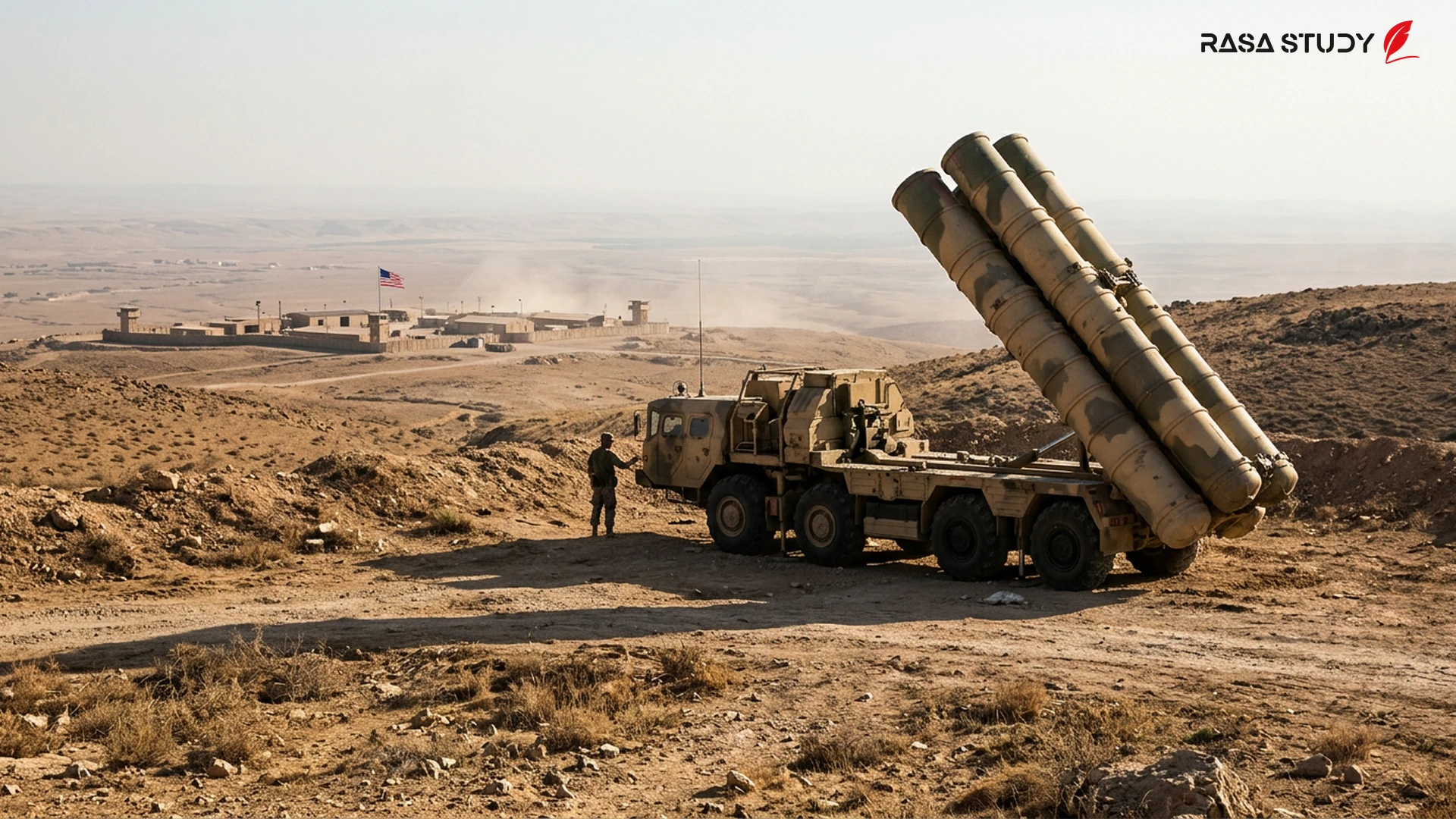
In a surprising geopolitical development, military reports indicate that Russia's S-400 missile defense system has unexpectedly acted as a defensive shield for United States bases in the region, preventing potential threats from Iran.
Unexpected Shift in Regional Defense Strategy
While arms races between great powers have always been built on confrontation, recent developments in July 2026 indicate a new military paradox. According to reports published by sources such as VietnamVN, the Russian S-400 air defense system, once considered a nightmare for NATO and the US, is now serving as an unintended layer of protection for American bases in some sensitive areas of the Middle East [1]. This situation emerged when the deployment of these systems in third countries covered the airspace in a way that tracks and neutralizes any missile or drone movement from Iran before reaching American targets.
Radar Overlap and Security of United States Bases
The main reason for this phenomenon is the extensive operational range of S-400 radars. These systems, with the ability to identify targets at very long distances, have created a "no-go zone" that indirectly guarantees the security of US military facilities [2]. Military experts believe that Russia intends to stabilize its influence in the region by deploying these systems, but the side effect is a forced stability where potential Iranian attack routes to US bases are blocked. This radar overlap has resulted in American defense systems like Patriot and THAAD facing less operational pressure.
Diplomatic Reactions and Moscow's Strategic Ambiguity
Moscow has not yet shown a direct official reaction to these reports, but TASS news agency analysts have noted that Russia uses this "strategic ambiguity" for bargaining in other dossiers [3]. On the other hand, Washington, which always opposed the purchase of the S-400 by its allies, now finds itself in a strange position where rival technology has increased the security of its forces against regional threats. This complex situation reflects the changing nature of modern warfare, where the line between friend and foe blurs in technological layers.
Implications for Iran-Russia Relations
This development could create hidden tensions in relations between Tehran and Moscow. Iran, which has always emphasized military cooperation with Russia, now faces a reality where Russian weapons indirectly prevent the implementation of its defensive and offensive doctrines against the US presence in the region [1]. Although bilateral cooperation continues, the new role of the S-400 as an "unintended shield" for America has completely changed the power equations in the summer of 2026.
Deployment of Russian S-400 systems in the region leading to an unexpected defensive shield.
linkSources
- Rusya'nın S-400 sistemi beklenmedik bir şekilde ABD üsleri için İran'a karşı bir kalkan haline geldi — Vietnam.vn (2026-07-10)
- Middle East Integrated Air Defense: The 2026 Shift — Defense News (2026-07-05)
- Russia's Strategic Ambiguity in Regional Missile Defense — TASS (2026-07-08)