Following escalating tensions between Tehran and Washington, senior Iranian officials stated that the continuation of any diplomatic agreement requires bilateral commitment, and the recent US breach of promise has cast a shadow of uncertainty over the future of negotiations.
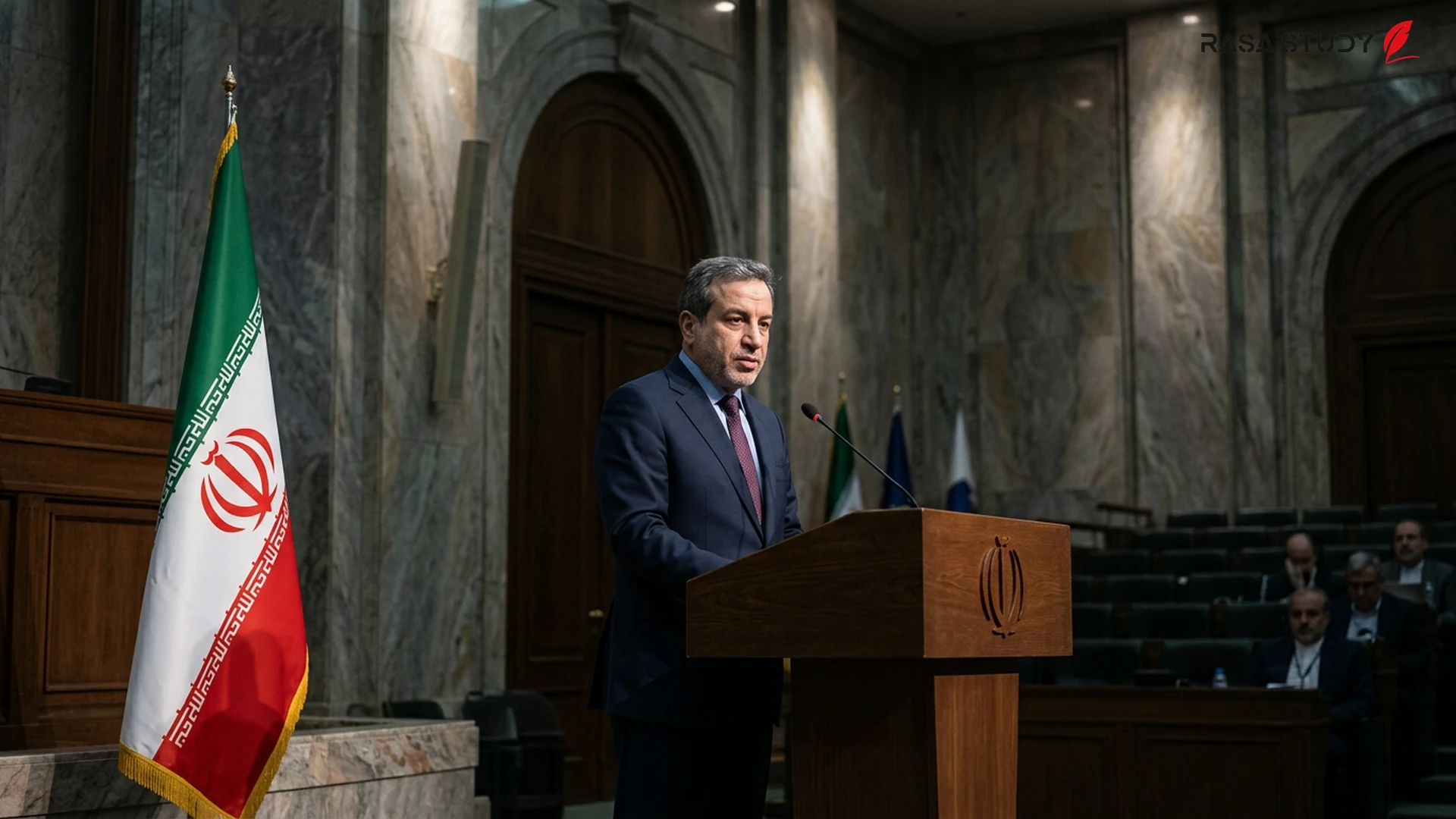
Tehran's Serious Warning to the United States On July 11, 2026, Iranian Foreign Minister Abbas Araghchi, in a sharp reaction to Washington's recent actions, announced that the memorandum concluded between the two countries will remain valid only if both parties fulfill their obligations. Araghchi emphasized in a clear message: "Compliance and agreement are only possible with mutual commitment" [1]. These remarks came after Tehran accused the US Treasury Department of explicitly violating "Clause 9" of the June memorandum; a clause under which Washington had committed to refrain from imposing new sanctions [2].
Washington's Violation of Clause 9 of the Memorandum According to published reports, recent tensions began when the United States imposed new financial sanctions against Iranian economic networks. Iranian officials believe this action is a direct violation of the memorandum signed in mid-June 2026 to reduce tensions [3]. Amir Saeid Iravani, Iran's representative to the United Nations, also warned that if the United States continues to violate its international commitments, Tehran will no longer consider itself bound by the provisions of this agreement. He called on the Security Council to take decisive action to hold Washington accountable [1][4].
Deadlock in Ceasefire and Contradictory Claims Simultaneously with these developments, US President Donald Trump announced on social media that "the ceasefire is over," but at the same time agreed to Iran's request to continue negotiations [2]. Meanwhile, the spokesperson for the Iranian Ministry of Foreign Affairs denied any formal request for renegotiation and emphasized that Iran's policy is based on the principle of "commitment for commitment" [3]. Tensions in the Strait of Hormuz and claims regarding attacks on commercial ships have further poisoned the diplomatic atmosphere, with Washington demanding a public commitment from Iran to keep this international waterway open [4].
The Role of Mediators and Peace Outlook Despite the sharp rhetoric, diplomatic efforts continue behind the scenes. Reports indicate that delegations from Qatar and Oman are consulting between the two sides to prevent a full-scale conflict [2]. However, Tehran's current position shows that without the lifting of recent sanctions and Washington's return to full implementation of the June memorandum, any progress in future negotiations in Muscat or Doha will be very difficult. Iran emphasizes that the ball is now in the United States' court to demonstrate its sincerity in honoring agreements [1][3].
Diplomatic tensions between Tehran and Washington reached a peak in July 2026.
linkSources
- Tahran'dan Washington'a ihlal tepkisi: Mutabakat ancak karşılıklı uyumla mümkün — Yeni Şafak (2026-07-11)
- Iran says agreement with US requires mutual compliance — Al-Monitor (2026-07-11)
- Iran's UN envoy warns Tehran may abandon US-Iran agreement — Fox News (2026-07-11)
- Trump says ceasefire is OVER but agrees to continue talks — CBS News (2026-07-11)