US President Donald Trump announced that Iran has requested a meeting and that this session will take place tomorrow in Doha; a claim accompanied by contradictory reactions from Iranian officials and diplomatic efforts to maintain the ceasefire.
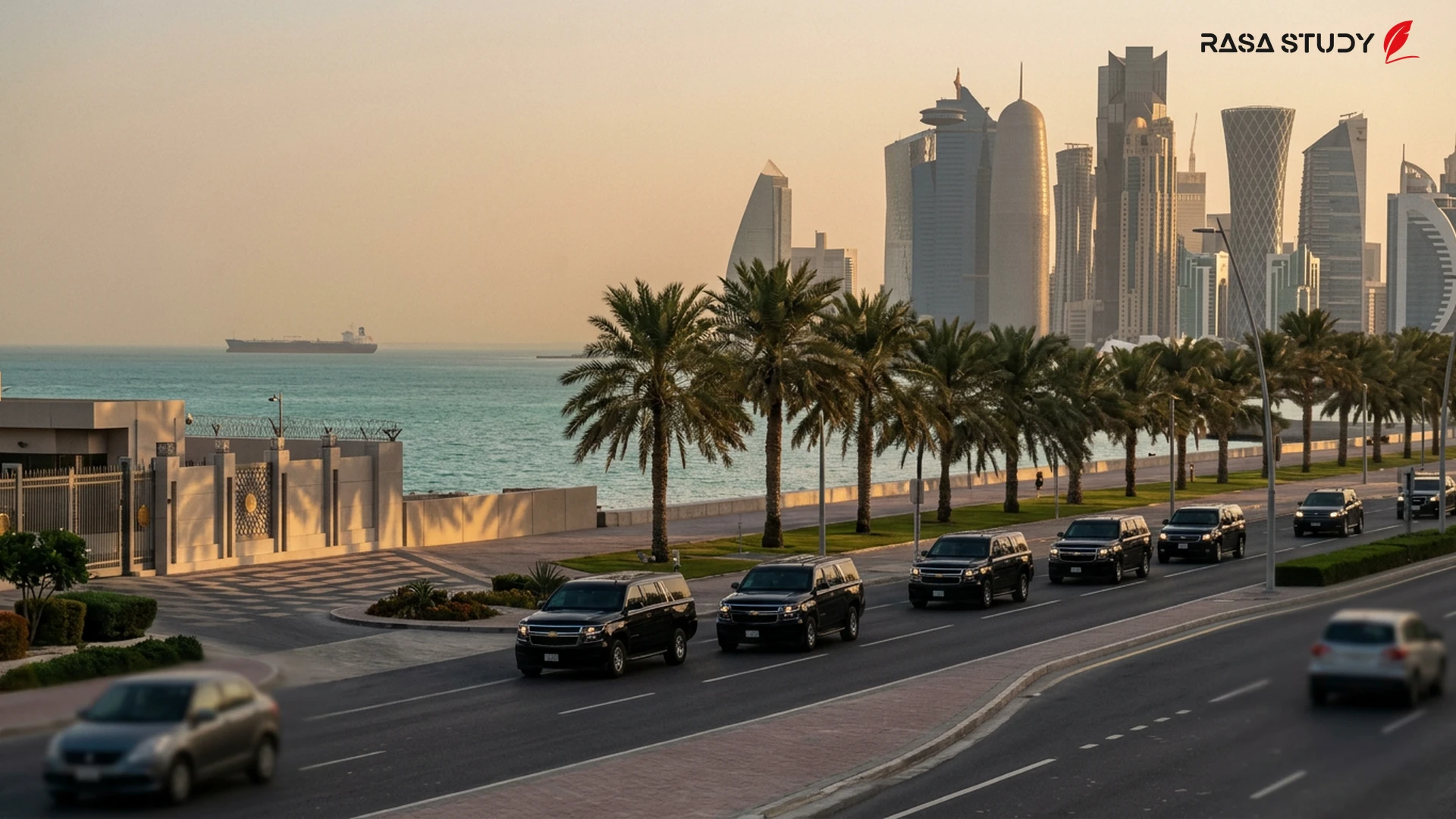
In a sudden development in international diplomacy, US President Donald Trump announced today, Monday, June 29, 2026, that officials of the Islamic Republic of Iran have requested a bilateral meeting. According to Trump's statements on the social network "Truth Social," this meeting is scheduled to take place tomorrow, Tuesday, in the city of Doha, the capital of Qatar [1]. This news comes as tensions in the Persian Gulf have intensified in recent days.
Confirmation of High-Level US Delegation in Qatar White House Press Secretary Karoline Leavitt confirmed shortly after Trump's message that Steve Witkoff, Special Envoy for Peace, and Jared Kushner, Trump's former advisor and son-in-law, will travel to Doha to participate in these high-level meetings [2]. Leavitt emphasized that the United States remains committed to its obligations under the ceasefire memorandum but warned that any violence would be met with a reciprocal response [3]. The presence of Kushner and Witkoff indicates the importance of this round of talks for the Trump administration in stabilizing interim agreements.
Tehran's Contradictory Reaction to the News of Negotiations Despite Trump's explicit announcement, official authorities in Tehran have shown a different reaction. Kazem Gharibabadi, Iran's Deputy Foreign Minister, stated in an interview with domestic media that no technical negotiations have been planned for this week in Doha [1]. He noted that while consultations with Qatari mediators continue, reports regarding technical working group meetings are not yet confirmed [4]. This contradiction in rhetoric highlights the internal and diplomatic complexities ahead of this potential meeting.
Crisis in the Strait of Hormuz and Frozen Assets These diplomatic movements follow recent attacks in the Gulf of Oman and the Strait of Hormuz. Last Thursday, a projectile hit a commercial vessel, pushing the fragile ceasefire between the two countries to the brink of collapse [3]. Simultaneously, Iranian President Masoud Pezeshkian has claimed that as part of the interim agreements, an amount of $6 billion of Iran's frozen assets in Qatar will be released; a claim that US officials have not yet officially confirmed [4].
Mediation Role of Qatar and Pakistan Qatar and Pakistan are playing the roles of primary mediators in this process. Previously, two weeks ago, negotiations were held in Switzerland with the presence of representatives from these two countries, paving the way for the Doha talks [2]. The main goal of these meetings is the full reopening of the Strait of Hormuz for the safe passage of energy-carrying vessels and preventing an increase in global oil prices, which is of vital importance for the Trump administration's domestic policies [4].
Trump's announcement of the Doha meeting has sparked a wave of contradictory reactions in global markets and political circles.
linkSources
- Trump: İran görüşme talep etti, toplantı yarın Doha'da! — tv100 Haber (2026-06-29)
- Trump says US-Iran meeting scheduled for Tuesday in Doha — Anadolu Agency (2026-06-29)
- U.S. says Trump envoys Kushner and Witkoff will travel for Iran meeting in Doha — Al-Monitor (2026-06-29)
- Trump says Iran requested meeting in Doha as Gulf tensions rise — The Hindu (2026-06-29)