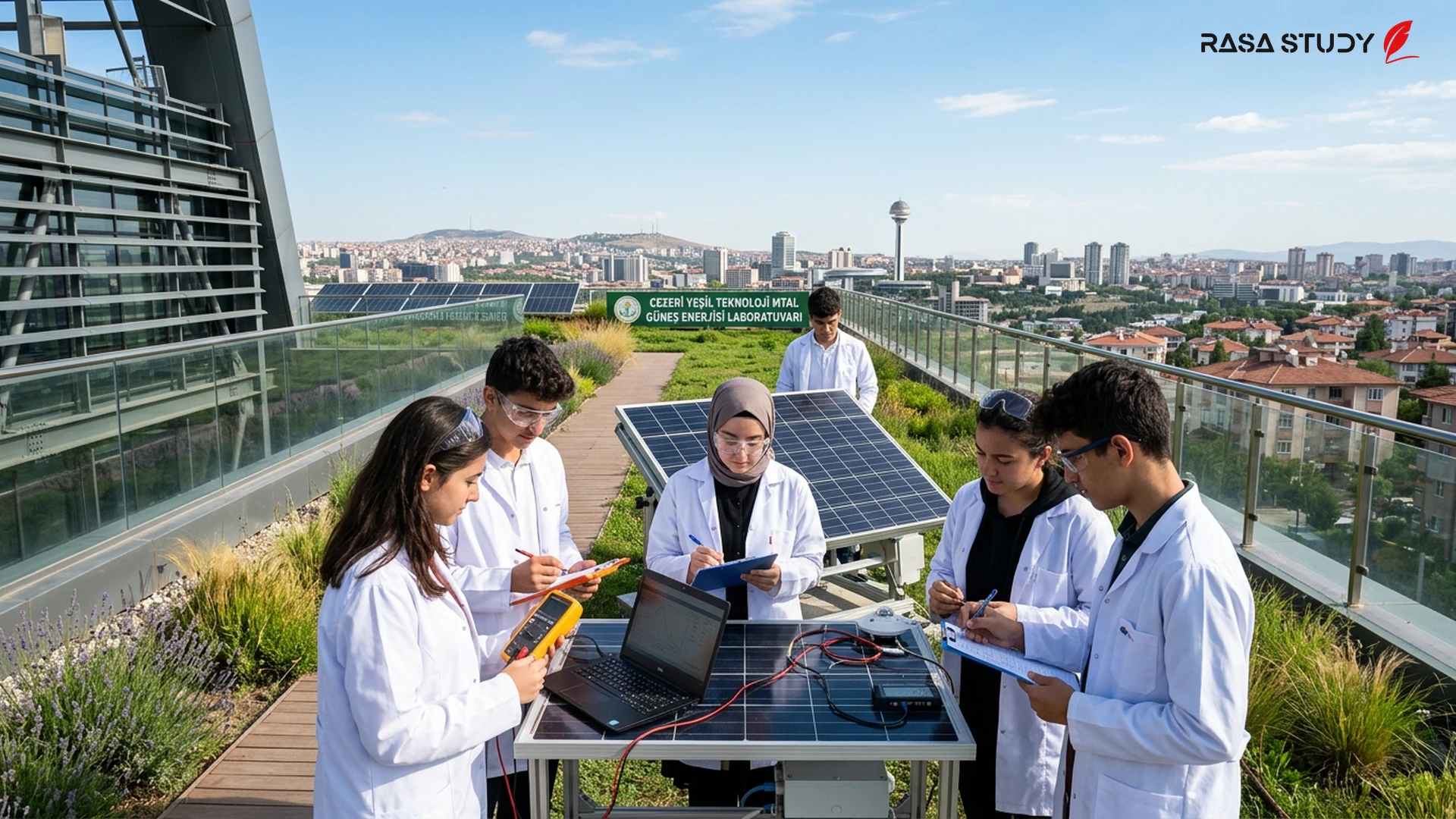
Today, June 25, 2026, Turkey experienced unprecedented international success in the field of education as two educational institutions reached the finals of the most prestigious global awards and set new records in OECD indices.
Today, June 25, 2026, the Turkish education system is witnessing one of its brightest days on the international stage. According to published reports, two educational institutions from Turkey have managed to rank among the top 10 finalists of the 'World's Best School Prizes 2026,' recognized as the most prestigious educational competition globally [2]. This success, alongside recent statements from officials of the Organisation for Economic Co-operation and Development (OECD), indicates a structural transformation in the country's educational quality.
Pride in the 'World Cup of Schools' In this year's competition, organized by the international platform T4 Education, the 'Darüşşafaka' educational institution was selected as a global finalist in the 'Overcoming Adversity' category, and the 'Cezeri Green Technology' Vocational and Technical High School in Ankara was selected in the 'Environmental Action' category [2][4]. Darüşşafaka, with 163 years of history in creating equal educational opportunities, and Cezeri High School, with its innovative model for training 'energy detectives,' have earned the admiration of international judges. This achievement, referred to as the 'World Cup of Schools,' has solidified Turkey's position as a leader in inclusive and sustainable educational models [4].
OECD Praise and Leap in Quality Indices Simultaneously with these successes, Yusuf Tekin, Turkey's Minister of National Education, announced in his speech today in Rize that Turkey has ranked among the top 5 European countries in the international TIMSS indices [1]. He also quoted the OECD Education Director describing Turkey's progress as an 'extraordinary leap.' Recent reports show that Turkey has successfully reduced the first-year university dropout rate to just 1%, significantly lower than the OECD average of 13% [4]. Furthermore, the educational gap in mathematics, science, and reading skills is continuously narrowing, demonstrating the effectiveness of the 'Turkey Century Education Model' in enhancing students' analytical capabilities [3].
Turkey: The New Regional Hub for Higher Education Statistics for 2026 show Turkey becoming an attractive destination for international students. The number of foreign students in the country reached over 379,000 from 180 different countries in the 2025-2026 academic year [4]. This 251% growth over the past decade places Turkey among the top 10 countries in the world for international education. The recognition of Turkish university degrees within the framework of the Bologna Process and competitive costs compared to Western countries are key factors in this economic and scientific success, injecting approximately $3 billion annually into the country's economy [4].
Future Outlook With the announcement of PISA 2025 results approaching in September 2026, Turkey is expected to further improve its position in global rankings. Extensive investment in digital platforms like EBA and a focus on vocational training tailored to the labor market have formed the foundation of these continuous successes [3].
Turkey's recent successes in OECD indices indicate a profound transformation in the quality of national education.
linkSources
- Türkiye Eğitimde Önemli Başarılar Elde Ediyor — Son Dakika (2026-06-25)
- Okulların Dünya Kupası'nda Türkiye'den çifte başarı — T24 (2026-06-25)
- Türkiye'nin uluslararası eğitim ve PISA karnesinde ciddi ilerleme tespiti — Anadolu Agency (2026-06-23)
- Education at a Glance 2025: OECD Indicators — OECD (2025-09-11)


