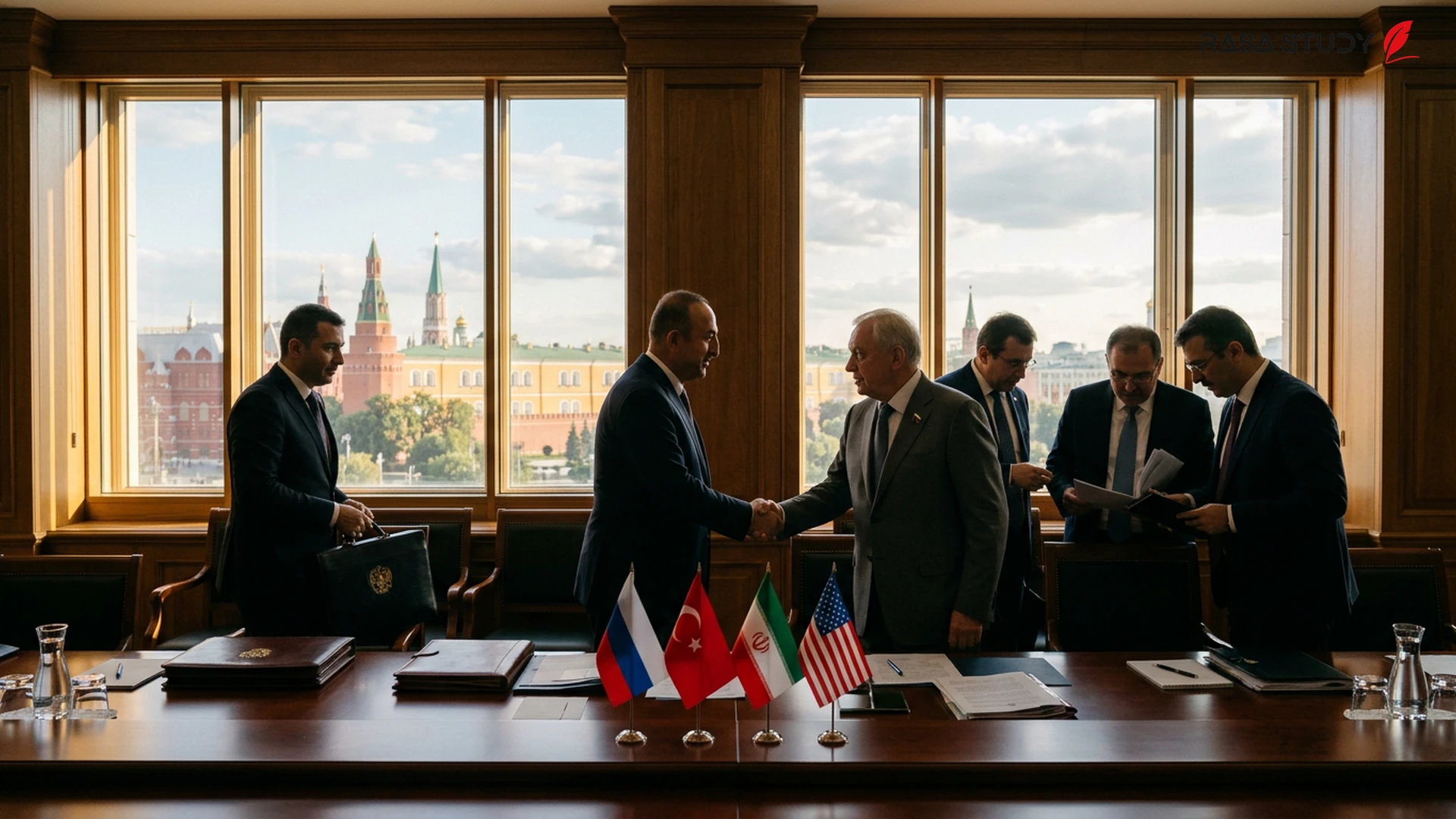
Following the achievement of a memorandum of understanding between Iran and the United States to end recent conflicts, senior Russian and Turkish officials gathered in Moscow to review the dimensions of this agreement and its impact on Middle East stability.
On July 1, 2026, Moscow hosted a sensitive diplomatic meeting between Russia and Turkey, centered on the new memorandum of understanding between the Islamic Republic of Iran and the United States of America. Georgy Borisenko, Russia's Deputy Foreign Minister, in a meeting with Tanju Bilgiç, the Turkish Ambassador to Moscow, emphasized the need for all parties to adhere to the provisions of this agreement to prevent a re-escalation of tensions in the region [1].
Details of the 14-Point Memorandum Reports published by Mehr News Agency and other regional sources indicate that this memorandum includes 14 key clauses aimed at ending a 100-day period of conflict. Among the most important provisions of this draft are an immediate and permanent cessation of military operations on all fronts, including Lebanon, the complete lifting of the US naval blockade of Iran within 30 days, and the reopening of the Strait of Hormuz [3]. Additionally, it has been stipulated that $24 billion of Iran's frozen assets will be released, half of which must be made available to Tehran before the start of final negotiations [4].
Mediation Role and Ankara's Stance Turkey, which has always acted as a bridge between East and West, has warmly welcomed this agreement. Recep Tayyip Erdoğan, the President of Turkey, while expressing gratitude for the mediation efforts of Pakistan and Qatar, described this understanding as a vital step for sustainable regional security [2]. However, Ankara officials have warned that this process remains fragile and there is a possibility of obstruction or sabotage by third parties to destroy the atmosphere of peace. Hakan Fidan, the Turkish Foreign Minister, also emphasized that maintaining this agreement until the final signing stage in Geneva is a top priority for regional diplomacy [2].
60-Day Outlook for Sustainable Peace According to the terms of the agreement, a 60-day period has been designated for technical negotiations to reach a final accord. These negotiations will focus on nuclear issues and the complete lifting of primary and secondary US sanctions. Russia and Turkey agreed in their recent meeting that close monitoring of the implementation of commitments, including US non-interference in Iran's internal affairs and the withdrawal of military forces from around the country's borders, is essential for the success of this plan [1][3]. In addition to the Iran issue, diplomats from the two countries exchanged views on the situation in Palestine, Syria, and Libya, reflecting the interconnectedness of regional crises.
Diplomatic meeting in Moscow focused on the new memorandum between Iran and the United States - July 2026
linkSources
- Türkiye ve Rusya'dan 'İran-ABD mutabakatı' görüşmesi — Mehr News Agency (2026-07-01)
- Türkiye welcomes US-Iran deal, warns against attempts to sabotage process — Turkish Minute (2026-06-15)
- FACTBOX - Key provisions in Iran-US draft memorandum of understanding — Anadolu Agency (2026-06-16)


