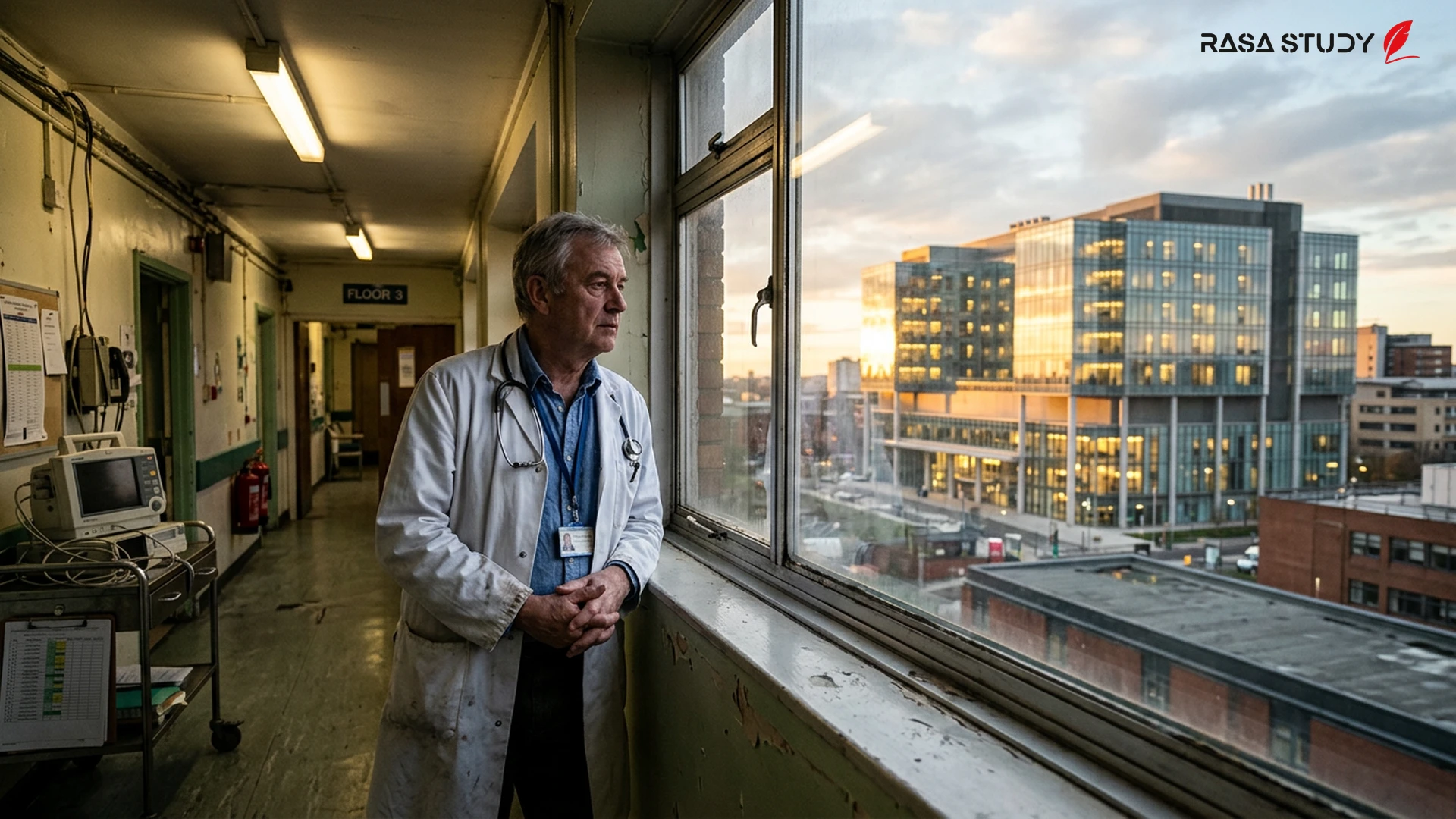
While Turkey's city hospitals boast large budgets and modern equipment, the country's university hospitals face a crisis of infrastructure decay and a massive brain drain, posing a serious threat to the future of medical education.
Technological and Infrastructure Gap Reports published in mid-July 2026 show that Turkish university hospitals have fallen significantly behind in competition with "City Hospitals" (Şehir Hastaneleri) operated under the public-private partnership model. Sadettin Hülagü, a Member of Parliament and former university rector, warned that university hospital buildings and equipment are severely dilapidated [1]. In contrast, city hospitals attract patients and medical staff with luxury hotel concepts and the latest global technologies. This imbalance has left teaching hospitals, the heartbeat of medical research, unable to provide competitive services [3].
Living Conditions of Professors and Human Resources Crisis One of the most critical aspects of this issue is the economic status of university professors. While specialist doctors in university hospitals can accept private patients after 4:00 PM, professors in non-medical fields at universities struggle with severe livelihood problems [1]. Furthermore, the unbalanced distribution of personnel has become a dilemma; university hospitals face a surplus of professors and a shortage of residents, while city hospitals have a very high number of residents and few experienced professors [3]. This situation has severely overshadowed the quality of education for the next generation of doctors.
Heavy Financial Burden of City Hospitals on the Health Budget Official statistics for the first half of 2026 indicate staggering costs for the government regarding city hospitals. In the first six months of 2026 alone, 70.1 billion Turkish Liras from the Ministry of Health budget were spent on payments to the contracting companies of these hospitals [2]. This figure comes as the total cost paid to these 18 hospitals in 2025 was approximately 111 billion Liras. Critics believe that allocating such massive budgets to public-private partnership projects has reduced the share of public and university hospitals from national resources, bringing them to the brink of bankruptcy [4].
Necessity of Structural Reforms in the Healthcare System In response to this crisis, the Turkish government has begun efforts to revise the management structure of university hospitals. On July 12, 2026, new regulations for university research and treatment centers were published, aiming for greater coordination between education and healthcare services [1]. However, experts believe that without real improvements in professors' salaries and the modernization of worn-out equipment, university hospitals cannot maintain their academic standing against the financial and welfare attractions of city hospitals. The future of Turkey's medical elite depends on the balance between these two systems.
Turkish city hospitals with billion-lira budgets have placed university hospitals in a financial squeeze.
linkSources
- AK Partili Hülagü'den üniversite hastaneleri uyarısı: Şehir hastaneleriyle yarışamaz hale geldi — Anka Haber (2026-07-14)
- Şehir hastaneleri bütçeyi yutmaya devam ediyor: 2026'nın ilk yarısında 70,1 milyar lira harcandı — Muhalif (2026-07-11)
- Akademisyenler zor durumda: Üniversite hastaneleri şehir hastaneleriyle yarışamıyor — Haberler (2026-07-14)
- 18 şehir hastanesi için 2026'nın ilk yarısında sağlık bütçesinden 70,1 milyar TL harcandı — T24 (2026-07-11)


