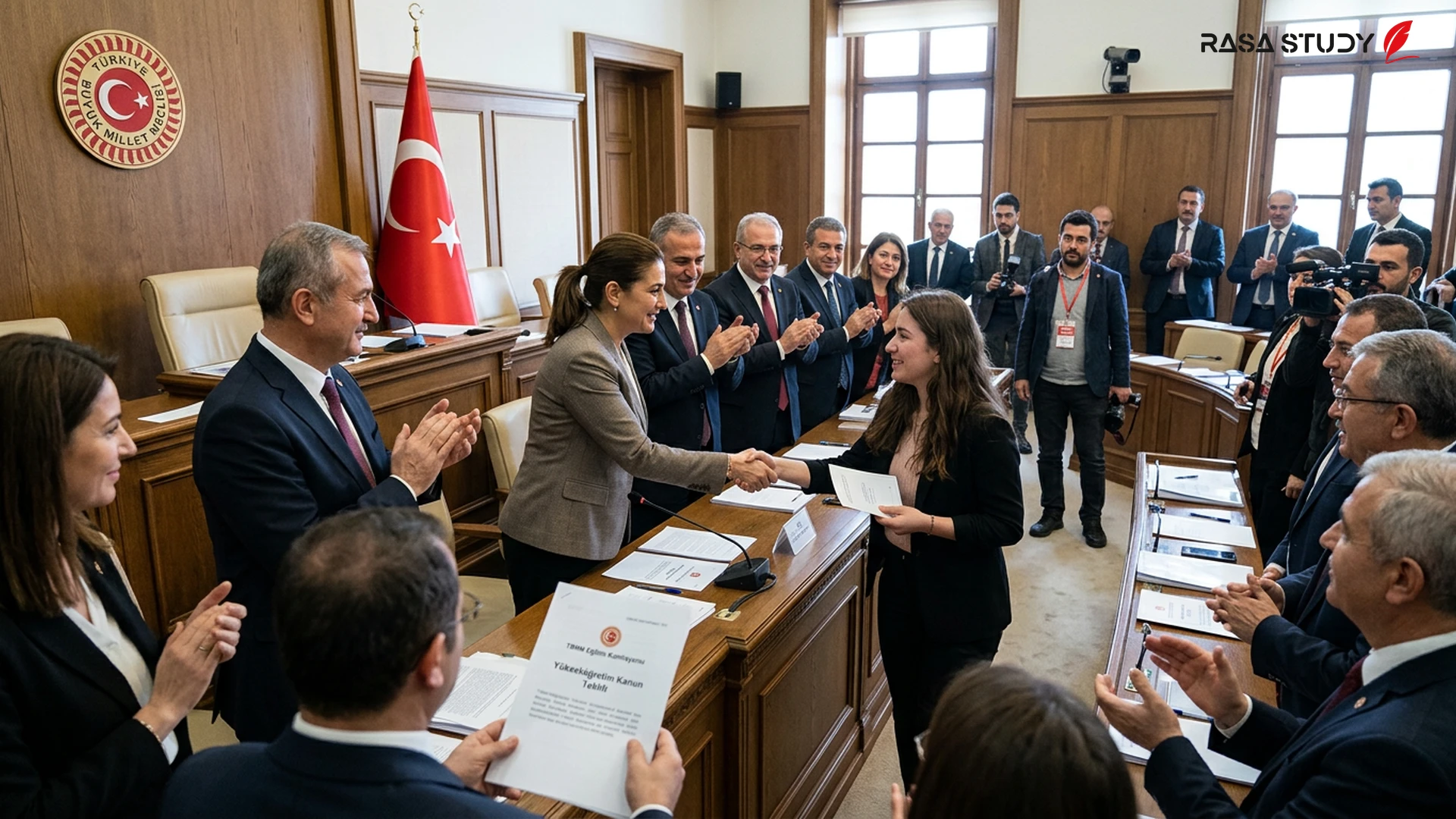
Today, July 15, 2026, the National Education Commission of the Turkish Parliament approved a proposed plan to restructure the country's universities. This resolution includes a broad student amnesty, structural changes in academic units, and a decisive fight against academic fraud.
Today in the Turkish Parliament, a major step was taken toward modernizing the higher education system. The Commission on National Education, Culture, Youth, and Sports of the Grand National Assembly of Turkey (TBMM) approved a plan that not only changes the administrative structure of universities but also grants thousands of students a second chance to return to their desks [1]. This plan, submitted with the signatures of Justice and Development Party representatives, covers various aspects including student amnesty, the hiring of new academic staff, and combating academic misconduct.
General Amnesty and a Second Chance for Students One of the most significant parts of this resolution is the "student amnesty." According to this law, all students who were expelled from universities for various reasons (except for specific legal exceptions) or who were unable to finalize their registration can apply to return to their studies [2]. Upon approval of their application, these individuals will resume their education starting from the first semester of the 2026-2027 academic year. This plan includes associate, undergraduate, and graduate levels and even allows students to transfer to other universities under specific conditions [3].
Structural Restructuring and Renaming of Universities Another part of this plan is dedicated to optimizing university units. To prevent duplication and increase efficiency, "Kahramanmaraş İstiklal University" has been renamed "İstiklal University of Science and Technology" [1]. Additionally, some faculties of this center were merged with "Sütçü İmam University" to create a greater focus on the specialized fields of engineering, aviation, and space sciences. Furthermore, the government has authorized the creation of 48 new academic posts, including professors, associate professors, and research assistants, to strengthen the teaching staff across 48 different universities [2].
Combating Academic Fraud and Strict Standards In this resolution, the Turkish Parliament has taken a hard line against academic offenders. According to the new laws, individuals who commission others to write their theses, articles, or scientific projects, or who play a role in preparing scientific works for others, will face severe penalties, including permanent expulsion from the academic profession and the cancellation of their degrees [3]. This move aims to elevate the standing of Turkish universities in international rankings and ensure the authenticity of scientific research.
International Development and Working Conditions for Professors In line with the globalization of higher education, Turkish state universities are now permitted to establish campuses abroad by Presidential decree [1]. Additionally, to benefit from the experience of veteran professors, the retirement age for contract professors has been increased to 75. These comprehensive reforms demonstrate Turkey's will to become an educational hub in the region and to better align universities with the needs of the modern labor market [2].
The approval of new reforms in the Turkish Parliament paved the way for the modernization of universities and the return of students to their studies.
linkSources
- Üniversite yeniden yapılanma teklifi kabul edildi — Haberler (2026-07-15)
- Öğrenci affı ve yükseköğretime ilişkin düzenlemeleri içeren kanun teklifi kabul edildi — Anadolu Ajansı (2026-07-15)
- Öğrenci affı düzenlemesini içeren teklif komisyondan geçti — Gazete Oksijen (2026-07-15)