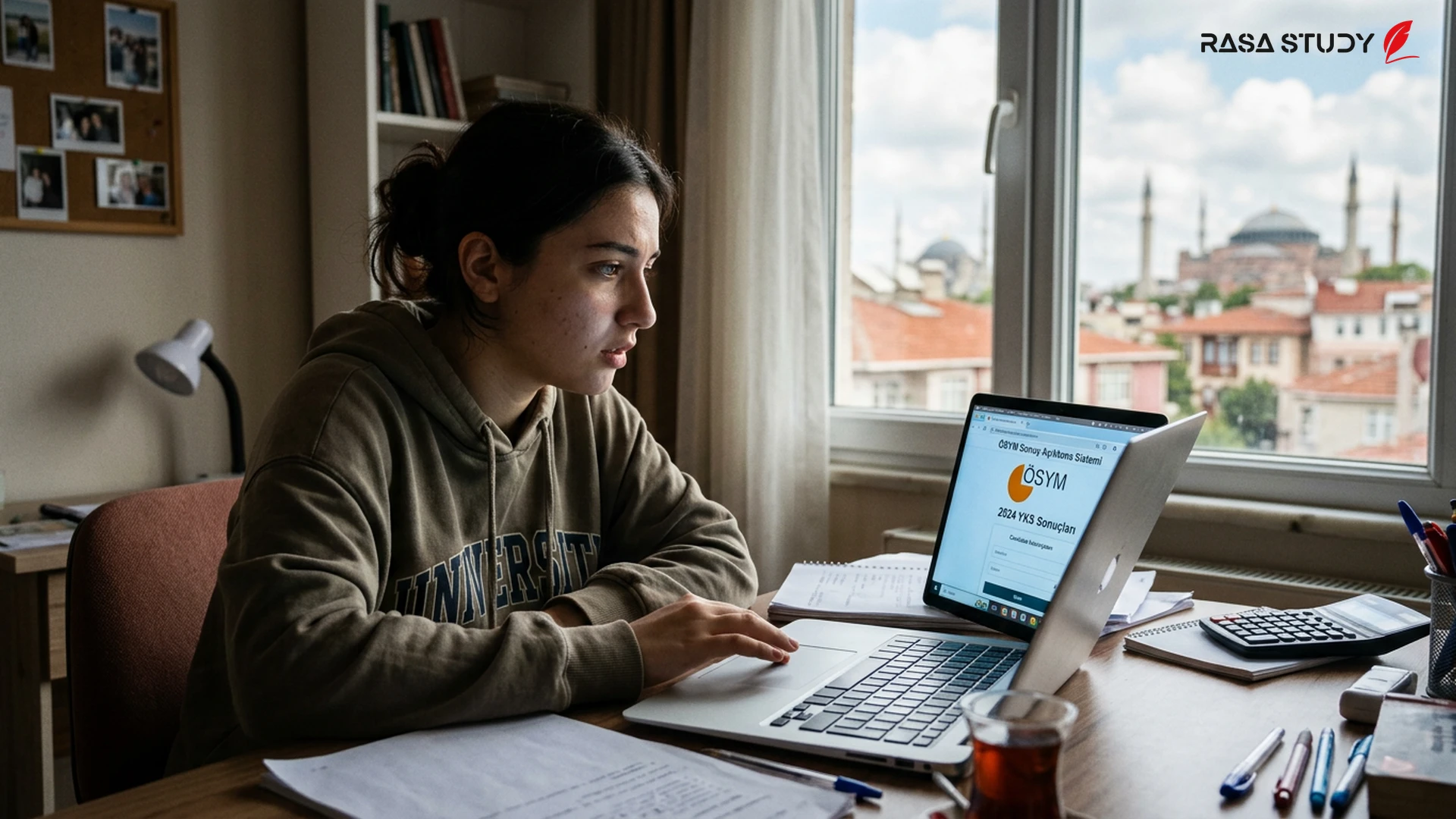
With the publication of new reforms in the Official Gazette of Turkey on July 8, 2026, details of the two-semester extension of academic duration and new student rights have become one of the most important educational news items, smoothing the path to graduation for thousands.
In recent days, extensive changes have been applied to the educational laws of Turkish universities, directly impacting the academic progress of both local and international students. According to reports published on July 8, 2026, the Council of Higher Education of Turkey (YÖK) has introduced new facilities for students in specific circumstances with the aim of increasing flexibility in the educational system [1].
Two-Semester Extension for Graduate Students One of the most prominent provisions of this new regulation is the right to a two-semester (two terms) extension for Master's and PhD students. This law specifically focuses on supporting women's rights; female students who give birth during their studies can request two extra terms without deducting from their Maximum Duration (Azami Süre) [2]. This extension allows students to continue their research and thesis writing stages after maternity leave without the stress caused by the expiration of their academic duration [1].
2026 Academic Amnesty and Return to University Simultaneously with these changes, a new bill has been submitted to the Grand National Assembly of Turkey (TBMM), known as the "2026 Academic Amnesty." According to this bill, students who were expelled from universities since July 1, 2022, for reasons such as failure to register, absence, or completion of the maximum duration, have the opportunity to return to their studies for the first semester of the 2026-2027 academic year [3]. This law covers associate, undergraduate, and graduate levels, but individuals expelled due to terrorism or criminal offenses will not be eligible for this amnesty [3].
Definition of "Equivalent Diploma Program" and Facilitating Mobility In the new reforms, the concept of "Equivalent Diploma Program" (Eş değer diploma programı) has also been officially defined. Accordingly, fields that share at least 80% of the same educational content are recognized as equivalent [1]. This move is a major step toward facilitating student transfers between different universities and preventing the repetition of course units. Additionally, for students who can graduate by passing only 2 or 3 courses, the right to participate in single-course exams or receive an additional term on a case-by-case basis has been considered to prevent the unnecessary prolongation of the study period [1].
Warning to Inactive Students Alongside these facilities, strict rules have also been established for "inactive students." According to the new regulation, students who have not paid tuition fees or selected courses for 4 consecutive years face the risk of permanent expulsion from the university [1]. This action was taken with the aim of clarifying active student statistics and optimizing university resources. Students are required to follow their academic status through university systems to avoid falling under this law.
New changes in Turkish educational laws have provided new opportunities for student graduation.
linkSources
- Üniversite Öğrencileri Dikkat! 2 Dönem Ek Süre Detayı Gündem Oldu — Çanakkale Kalem Gazetesi (2026-07-07)
- YÖK'ten annelere 2 dönem ek süre — Sabah (2026-03-07)
- 2026 Student Amnesty in Turkey: Details of the New Bill — Rasa Study (2026-07-02)