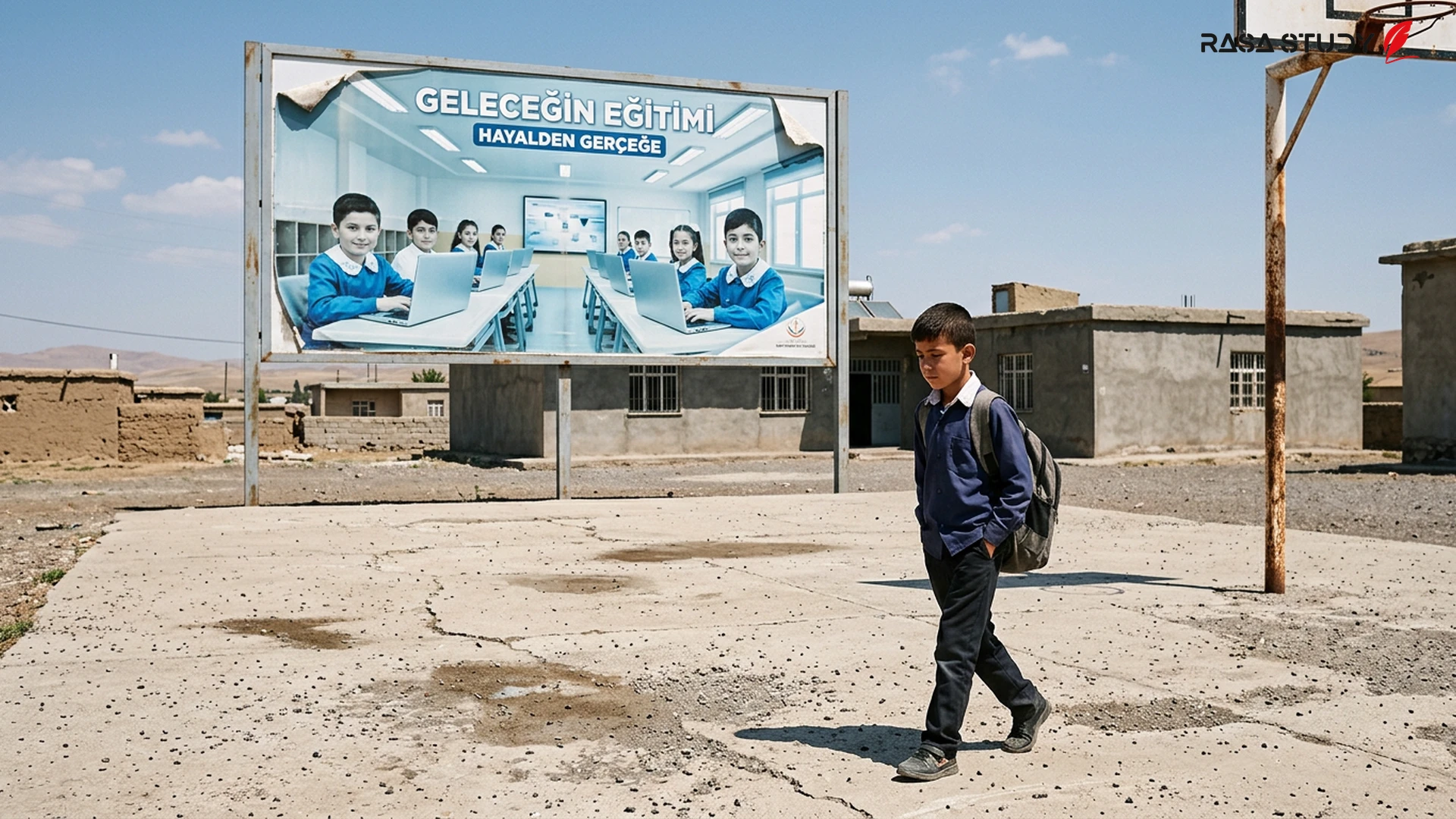
While Turkish officials emphasize infrastructure progress, the release of three new analytical reports by the organization "Eğitim Tercihi" reveals concerning realities regarding learning quality and educational inequalities in the country.
The Confrontation Between Official Discourse and Field Realities In July 2026, debates surrounding the efficiency of the Turkish education system have once again reached a peak. According to reports published by the analytical platform "Eğitim Tercihi," a significant gap is observed between the official claims of government officials and the tangible results in schools. This analysis, built upon three separate reports, shows that the focus on quantity and increasing the number of schools has not necessarily led to an improvement in the quality of educational outcomes [1].
First Report: Infrastructure vs. Learning Quality The first cited report examines the ratio of budget to quality. Although Turkey has made massive investments in educational technology and school modernization in recent years, comparative data shows that students' basic skills remain at a percentage distance from international standards. According to previous OECD statistics, Turkey continues to rank below average in the index of spending per student, which has directly affected teaching quality and available resources [2].
Second Report: Regional Inequalities and the Class Gap The second report focuses on the issue of educational equity. The findings of "Eğitim Tercihi" show a stark difference between public schools in deprived areas and private schools or elite schools (Fen Liseleri) in metropolitan areas. This inequality has caused academic success to depend more on a student's family economic status and place of residence than on their talent. The 2026 monitoring reports emphasize that access to high-quality education for refugees and low-income groups remains a major challenge [3].
Third Report: Labor Market Readiness and 21st Century Skills The third report examines the output of the education system and its alignment with the needs of the modern labor market. Despite changes in curricula, Turkish employers continue to complain about the lack of soft skills, critical thinking, and foreign language proficiency among graduates. The report concludes that the current system is based more on rote memorization and test-oriented methods than on fostering creativity [1].
Conclusion: A Single Truth The combination of these three reports leads to a single conclusion: the Turkish education system requires a structural transformation beyond superficial changes. "Eğitim Tercihi" warns that without addressing the roots of inequality and revising teacher training methods, slogans of progress will remain only on the surface, and bitter educational realities will be reflected in future generations [1][3].
New analyses in 2026 indicate an urgent need for qualitative reforms in Turkish schools.
linkSources
- Söylem, Gerçeklik ve Türk Eğitim Sistemi; Üç Farklı Rapor, Gerçek Bir Sonuç! — Eğitim Tercihi (2026-07-02)
- OECD Education at a Glance 2025: Turkey Country Note — OECD (2025-09-15)
- Eğitim İzleme Raporu 2025-2026: Öğrenci Başarısı و Eşitsizlik — Eğitim Reformu Girişimi (ERG) (2026-06-20)


