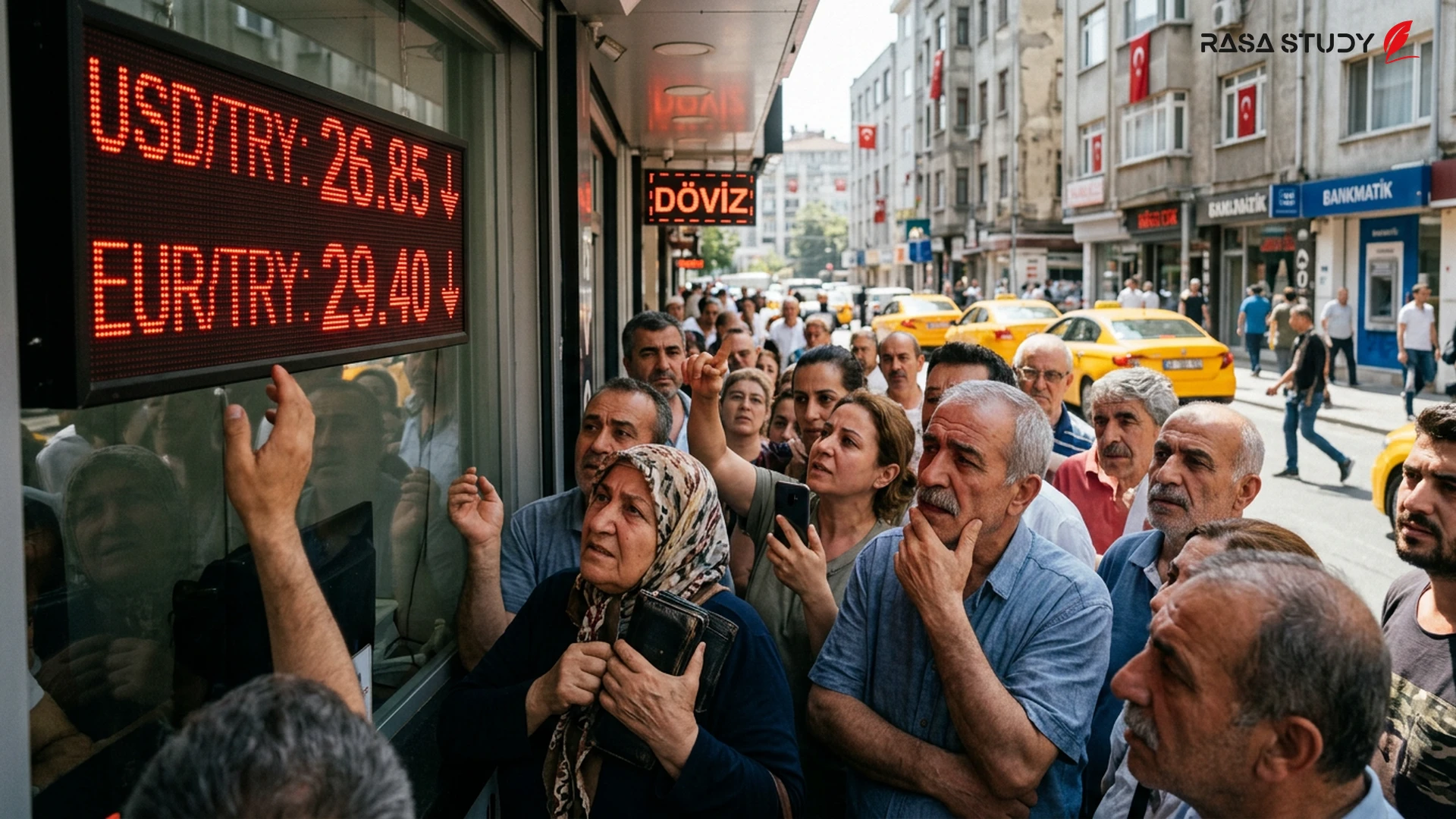
As Turkish financial markets face severe volatility on July 10, 2026, the Lira's exchange rate against the Dollar has reached new critical boundaries, sparking widespread concern among economists.
Severe Volatility in Ankara's Foreign Exchange Market
Today, July 10, 2026, reports from the Turkish currency market indicate that the Lira is once again in a free fall. The news network Halk TV, in a special report titled "5 Minutes to the Record; The Turkish Lira is Melting," examined the alarming state of exchange rates [1]. According to this report, selling pressure in the market has risen so high that the Dollar rate against the Lira is only a few steps away from breaking its historical ceiling. This situation has caused exchange offices in Istanbul and Ankara to face crowds of customers seeking to preserve the value of their assets.
Monetary Policies and Inflationary Pressure
Despite the efforts of the Central Bank of the Republic of Turkey (TCMB) to control liquidity, inflation continues to act as the driving engine for the devaluation of the national currency [3]. Analysts believe that current interest rates have failed to curb inflationary expectations. While Turkey faced similar challenges with inflation exceeding 70% in previous years, this crisis has taken on new dimensions in 2026 [2]. Uncertainty in fiscal policies and the Turkish economy's heavy dependence on energy and raw material imports have made the Lira highly vulnerable to external shocks.
Impact on Livelihoods and Citizens' Purchasing Power
The decline in the Lira's value is not just a number on exchange boards; it directly targets the tables of the Turkish people. With the increase in the Dollar price, the cost of basic goods, fuel, and housing has skyrocketed. Field reports show that the purchasing power of the middle class has significantly decreased, and many small businesses are unable to plan for the future due to momentary price fluctuations. Economic experts warn that if the current trend continues, the Turkish Lira may record one of its worst annual performances in the last decade [1].
Economic Outlook in the Second Half of 2026
Many international investors are now looking at the Turkish market with caution. The Central Bank announced in its latest statement that it will employ all necessary tools for market stability, but markets are reacting to these promises with skepticism [3]. To return stability to the currency market, not only monetary reforms but also the creation of political trust and the attraction of direct foreign investment seem essential. Currently, eyes are fixed on the next meeting of the Monetary Policy Committee to see if a more aggressive approach will be adopted to save the Lira.
Severe fluctuations of the Turkish Lira in Ankara and Istanbul financial markets in July 2026
linkSources
- Rekora 5 kala: Türk Lirası eriyor! — Halk TV (2026-07-10)
- Turkey's inflation and currency outlook for 2026 — Reuters (2024-05-24)
- Central Bank of the Republic of Türkiye: Monetary Policy Reports — TCMB (2026-06-30)


