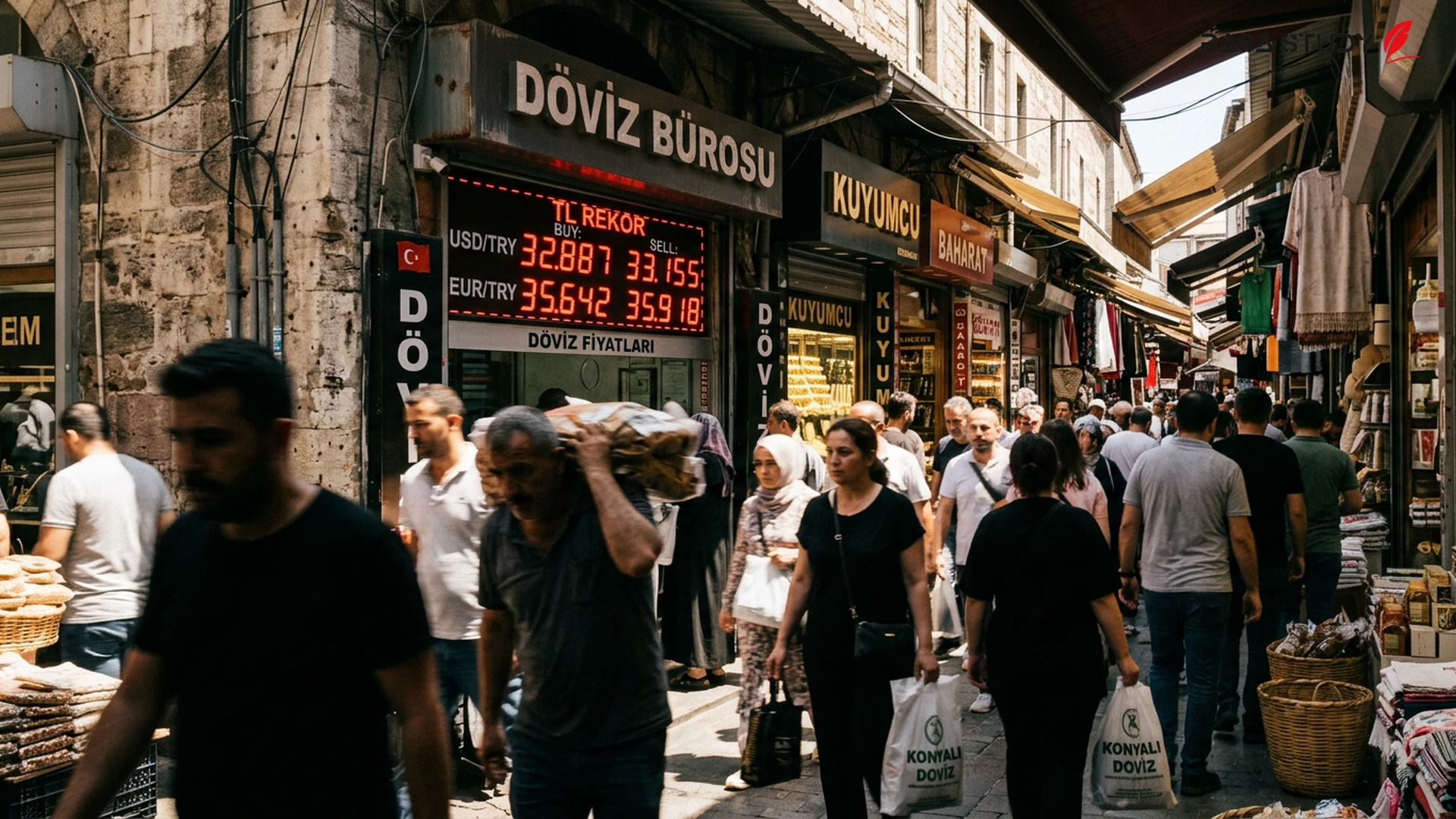
On Saturday, July 18, 2026, the Turkish currency market witnessed new fluctuations. The Dollar price crossed the 47 Lira threshold, and the Euro traded in the 54 Lira range, indicating continued economic pressure on the national currency.
As Turkish financial markets navigate Saturday, July 18, 2026, the exchange rate of the Lira against major global currencies remains the focus of economic actors and citizens. According to reports published by reputable Turkish media outlets, including «Ege Telgraf», Dollar and Euro rates in the Istanbul free market have seen a relative increase, setting new records [1].
Free Market Status on Saturday, July 18 According to real-time currency market data, on the morning of Saturday, July 18, each United States Dollar was traded at a rate of 47.1967 Lira. Meanwhile, the Euro maintained its upward trend, reaching a price of 54.0261 Lira [2]. These figures represent the gradual depreciation of the Lira in recent months, influenced by both domestic and international factors. Experts believe that the closure of official markets on Saturday has led to a decrease in transaction volume, yet free market prices continue to reflect the community's inflationary expectations.
Analysis of Central Bank of the Republic of Türkiye (TCMB) Monetary Policies In its latest inflation report published in May 2026, the Central Bank of the Republic of Türkiye increased its year-end inflation forecast to 26 percent [3]. The institution announced that contractionary monetary policies and maintaining interest rates at high levels (around 37 percent) will continue to curb inflation and stabilize the exchange rate. However, the gap between the official inflation rate and free market realities has kept the pressure on the Turkish Lira persistent. The Central Bank emphasized that until price stability is achieved, it will use all monetary tools to support the national currency [3].
Impact of Regional Tensions on the Lira's Value One of the primary reasons for the recent fluctuations in the Turkish currency market is the increase in geopolitical tensions in the Middle East. These tensions, which have affected energy prices and supply chains, have increased Turkey's import costs and led to a weakening of the trade balance [2]. Economic analysts believe that until political stability is established in the region, Turkish financial markets will continue to face systemic risks that directly affect the Lira's exchange rate.
Economic Outlook and Forecasts Looking toward the second half of 2026, currency market fluctuations are expected to be influenced by the upcoming decisions of the Central Bank's Monetary Policy Committee in late July. Investors are waiting for signals to start an interest rate cut cycle, but sticky inflation may delay this decision [1]. If inflationary expectations are not successfully curbed, the Turkish Lira is likely to endure more pressure by the end of 2026 and experience higher rates against the Dollar and Euro.
Exchange rate fluctuations in the Turkish free market remain a focus for economic analysts in 2026.
linkSources
- Dolar kaç TL oldu, Euro ne kadar? (18 Temmuz Cumartesi Döviz Kurları) — Ege Telgraf (2026-07-18)
- Dolar/TL bugün ne kadar? (18 Temmuz 2026 Dolar - Euro fiyatları) — Bursada Bugün (2026-07-18)
- CBRT Inflation Report 2026-II — Central Bank of the Republic of Türkiye (2026-05-14)