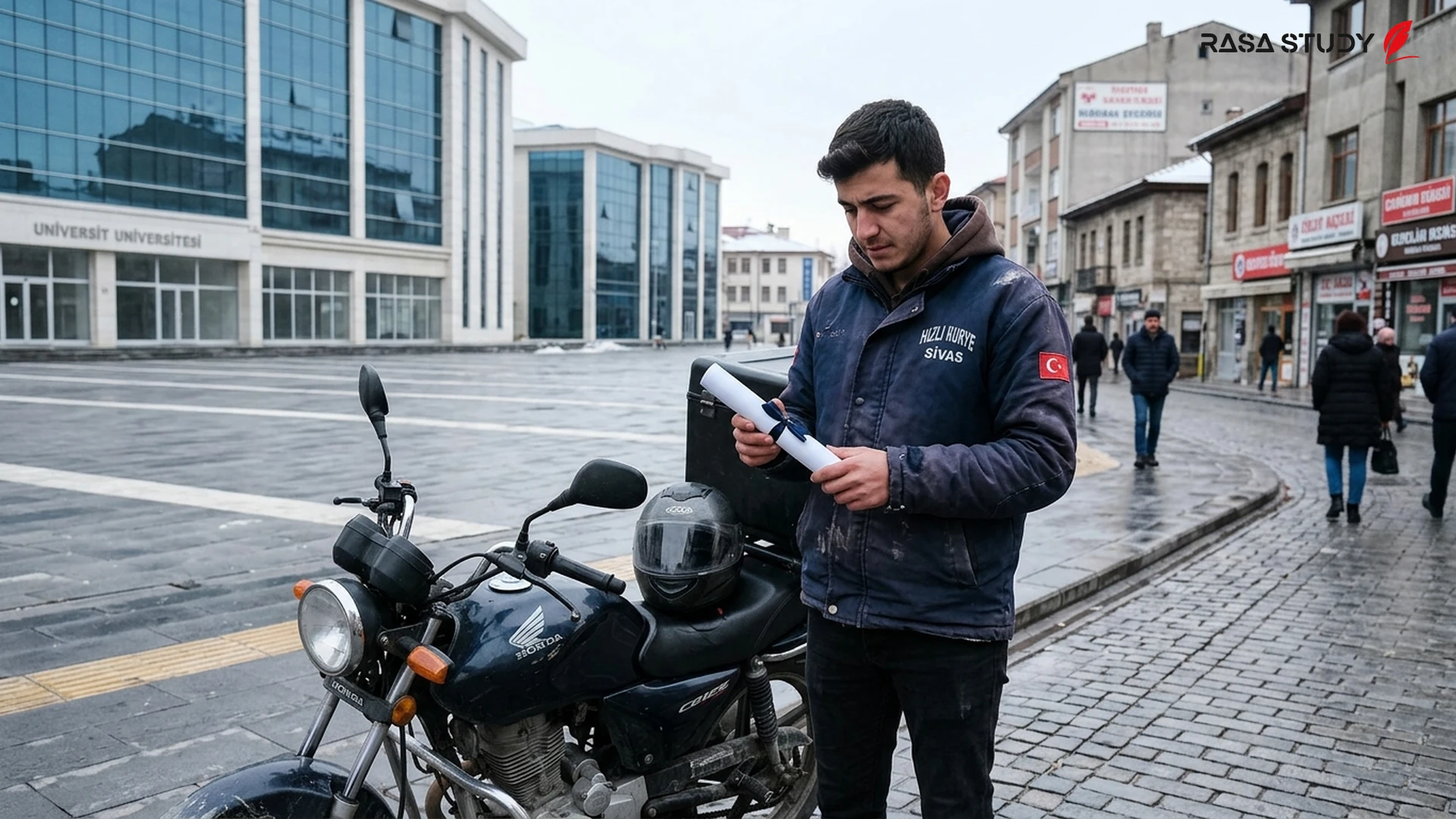
As June 2026 arrives, new reports from local Turkish media indicate an intensification of the unemployment crisis among university graduates; a phenomenon that has confronted the younger generation's mental health with deep anxiety, beyond just the economy.
The Critical Situation of Graduates in 2026 As we pass the first half of 2026, the issue of the 'graduated unemployed' has once again returned to the forefront of Turkey's social and economic news. A recent report by the publication 'Sivas Irade' shows that a significant number of young people find themselves in a career dead-end after years of university education [1]. This situation, which is more evident in central provinces like Sivas, reflects a deep gap between educational capacities and the actual needs of the labor market.
Future Anxiety: Beyond an Economic Problem What distinguishes recent reports is the focus on 'future anxiety'. Based on statistical data, educated youth are struggling not only with financial challenges but also with a type of psychological erosion caused by uncertainty [1]. Many of these individuals are forced to accept jobs that have no connection to their field of study, a matter that has led to a decrease in national productivity and individual frustration. Official statistics from the Turkish Statistical Institute (TUIK) also confirm that the unemployment rate among youth with higher education remains at alarming levels [2].
The Gap Between Academic Expertise and Market Needs Experts believe that the inflation in the number of universities in recent decades, without considering regional planning and industrial needs, is one of the main reasons for this crisis. In 2026, many graduates in humanities and engineering fields face a market that is either saturated or does not require their expertise [3]. This mismatch has caused university degrees to no longer serve as a guarantee for entering the middle class of society.
The Necessity of Structural Reforms in the Employment System To overcome this situation, analysts emphasize the need to revise job creation policies. Establishing a direct link between university and industry, supporting youth startups, and reforming the academic guidance system are among the proposed solutions [2]. If serious measures are not taken to reduce future anxiety among this group, the 'brain drain' phenomenon, which has accelerated in recent years, could lead to the depletion of the country's talent in the coming years [3].
University graduate unemployment has become one of Turkey's biggest social challenges in 2026.
linkSources
- DİPLOMALI İŞSİZLER VE GELECEK KAYGISI — Sivas İrade (2026-06-14)
- İşgücü İstatistikleri, I. Çeyrek: Ocak-Mart, 2026 — TÜİK (2026-05-15)
- Türkiye'de Genç İşsizliği و Beyin Göçü Raporu — TRT Haber (2026-06-01)


