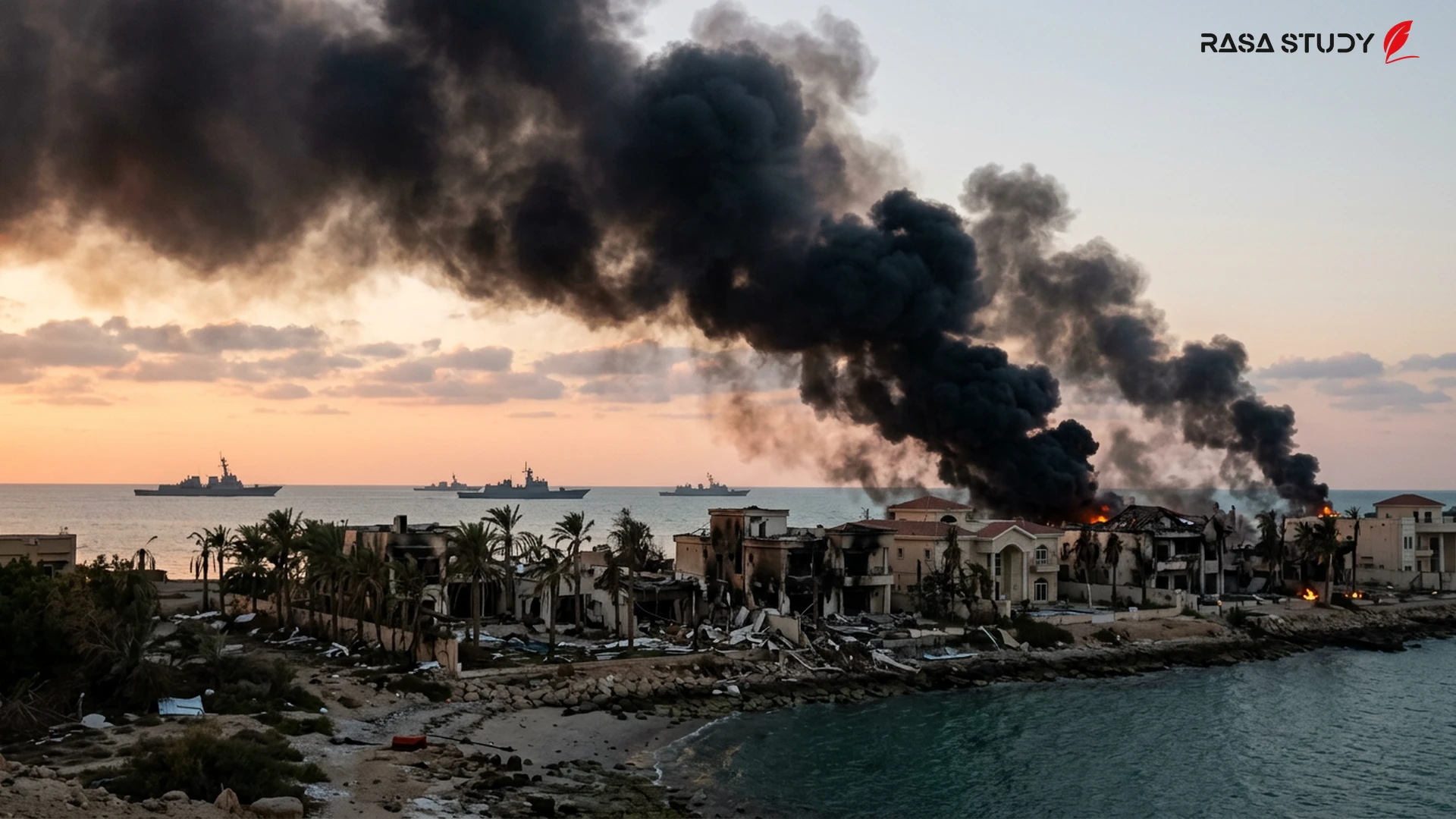
Following the collapse of the Islamabad Peace Memorandum, US forces, in their fourth consecutive night of strikes, targeted sites on the tourism islands of Kish and Qeshm, resulting in disruptions to critical infrastructure and a surge in oil prices.
Details of Attacks on Southern Iran's Tourism Hubs In the late hours of July 14 and early July 15, 2026, multiple reports emerged of explosions on strategic and tourist islands in the Persian Gulf. According to domestic news agencies, US projectiles struck points on Qeshm Island, specifically the "Mesan" area [1][3]. Simultaneously, news sources reported a projectile explosion near water and power facilities on Kish Island, causing widespread concern among residents and tourists [2]. These attacks are part of a new wave of US military operations in the region, which have also targeted other coastal cities such as Bandar Abbas, Bushehr, and Chabahar [4].
Collapse of the Islamabad Memorandum and Start of the Naval Blockade These intense clashes occur despite previous hopes that the "Islamabad Memorandum," mediated by Pakistan, would pave the way for lasting peace. However, US President Donald Trump announced the end of the ceasefire, accusing Iran of violating security clauses [4]. Washington claims these strikes aim to weaken Iran's ability to threaten commercial shipping. In this regard, US Central Command (CENTCOM) announced the official return of the naval blockade against Iranian ports, stating it will prevent vessel traffic destined for Iran [2][4].
Regional Reactions and Iran's Counter-Response Tensions have not remained limited to Iran's borders. Kuwaiti officials stated that their air defense systems intercepted several hostile targets in Kuwaiti airspace [3]. Additionally, sirens sounded in Bahrain, and reports of drone attacks on US bases in Jordan have been published [4]. Condemning these actions, Iran called the US attacks a clear violation of international law and emphasized that, based on the right to legitimate defense, it has delivered crushing responses to the origins of these attacks [4].
Economic Consequences and Global Market Status The escalation of conflict in the Strait of Hormuz, considered the world's primary energy artery, immediately affected global markets. Brent crude oil prices rose by 15% in the past week to reach $85 per barrel, the highest level in recent months [2]. Experts warn that the continuation of this situation and threats to target power plants and bridges could push the global energy crisis into an irreversible phase [4].
Military tensions in the Persian Gulf have led to the targeting of civilian infrastructure on southern Iranian islands.
linkSources
- اصابت پرتابههای آمریکا به نقطهای در جزیره قشم — خبرگزاری مهر (2026-07-14)
- Iran reports new explosions on Qeshm, Kish islands — Anadolu Agency (2026-07-14)
- Projectiles strike Iran's Gulf island of Qeshm — Arab News Japan (2026-07-15)
- چهارمین شب حملات آمریکا به مناطقی از ایران — ایرنا (2026-07-15)


