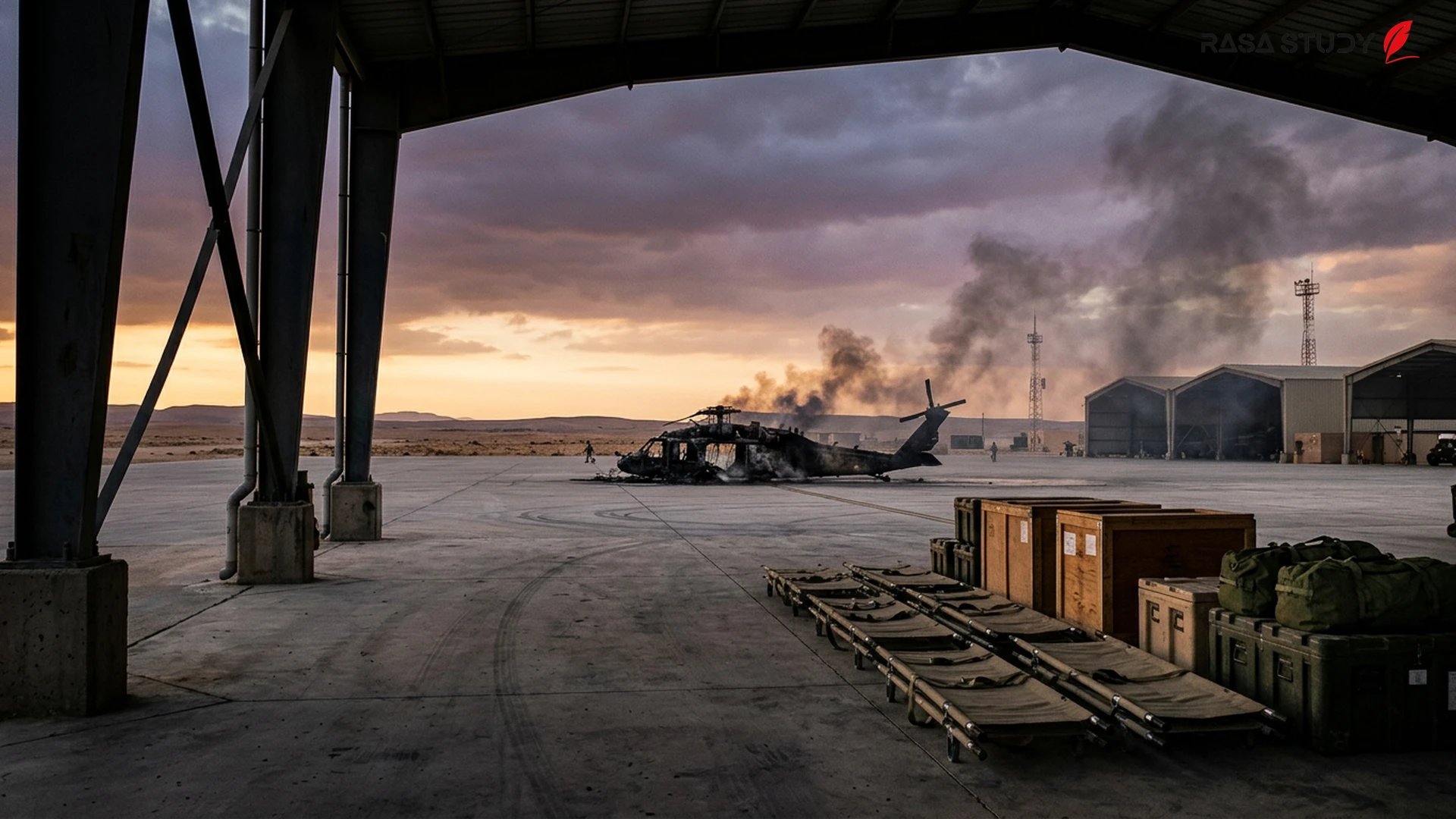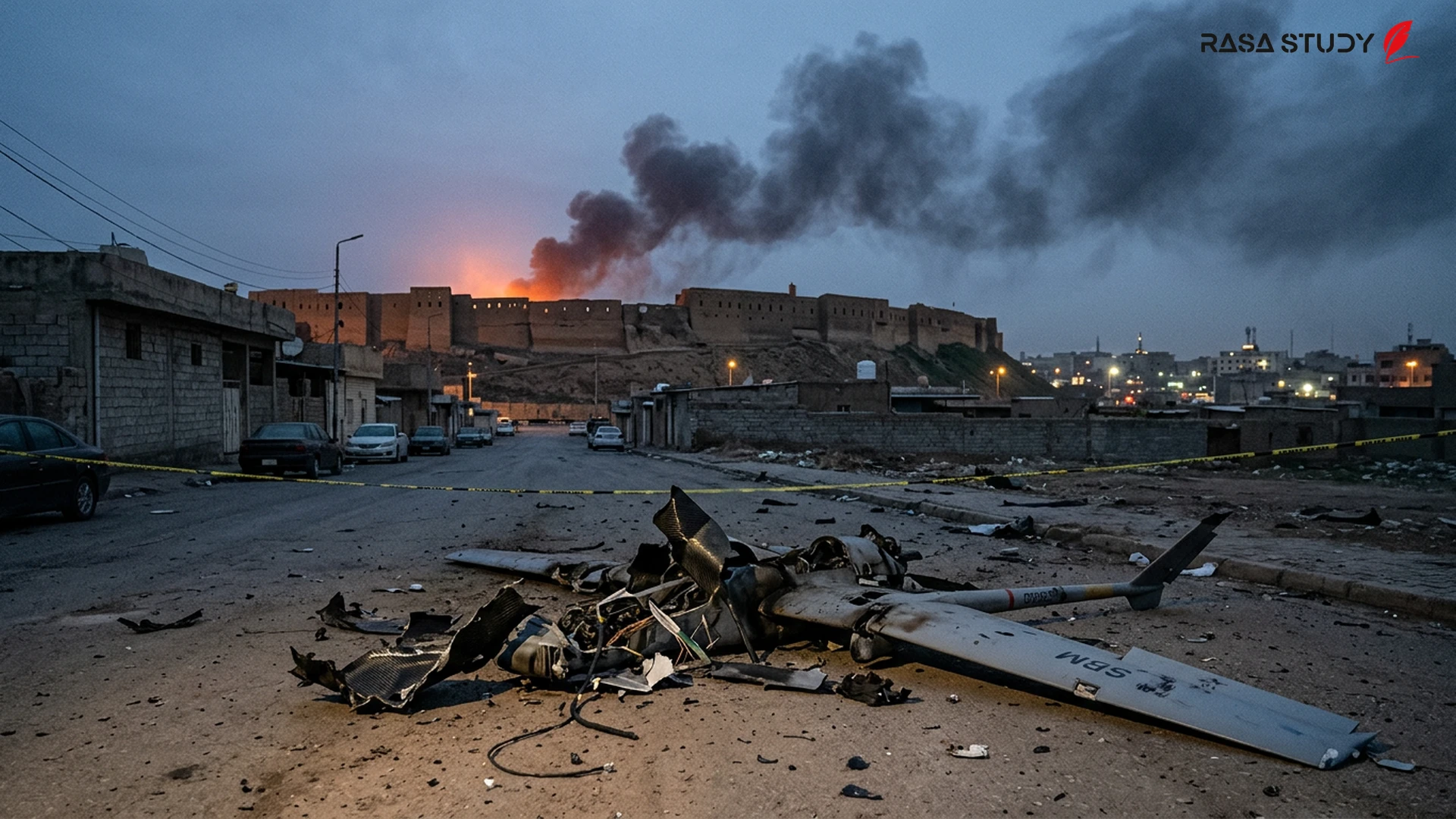
In an exclusive statement, the United States Department of State strongly condemned recent Iranian missile and drone attacks on Erbil, labeling them a clear violation of Iraq's territorial integrity and national sovereignty.
Washington's Sharp Reaction to Erbil Attacks Following a new wave of drone and missile attacks on the capital of the Kurdistan Region, a US State Department spokesperson told "Kurdistan 24" in an exclusive interview that the United States strongly condemns these "shameful" attacks [1]. The American official emphasized that such military actions not only violate Iraq's national sovereignty but also pose a serious threat to the stability of the entire region [1]. Washington also reaffirmed its firm support for the Iraqi federal government led by Prime Minister Ali Falih al-Zaidi and his efforts to protect the Iraqi people [1].
Details of Attacks and Drone Interceptions on July 17 Field reports indicate that in the early hours of Friday, international coalition forces successfully intercepted and destroyed eight suicide drones in the skies over Erbil [2]. The Kurdistan Region's Counter-Terrorism Directorate announced that these drones were detected between 4:19 and 5:25 AM, and fortunately, the incident caused no casualties within the city of Erbil [2]. However, simultaneous reports from Sulaymaniyah province show that missile attacks on Komala Party headquarters resulted in the deaths of at least nine people and injured several others [4].
Joint Statement by the US and Regional Allies This condemnation was not limited to Washington alone. The United States, along with six regional allies—Bahrain, Jordan, Kuwait, Qatar, Saudi Arabia, and the United Arab Emirates—issued a joint statement condemning Iran's "reckless" and "indiscriminate" attacks on sovereign territories across the region [3]. The statement emphasized that targeting civilians and the infrastructure of countries not involved in the conflict is a destabilizing and dangerous behavior that must stop immediately [3].
Context of Widespread Regional Military Tensions The recent attacks occur as the region witnesses an unprecedented escalation of conflict between Iran and the United States. US Central Command (CENTCOM) announced it has completed its sixth consecutive night of precision strikes on Iranian military and logistical infrastructure [1]. These strikes included targeting strategic bridges in Hormozgan province and air defense positions [5]. Tensions have intensified following the collapse of the June 2026 memorandum of understanding mediated by Pakistan, turning Iraq into a primary arena for exchanges of fire [2].
Reaction of Kurdistan Region Officials and Security Warning Nechirvan Barzani, President of the Kurdistan Region, condemned the attacks, calling them a clear violation of international law and a "betrayal of Iraq" [4]. The Kurdistan Region Presidency warned that the continuation of these attacks creates major obstacles to peace efforts [4]. Simultaneously, the US Embassy in Baghdad issued a security alert, urging its citizens to remain at the highest level of vigilance due to the possibility of sudden airspace closures and flight disruptions [2].
Coalition forces successfully downed eight suicide drones over Erbil on July 17, 2026.
linkSources
- Kurdistan24 Exclusive: State Department Strongly Condemns Iranian Attacks on Erbil — Kurdistan24 (2026-07-17)
- Eight bomb-laden drones intercepted over Erbil — The New Region (2026-07-17)
- US, Gulf states condemn Iran's missile, drone attacks, including in Kurdistan Region — Rudaw (2026-07-13)
- Attacks on Kurdistan Region is a betrayal of Iraq, presidency says — Shafaq News (2026-07-17)
- ادامه حملات به مواضع آمریکاییها در منطقه — Mehr News Agency (2026-07-17)