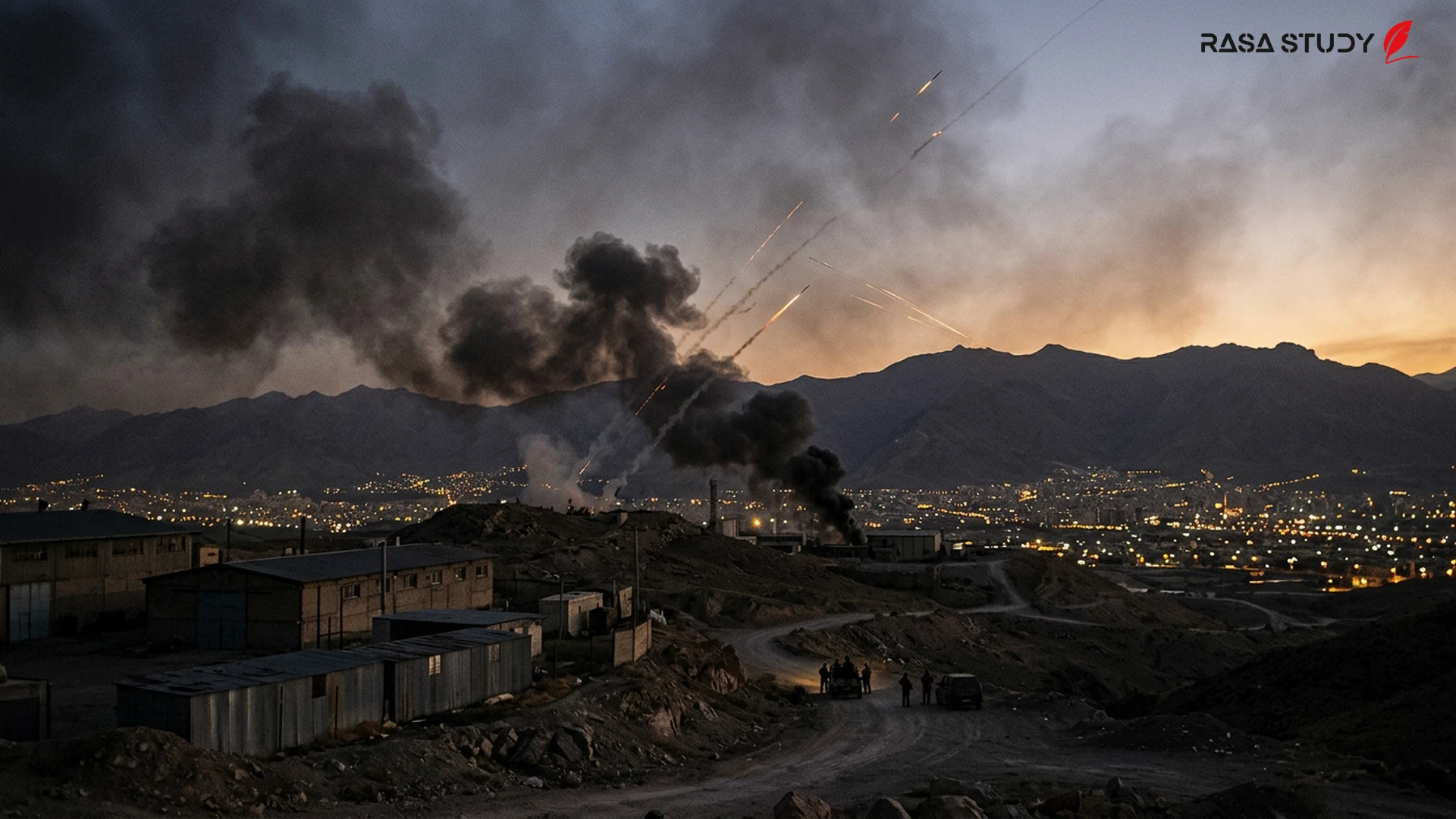
Following the collapse of the ceasefire agreement, US forces targeted military positions across Iran, including areas near Tehran, in a large-scale operation. These strikes triggered an Iranian missile response against US bases in the region.
In the early hours of July 16, 2026, military tensions between the United States and Iran reached an unprecedented level. One week after Donald Trump officially announced the end of the ceasefire, the United States Central Command (CENTCOM) launched a new wave of air strikes that, for the first time in recent months, targeted sites near Tehran and Semnan [5]. The operation, which lasted approximately seven hours, signifies a geographical expansion of the conflict from the Persian Gulf coast into the heart of Iranian territory.
Details of Night Strikes and Strategic Targets According to an official CENTCOM statement, the strikes began at 22:00 local time on July 15 and continued until 05:00 AM on July 16 [6]. The primary objective of the operation was stated as weakening Iran's military capabilities to target commercial vessels in the Strait of Hormuz. Reports indicate that command centers, air defense sites, and missile and drone warehouses in areas such as Bandar Abbas, Greater Tunb Island, and the outskirts of Tehran were hit [5][6].
During these attacks, reports emerged of the evacuation of the "Shahid Baghaei" hospital in Ahvaz due to a missile strike nearby [6]. Additionally, US officials confirmed the use of precision weaponry to target military infrastructure to avoid civilian casualties, although regional tensions have escalated sharply.
Iran's Missile Response and Regional Clashes The Islamic Revolutionary Guard Corps issued a statement immediately after the US strikes began, speaking of an "existential war" with the United States. In response to the CENTCOM operation, Iranian forces targeted US military bases in Bahrain, Kuwait, and Jordan using ballistic missiles and suicide drones [2][5]. This extensive exchange of fire triggered air raid sirens across the region, sending residents of Gulf countries to shelters.
Mohammad Bagher Ghalibaf, Iran's senior negotiator, stated that Iran's security depends on maintaining security arrangements in the Strait of Hormuz and that Tehran will resist until the end against what he called "direct aggression against national sovereignty" [5].
Collapse of the June Agreement and Return to Crisis These clashes occur as the Memorandum of Understanding (MoU) signed in June 2026, which was intended to pave the way for permanent peace, has completely collapsed [1]. On July 7, following Iranian attacks on several commercial vessels, Donald Trump officially declared the ceasefire over [1][4].
Military analysts believe the recent US strikes are a form of "shaping operations" designed to weaken Iranian air defenses to clear the way for more complex and extensive operations if necessary [4]. Simultaneously, the United States has reinstated the naval blockade of Iranian ports, leading to a sudden spike in global oil prices [2][3].
Economic Consequences and Blockade of the Strait of Hormuz With the escalation of conflict, traffic in the Strait of Hormuz has reached its lowest level. Ship tracking data shows that only a few tankers are currently transiting this vital waterway [1]. The International Monetary Fund has warned that a continuation of this situation could severely deplete global energy reserves and confront the global economy with a new shock [2]. While regional mediators continue to try to bring the parties back to the negotiating table, the harsh rhetoric from officials in both countries suggests a dark outlook for diplomacy in the coming days.
Released image of air defenses active on the outskirts of Tehran during the night strikes of July 16, 2026
linkSources
- 2026 Iran war — Britannica (2026-07-15)
- U.S. reimposes blockade and steps up strikes as Iran threatens to halt all energy exports — PBS NewsHour (2026-07-15)
- American forces launch fresh strikes against Iran to degrade Tehran's ability — Fox News (2026-07-15)
- US targets Iran's defenses as Trump weighs next military moves — Jerusalem Post (2026-07-16)
- ABD-İran çatışması gece yarısı büyüdü: Saldırılar Tahran’a uzandı — Dünya Gazetesi (2026-07-16)
- ABD'den İran'a gece saldırısı: Operasyon Tahran'a kadar uzandı — Istanbul Ticaret Gazetesi (2026-07-16)


