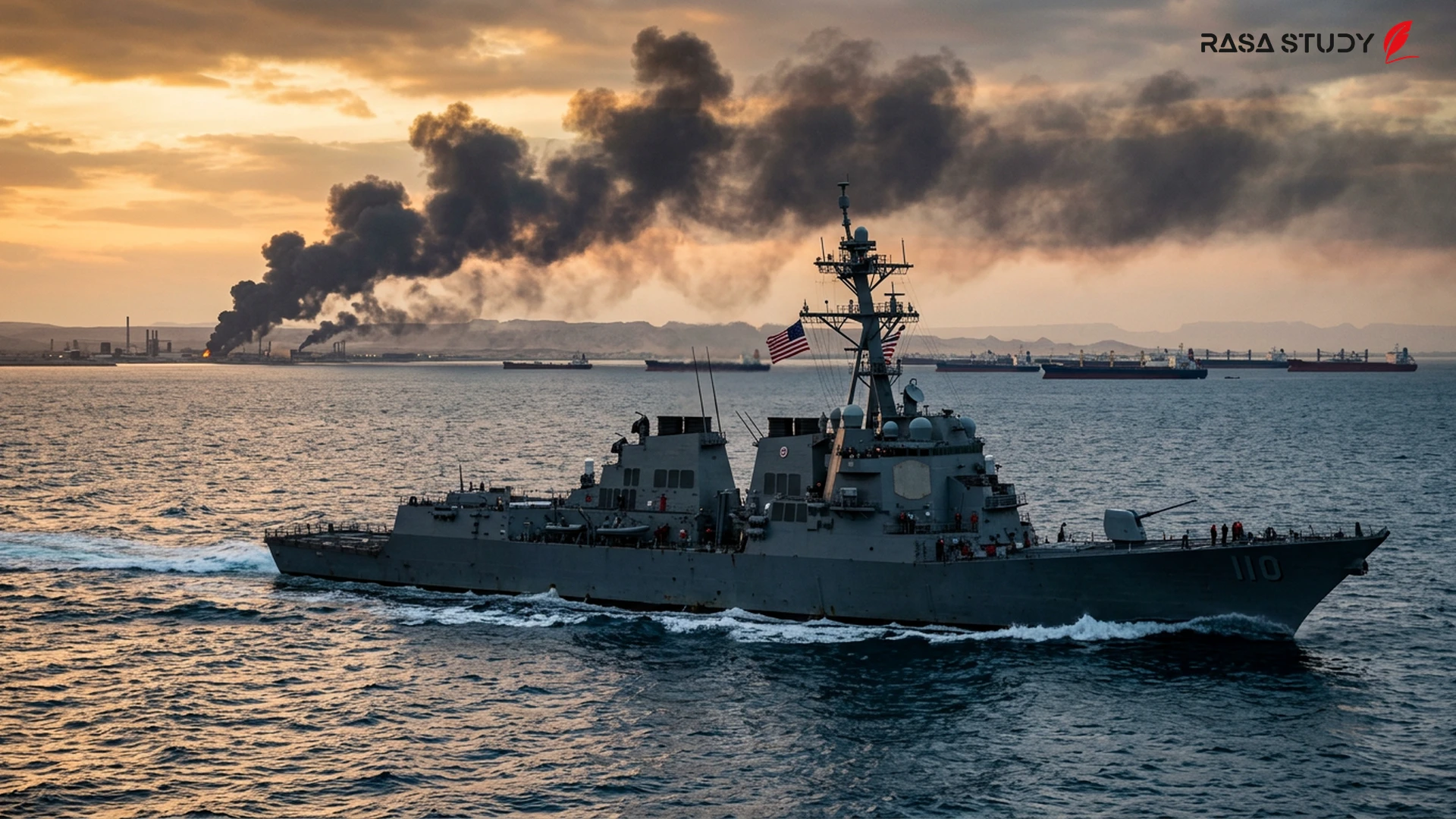
Following the failure of recent diplomatic agreements, the Middle East is once again witnessing a direct military confrontation between the United States and Iran. US Central Command (CENTCOM) announced a new wave of airstrikes and the establishment of a full naval blockade against Iranian ports.
Details of Airstrikes and CENTCOM Targets In the early hours of July 15, 2026, United States Central Command (CENTCOM) announced that it had carried out a new wave of precision strikes against military facilities inside Iranian territory. This operation, which continued for the fourth consecutive night, targeted dozens of strategic objectives, including missile sites, drone hangars, and coastal defense systems in areas such as Bandar Abbas, Bushehr, and Qeshm Island [1][3]. US military officials stated the purpose of these attacks is to weaken Iran's capabilities to attack commercial vessels in the Strait of Hormuz. Local reports indicate sounds of massive explosions in Ahvaz and the border regions of Khuzestan province [4].
Return of the Naval Blockade and Impact on Global Markets Simultaneously with the airstrikes, the United States officially resumed a naval blockade of Iranian ports. This action, which began at 23:00 Turkey time on July 14, monitors all vessels traveling toward Iranian ports [1]. US President Donald Trump defended the decision, stating that pressure will not ease until Iran returns to the negotiating table. These tensions immediately affected global energy markets, with Brent oil prices rising significantly to over $85 per barrel [2]. Analysts warn that the continuation of this situation could face global energy security with a serious crisis.
Tehran's Counter-reactions and Targeting of US Bases In response to the CENTCOM attacks, the Islamic Revolutionary Guard Corps announced the targeting of several US military bases in the region. Reports indicate missile and drone attacks on the US Fifth Fleet base in Bahrain and military facilities in Kuwait and Jordan [4]. Additionally, tensions in the Strait of Hormuz have reached their peak, with reports of two United Arab Emirates tankers damaged by missile strikes [3]. Iranian officials have declared that the Strait of Hormuz will remain unsafe for military transit until "US wickedness" ends.
Diplomacy at a Deadlock; New Threats from Trump The current situation represents the complete collapse of the June diplomatic memorandums previously concluded to reduce tensions. Donald Trump, in a recent interview with Fox News, warned that if Iran refuses to negotiate, the US military will destroy the country's power plants and vital bridges in the next stages [4]. While mediators from Qatar and Oman are attempting to establish a ceasefire, the presence of more than 20 warships and hundreds of US military aircraft in the region reinforces the possibility of a full-scale war more than ever [2].
CENTCOM stated that airstrikes were conducted to reduce Iran's offensive capabilities in the Strait of Hormuz.
linkSources
- ABD-İran gerilimi tırmanıyor: ABD ordusu, bir kez daha saldırı başlattı — 24 Saat Gazetesi (2026-07-14)
- US conducts new round of attacks against Iran, striking military targets near Strait of Hormuz — Fox News (2026-07-15)
- U.S. Forces Complete Another Round of Strikes Against Iran — U.S. Central Command (CENTCOM) (2026-07-15)
- ABD-İran hattında son durum: Saldırılar sürüyor — Habertürk (2026-07-15)


